



 Evan Lee Salim
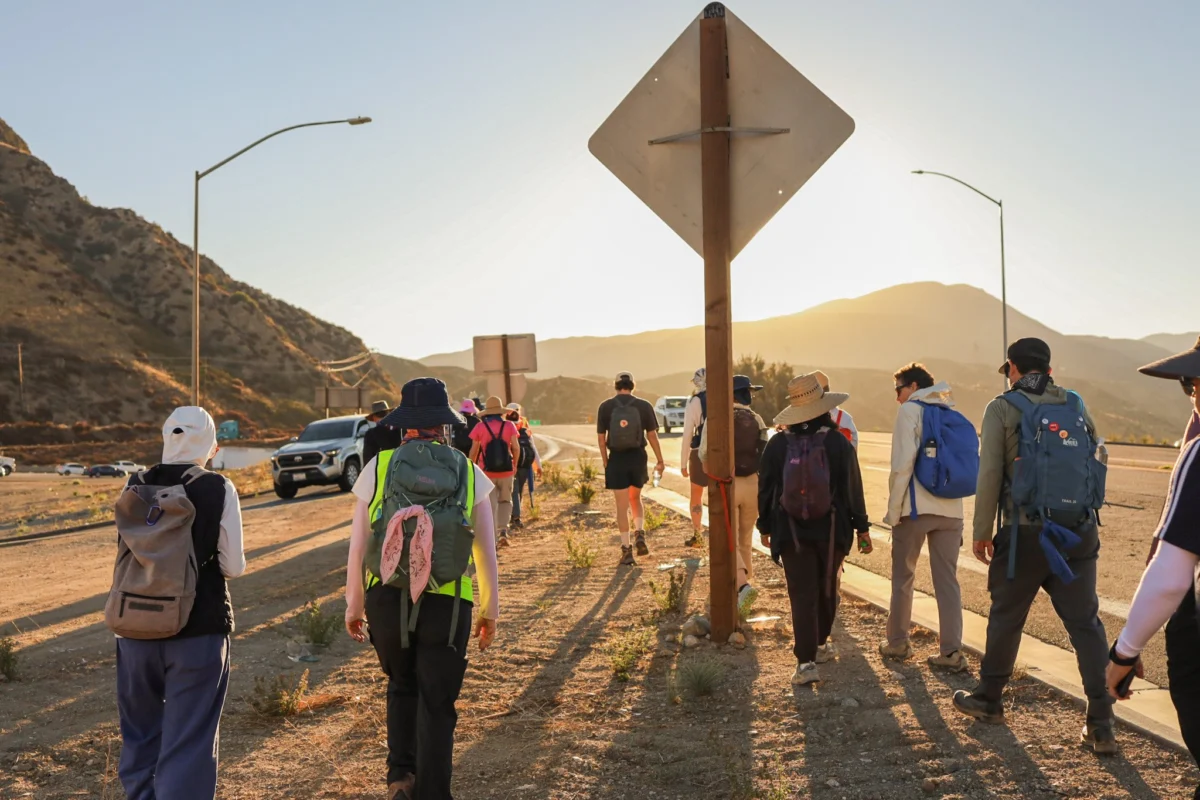
In late September, a coalition of faith leaders, migrant justice advocates, and families affected by deportation set out on a grueling 96-mile trek across the diverse landscapes of Southern California. The "Clear the Road to Freedom" pilgrimage, which spanned eight days, served as both a spiritual exercise and a pointed political protest against the escalating detention of migrants within the United States.
The journey, which concluded at the Metropolitan Detention Center in downtown Los Angeles, was a response to the hardening policies of the Trump administration. As the marchers navigated desert heat, mountainous paths, and dense urban sprawl, their message remained clear: the current system of mass incarceration for migrants is a moral failure that demands immediate rectification.
The Human Cost: A Journey Rooted in Trauma
For many participants, the pilgrimage was not merely a political statement but a deeply personal act of healing. Among them was "Cristiana," a woman who has spent over a decade processing the trauma inflicted upon her family by the U.S. immigration system.
In the 2000s, Cristiana regularly made the two-hour drive from Los Angeles to the Adelanto detention complex to bring her three young daughters to visit their father, a Mexican migrant held by Immigration and Customs Enforcement (ICE). Her husband was eventually deported, a rupture that left her daughters—then young children—without a father and Cristiana to navigate the long-term psychological fallout of state-sanctioned separation.
"I remember them being so young and not understanding why their dad had gone to work one day and never came back," Cristiana said, opting to use a pseudonym to protect her family’s privacy. "I see the trauma that it caused. Walking the 96 miles is a testament to the men and women currently in Adelanto and every other detention center in this country, and for all the families left behind—the children and the grandchildren."
Chronology of the Pilgrimage: From Adelanto to Los Angeles
The pilgrimage began on September 26 at the site of the Adelanto detention complex. Over 2,000 people are currently held within the three facilities that comprise the site, which has become a focal point for national protests due to its reputation for severe mismanagement and human rights concerns.
The core group of more than a dozen faith leaders and organizers, representing organizations such as Clergy and Laity United for Economic Justice (CLUE Justice), Nefesh, and the Episcopal Diocese of Los Angeles’ Sacred Resistance ministry, committed to the entire 96-mile route.
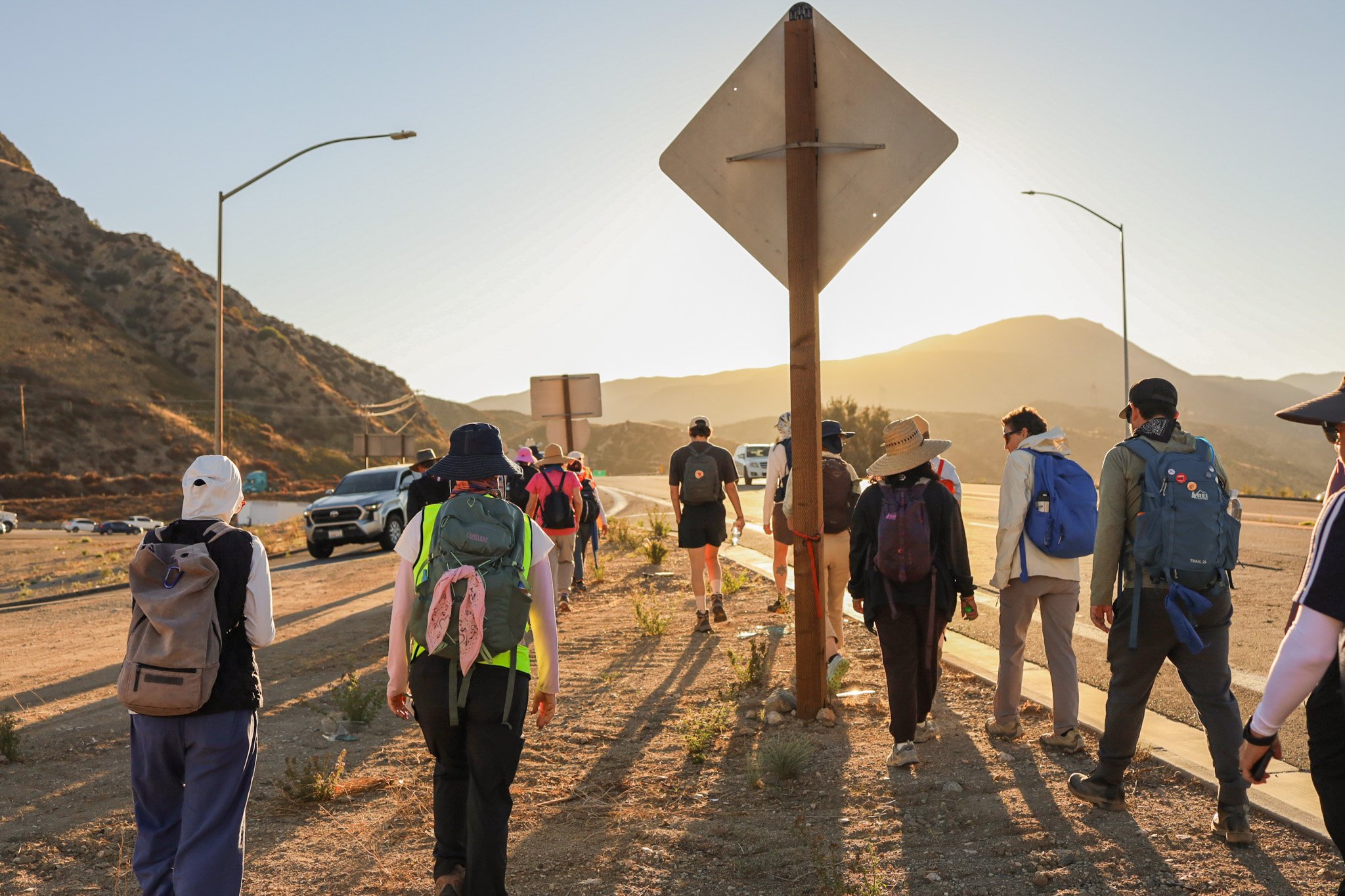
Throughout the eight-day journey, the group contended with record-breaking heatwaves that scorched Southern California. Despite the physical toll, the pilgrims were met with support from local communities. Each evening, the core group was hosted by local sacred spaces, where they held vigils, shared communal meals, and engaged in storytelling. These gatherings centered on the lives of those currently suffering behind bars and served as a space for prayer and reflection.
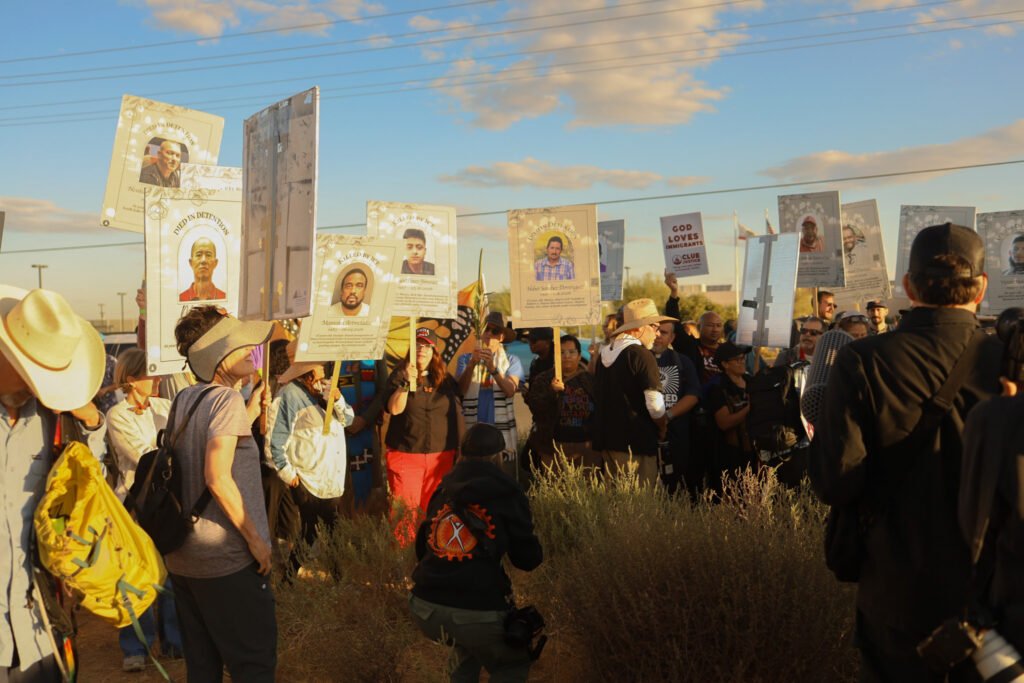
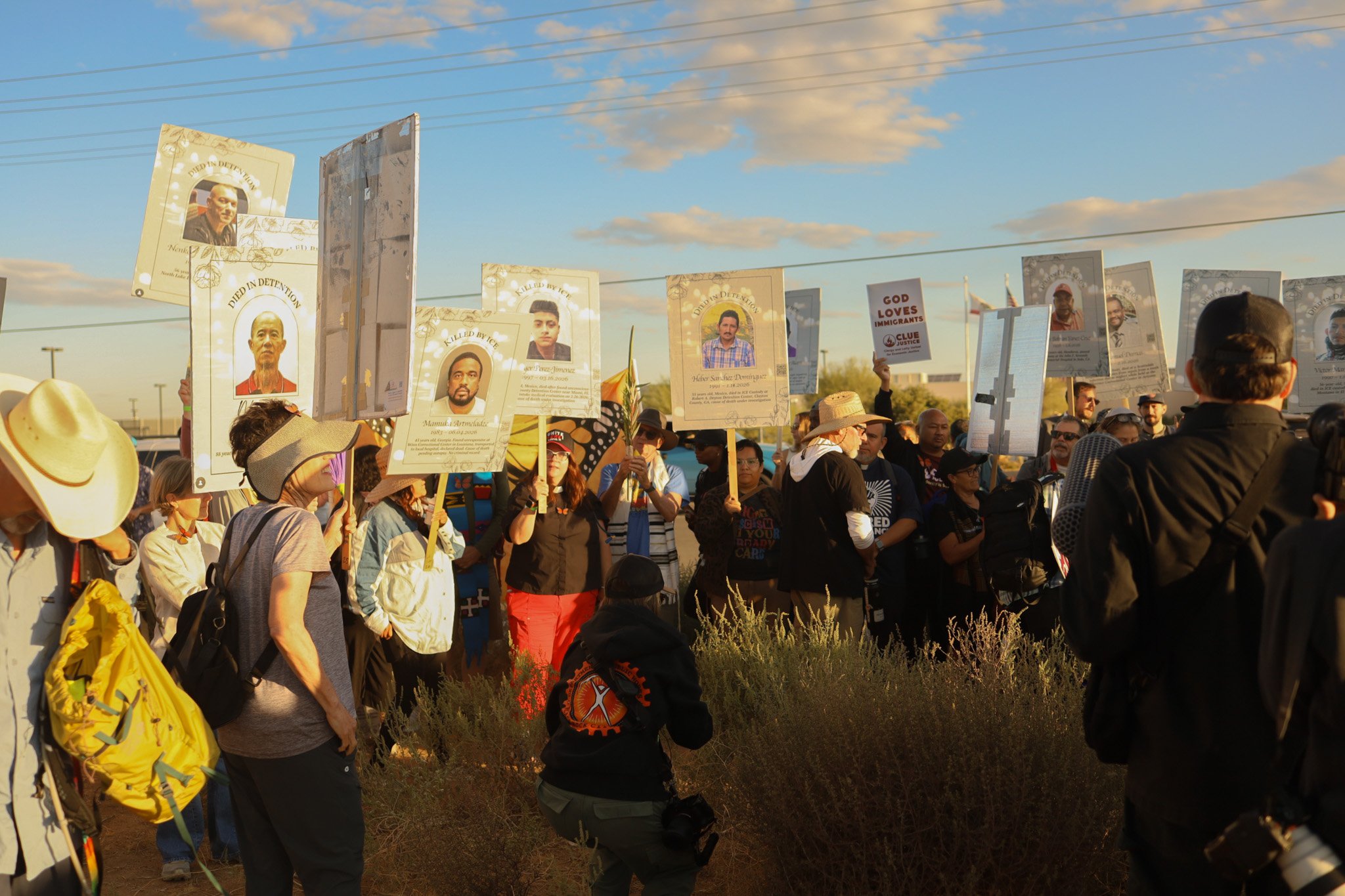
The final stretch of the pilgrimage took place on Tuesday, as approximately 200 supporters joined the core group for the walk from Alhambra into the heart of downtown Los Angeles. Musicians accompanied the marchers, and as the group neared Plaza de la Raza in East Los Angeles, the atmosphere was one of solidarity, marked by supportive honks from passing vehicles and groups of schoolchildren observing the procession. The event culminated in an emotional vigil where participants prayed for those “disappeared” by ICE.
The Reality of Detention: Data and Conditions
The pilgrimage was organized against a backdrop of surging detention numbers and reports of systemic abuse. As of July 2026, more than 65,000 people were held in ICE detention nationwide, a slight decrease from the record high of 73,000 reported in January. In California alone, eight detention centers were holding over 6,400 migrants as of mid-year.
The Adelanto complex, in particular, has faced intense scrutiny from federal and state oversight bodies. Investigations have repeatedly flagged the facility for inhumane living conditions, including poor nutrition, a lack of access to sunlight and clean water, and extreme temperature control failures—conditions that are particularly dangerous given the facility’s desert location.
The human toll of these conditions has been fatal. In the past year, at least two individuals have died after experiencing medical emergencies at Adelanto:
- Gabriel García-Avilés: The 54-year-old died of cardiac arrest in October 2025, just days after being processed into the facility.
- Ismael Ayala-Uribe: The 39-year-old died last month. Despite medical staff identifying a potentially life-threatening abscess, he was not transferred to a hospital for surgery in time to save his life.
"We’ve been very aware of the human rights abuses that have been happening inside the detention center—the medical neglect at an extreme level, the spoiled food, lack of access to clean water and sunshine," said Jennifer Gutierrez, Executive Director of CLUE Justice.
Faith and Resistance: Challenging Christian Nationalism
The pilgrimage serves as the most recent, and perhaps most high-profile, instance of religious leaders engaging in direct action to protest immigration policy. In recent months, clergy across the country have faced arrest for demonstrating at sites ranging from New Jersey to Vermont and Minnesota.
Organizers see this movement as a direct counter-narrative to the rise of Christian nationalism, which they argue has been weaponized by the Trump administration to justify harsh crackdowns on vulnerable populations.
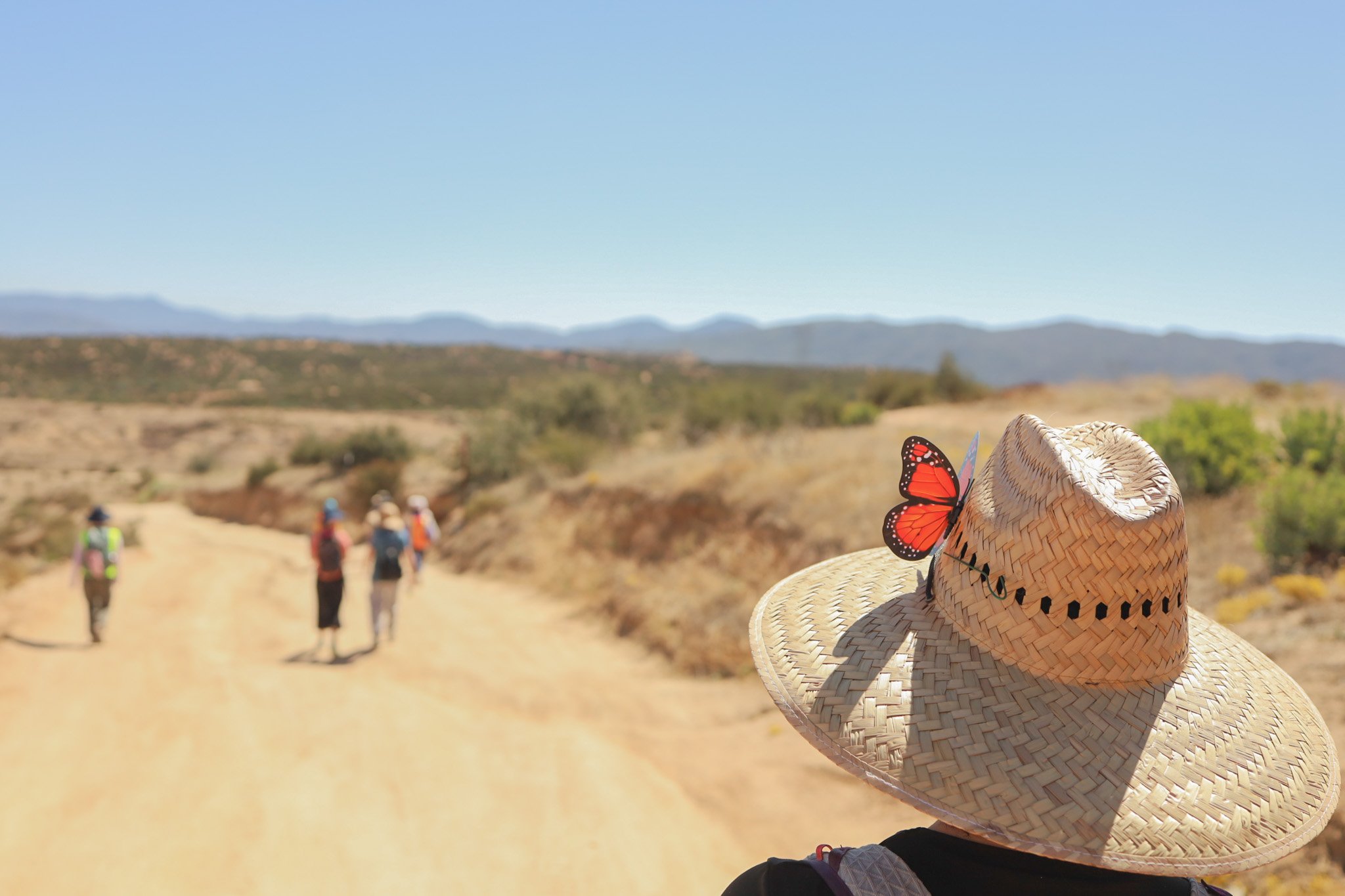
"It’s such a trend within the MAGA movement to use the Bible to push an agenda that is so antithetical to the teachings they claim to adhere to," said Michelle Arkin, a lead organizer with No Concentration Camps California. "To be able to claim our faith, and the Bible, and the teachings of Christ and to stand to protect people and act as Christ calls us to act, that to me is a huge gift."
Jennifer Gutierrez echoed this sentiment, framing the pilgrimage as a spiritual necessity. "Many spiritual traditions have traditions of pilgrimage as a sacred practice," she explained. "It’s typically to a sacred site, and the idea is that while you’re physically traveling to that site, you are also on a spiritual journey getting closer to God. This is us taking a spiritual journey and a way of calling out where we have been separated from God, where we have failed as a culture, as a society, as a country to follow God’s commands, to care for our neighbor."
Institutional Implications and Future Advocacy
The coalition behind the pilgrimage—including the Inland Coalition for Immigrant Justice, Matthew 25, and others—has been expanding its advocacy beyond symbolic walks. CLUE Justice, which has been working with Southern California migrant workers since 1997, has intensified its efforts following a series of violent raids in Los Angeles in June 2025. Reports suggest that over 1,300 people were abducted by federal agents during that period.
In response, these organizations have established:
- Immigration Bond Funds: Financial mechanisms designed to help detainees secure release and return to their families.
- Clergy Visitation Programs: Training initiatives that prepare faith leaders to visit detention centers, provide emotional support, and monitor conditions inside the facilities.
- Public Awareness Campaigns: Using events like the 96-mile pilgrimage to force public conversation about the scale of incarceration in the United States.
As the pilgrimage concluded, the organizers signaled that this was only the beginning of their efforts to "clear the road to freedom." The event successfully brought together a disparate group of activists, faith leaders, and families, creating a unified front against a system that many feel has become invisible to the average citizen.
For participants like Cristiana, the pilgrimage provided a necessary sense of agency in the face of systemic cruelty. "Walking the 96 miles, reliving driving my girls to see their dad, it is extremely painful," she admitted. "But at the same time, knowing that God is walking with me and holding me in his arms is a healing process. It warms my heart to know that people are stepping up and saying ‘enough.’"
The organizers remain adamant that until the detention numbers decrease and the standard of care for migrants is fundamentally overhauled, the protest movement will continue to grow, bringing the realities of the detention system out of the desert and into the public conscience.

 Suro Senen

 Nila Kartika Wati






