



 Nana Wu
In the landscape of modern American education, a pervasive, corrosive instinct dominates the conversation: the mindset of scarcity. We hoard resources, protect institutional turf, and engage in zero-sum battles over funding—pitting public schools against families and innovation against tradition. This survival-based behavior, while deeply human, has trapped our educational systems in a cycle of stagnation. As we face a reality defined by declining birth rates, aging infrastructure, and a public that has increasingly lost faith in institutional models, the need for a fundamental shift—from scarcity to abundance—has never been more urgent.
The Anatomy of a Systemic Crisis: Why the Old Walls Must Come Down
Our education system is not failing because it lacks resources; in fact, the total capital flowing into the American school system has reached trillion-dollar heights. Rather, the system is failing because it has drawn its walls in the wrong places. It is governed by competing silos, designed for an industrial-era economy that no longer exists, and restricted to serving a fraction of the population that could benefit from its assets.
The crisis is not isolated to any single geography. From rural districts in the heartland to sprawling urban centers like Denver, Chicago, and Los Angeles, the symptoms are identical: strained post-pandemic budgets, under-enrolled facilities, and a disconnect between the classroom and the community. As former Chicago Public Schools CEO Janice Jackson has noted, these demographic and fiscal shifts are not temporary blips—they are the new reality. To continue operating under the assumption that we can simply "patch" the current model is to ignore the structural obsolescence of the status quo.
A Case Study in Necessity: The Denver Proposal
The push for a new paradigm is best illustrated by the recent discourse surrounding Denver Public Schools (DPS). Former Denver Mayor Federico Peña, in a provocative call to action, suggested that the system’s current trajectory is unsustainable. Peña’s proposal is not merely about trimming fat; it is a fundamental call to rethink governance.
When a district faces declining enrollment and fiscal fragmentation, the instinct is often to cut programs or shutter schools. However, this reactionary approach ignores the potential for systemic synergy. By integrating school governance with city infrastructure, we could theoretically eliminate the redundant bureaucracies—HR, legal, accounting—that currently drain funds away from the classroom. The goal is a unified system where resources flow toward student outcomes rather than administrative maintenance.
A Brief History of Mayoral Control: Accountability and Its Limits
To understand the current appetite for radical reform, one must look at the evolution of school governance. For over a century, the elected school board model remained the untouchable standard. That changed in 1983 with the release of A Nation at Risk, which galvanized political and corporate leaders to demand a "single point of accountability" for failing big-city districts.
Beginning in the late 1980s, a wave of major cities—including New York, Boston, Chicago, and Philadelphia—experimented with "mayoral control." The logic was simple: align the school district’s leadership with the city’s executive branch to drive efficiency, increase voter turnout, and force academic improvement.
Chronology of the Mayoral Governance Movement
- 1862: The modern school board model solidifies as the standard for local governance.
- 1983: A Nation at Risk serves as the catalyst for questioning the efficacy of traditional school boards.
- 1990s-2000s: A "Mayoral Control" surge sweeps through Boston, Chicago, New York, and other major urban centers.
- 2004: Detroit dissolves its experiment with mayoral control after failing to realize promised improvements.
- 2007: Los Angeles ends its foray into mayoral oversight following constitutional challenges.
- 2025/2026: A renewed, modern push begins for a total merger of city and school assets, transcending simple control to focus on resource integration.
Evaluating the Results: Did Centralization Work?
The historical record on mayoral control is, at best, a study in "sometimes." In cities like New York and Boston, the model produced initial, significant gains. Under the leadership of Superintendent Tom Payzant in Boston, for example, the percentage of Latino fourth graders proficient in reading effectively doubled. New York City saw sustained increases in graduation rates and a more efficient allocation of funds toward the classroom.
However, these gains often proved to be front-loaded or dependent on specific, charismatic leaders rather than structural integrity. The New York State Education Department eventually noted that these academic improvements were not consistent across all grades and did not reliably narrow race- and class-based achievement gaps. In many cases, the shift toward mayoral control led to top-down mandates that marginalized community voices, resulting in closures and privatization efforts that disproportionately harmed vulnerable neighborhoods.
The lesson here is not that centralization is inherently evil, but that centralization without community power is dangerous. The current challenge, therefore, is to avoid the pitfalls of the past by designing a structure that is not just centrally controlled, but genuinely integrated and transparent.
Implications: Moving Toward an Abundant Future
If we are to move forward, we must stop asking "who is in charge" and start asking "what are we trying to achieve?" The path forward involves three core shifts in philosophy and operation.
1. Rethinking Governance: The Unified City Model
The part-time oversight provided by traditional school boards is increasingly mismatched with the complexity of modern educational enterprises. A total merger of city and school government—where the City Council assumes oversight and the superintendent acts as a cabinet-level official—would unify the tax base and provide a single point of accountability. This would eliminate the "tug of war" between city hall and the school board, allowing for a coherent vision for the future of the municipality.
2. Rethinking Financing and Assets: Eliminating Silos
Current fiscal policy is a labyrinth of siloed bonds, federal Title funds, and city budgets. A consolidated system could leverage massive efficiencies. Consider, for example, transportation. National expenditures for pupil transportation exceed $28 billion annually, with districts bearing an increasing share of that cost. By coordinating school transit with public transportation, cities could save millions. Furthermore, school facilities—gyms, pools, and fields—should be treated as public assets, open to the community year-round rather than locked behind fences for two-thirds of the day.
3. Rethinking the "Learner": Lifelong Infrastructure
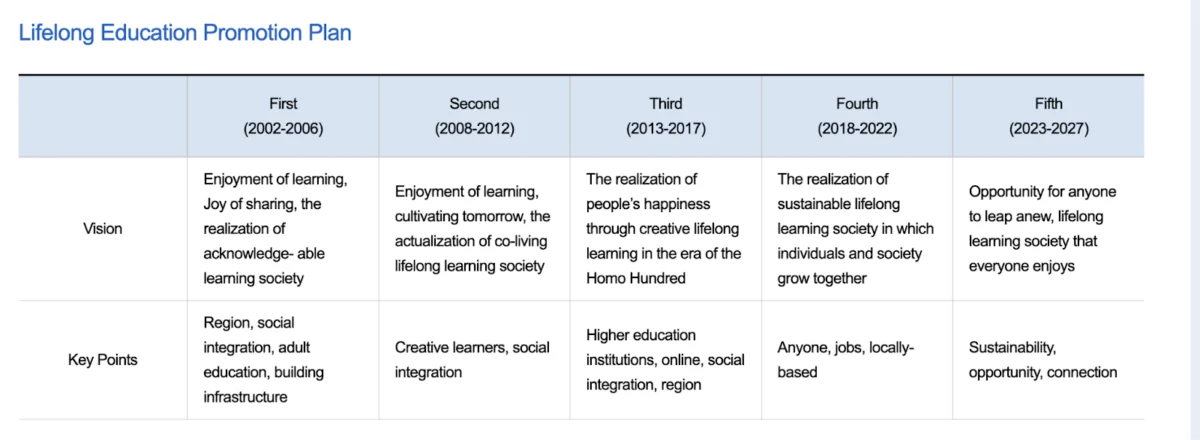
Perhaps the most disruptive idea is to redefine who we serve. Why should high schools be exclusively for teenagers? In an era where lifelong learning is a professional necessity, local high schools and skills centers could become community hubs for upskilling, reskilling, and entrepreneurial development. By allowing community members to access these spaces, we turn the school from a "silo for kids" into a "center for community prosperity."
Official Perspectives and The Path Ahead
Critics of these models rightly point to the complexity of the transition. Amending state constitutions, navigating entrenched union contracts, and untangling decades of bond commitments are daunting tasks. Yet, as the costs of our current, failing architecture continue to rise, the "risk" of innovation begins to look far more manageable than the "certainty" of decline.
Innovative districts like Cajon Valley in California and Forney in Texas are already proving that when you co-locate social services, business opportunities, and educational resources, you create a more resilient, thriving ecosystem. The objective is not just to change the leadership of the school district; it is to redesign the system itself so that it serves the entire community.
Conclusion: A Call for Cultural Transformation
Ultimately, this is not just a policy innovation; it is a cultural one. We must let go of the industrial-era reliance on uniformity and move toward a design philosophy rooted in interoperability, trust, and abundance.
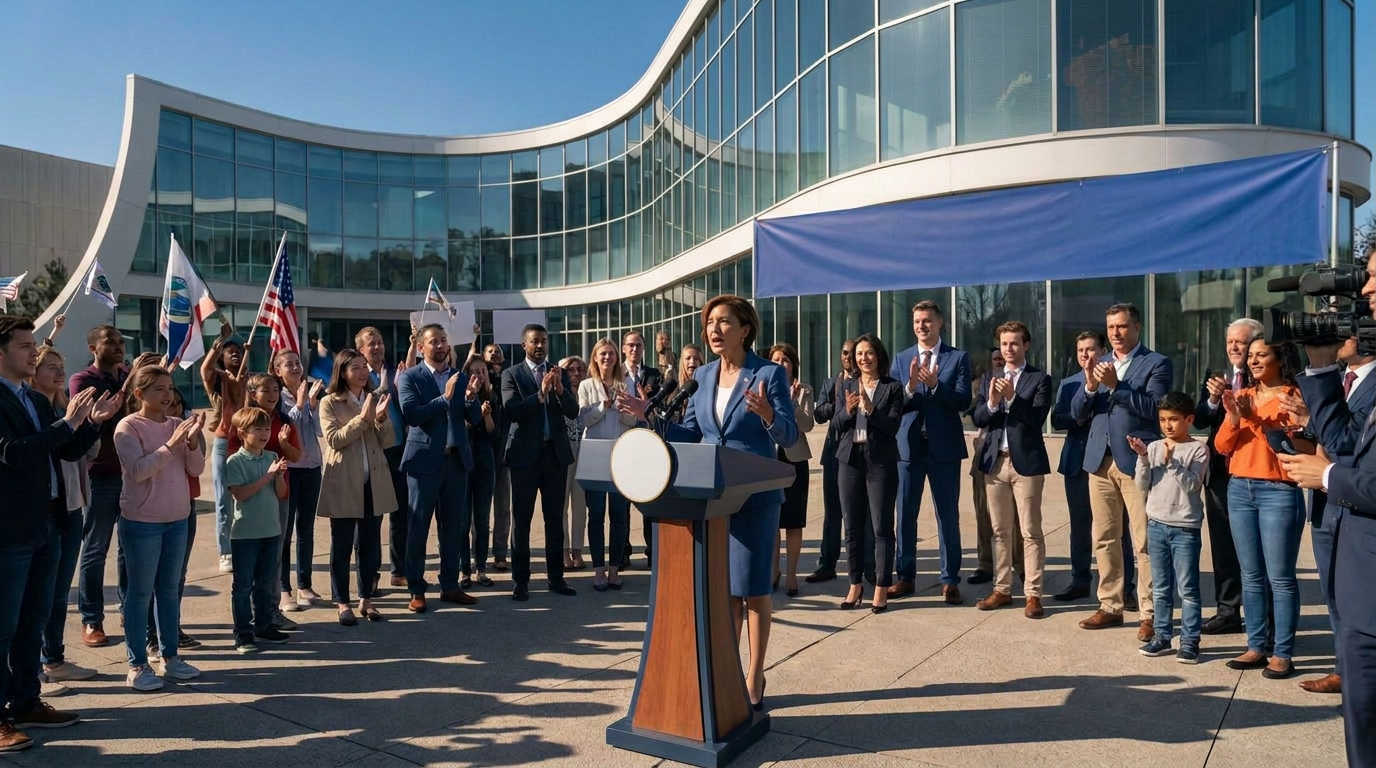
Peña’s vision for a merged city-school system is akin to a high-stakes business merger—the new enterprise has the potential to be significantly more efficient, improve service delivery, and create entirely new lines of "business" for the community. As we look to the future, we must summon the courage to build systems where all learning counts, where assets are shared, and where we finally move past the scarcity mindset that has held our students—and our cities—hostage for too long. The inaugural address of a "future mayor" might one day read as a rallying cry for exactly this: a city that learns together, grows together, and thrives in abundance.


 Laily UPN

 Nila Kartika Wati