
 Ali Ikhwan
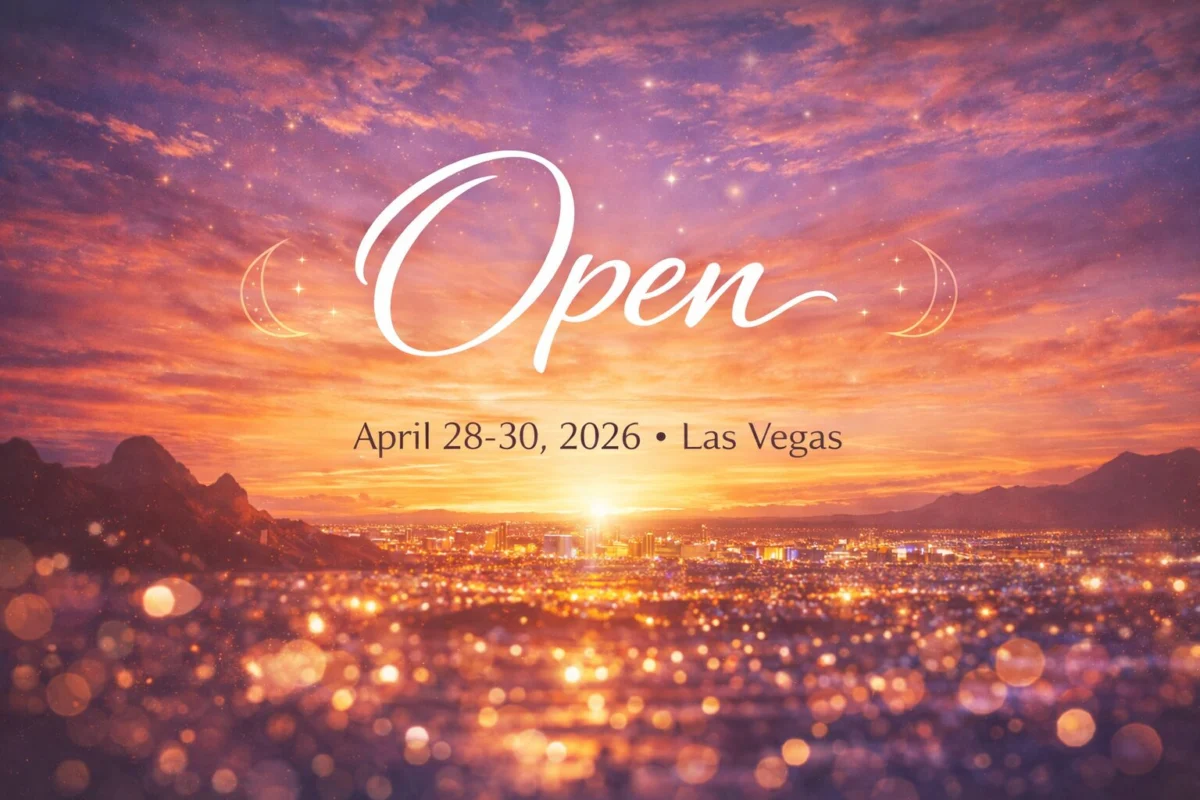
LAS VEGAS — In a surprising departure from the traditional digital-first, lecture-based seminar model that has defined the personal development industry for decades, Steve Pavlina, one of the internet’s most prominent voices in self-growth, has announced a highly unconventional, in-person gathering titled "Open."
Scheduled to take place from April 28–30, 2026, in Las Vegas, the event is positioned not as a structured educational workshop, but as an "inner-directed, experiential space." With registration now officially open, the event promises a departure from the high-production, slide-deck-heavy conferences common in the industry, opting instead for a minimalist approach focused on human presence and emotional resonance.
Main Facts: The Anatomy of "Open"
The announcement, released just two weeks ahead of the event, highlights a lean timeline and a clear departure from standard event logistics.
- Dates: April 28–30, 2026.
- Location: Las Vegas, Nevada.
- Format: In-person, experiential, non-recorded.
- Capacity: Strictly capped at 150 attendees.
- Core Methodology: A blend of reflection, gentle movement, emotional awareness, and collective presence.
Unlike traditional seminars that prioritize a one-to-many flow of information—where a speaker imparts wisdom to an audience—Pavlina describes "Open" as a space designed to harmonize the relationship between the individual and the broader concept of "Life." The event is explicitly designed for those seeking a shift in their state of being, focusing on clarity, freedom, and the attainment of a "flow state" rather than the acquisition of specific business or life-hacking tactics.
Chronology: The Evolution Toward Presence
To understand the significance of "Open," one must look at the trajectory of Steve Pavlina’s career. For over two decades, Pavlina has been a central figure in the online personal development space, pioneering long-form, analytical content that tackled everything from polyphasic sleep to conscious business models.
The Digital Era (2004–2020)
For years, the Pavlina model was defined by high-volume, text-based inquiry and structured digital courses. His work helped define the "self-help blog" era, providing thousands of readers with frameworks for productivity, health, and spiritual alignment.
The Shift Toward Experiential Learning (2021–2025)
In recent years, observers have noted a marked shift in Pavlina’s output. His focus transitioned from "how-to" methodologies toward the study of subjective reality and deep-seated psychological exploration. The decision to host an unrecorded, intimate event in 2026 represents the culmination of this transition. By removing the digital tether—no streaming, no recordings—Pavlina is effectively creating a "walled garden" of experience, where the value lies entirely in the immediacy of the moment.
The Immediate Call to Action
The two-week window between the announcement and the event is a deliberate design choice. It bypasses the traditional "marketing funnel" associated with large conferences, attracting only those who are already in alignment with his current philosophy. This creates a self-selecting cohort of participants who are, by nature of their prompt registration, already "open" to the experience.
Supporting Data: The Psychology of Intimate Gatherings
The choice to cap the event at 150 attendees is not arbitrary. This figure aligns with "Dunbar’s Number," the theoretical cognitive limit to the number of people with whom one can maintain stable social relationships. By keeping the group size under this threshold, the event fosters an environment where genuine connection—rather than networking—can occur.
The "Anti-Seminar" Effect
Recent trends in the personal development industry show a growing fatigue with "content saturation." Consumers are increasingly reporting burnout from digital courses, webinars, and information-heavy seminars. The "Open" model addresses this by:
- Removing the "Spectator" Barrier: By emphasizing shared presence, the event removes the hierarchy between teacher and student.
- Removing the Digital Archive: By refusing to record the sessions, the organizers are placing a high premium on the value of the present moment. This creates a "scarcity of experience" that paradoxically increases the psychological weight of the event.
- Prioritizing Somatic Engagement: The inclusion of "gentle movement" and "emotional awareness" suggests a move toward somatic experiencing—a therapeutic approach that focuses on the body’s physical response to trauma and growth, rather than just the intellectual analysis of it.
Official Responses and Participant Sentiment
While the event is in its infancy, the response from the long-term community has been one of curiosity mixed with high anticipation. Because Pavlina has spent years cultivating a readership that values introspection, the lack of traditional marketing assets—such as testimonials or a detailed curriculum—has not been a deterrent.
"This is the first time I’ve seen a shift from ‘teaching’ to ‘facilitating’ in this space," says one long-time industry observer. "Pavlina is betting that his audience has moved past the need for more information and is ready for a deeper, more visceral experience of connection."
Pavlina himself has remained focused on the simplicity of the proposition. Through his official channels, he has emphasized that the event is "warm, real, and deeply human," intentionally distancing the event from the "slick, corporate" vibe often associated with Las Vegas conferences. The goal is to create a pocket of stillness amidst the bustle of the city.
Implications: What "Open" Means for the Future of Personal Growth
The introduction of "Open" may signal a broader pivot in the personal development industry. If successful, this event could provide a blueprint for other thought leaders to follow.
1. The Death of the "Info-Product" Model
For years, the industry has relied on the perpetual creation of digital assets. "Open" suggests a future where the value proposition is the unrepeatable event rather than the repeatable product. This forces a higher standard of engagement for both the facilitator and the attendee.
2. Radical Authenticity as a Business Strategy
By opting for a smaller, more intimate setting, Pavlina is prioritizing quality of interaction over quantity of revenue. In a creator economy that often demands constant growth and wider reach, this move is a contrarian play. It suggests that, for high-level personal development, the "niche" is where the most profound transformation occurs.
3. The Revaluation of Presence
In an era increasingly dominated by AI, algorithmic content, and digital isolation, the physical, unrecorded, and human-centric gathering becomes a luxury item. "Open" posits that the most valuable commodity in 2026 is not information, but the capacity to be fully present with others.
4. A New Definition of "Harmonious Living"
The event’s focus on "harmony with Life" suggests a move away from the aggressive, goal-oriented language of the early 2000s (e.g., "crushing goals," "mastering productivity"). Instead, it embraces a more holistic, fluid approach to existence. This is a significant shift for the industry, mirroring a broader cultural move toward mindfulness, emotional intelligence, and long-term mental health.
Conclusion: A Test of Intent
As the calendar approaches April 28, the success of "Open" will not be measured by ticket sales or social media engagement, but by the qualitative feedback of the 150 individuals who will occupy that space. By stripping away the bells and whistles of the modern seminar, Steve Pavlina is inviting his audience to engage in a social experiment: What happens when we stop trying to learn, and start trying to be?
For those seeking to participate, the call to action is clear and unadorned. The event is a reminder that in a world of infinite digital noise, the most revolutionary act may be to simply show up, be open, and exist in the presence of others.
Whether this becomes a permanent shift in the landscape of personal development remains to be seen. However, for those 150 participants in Las Vegas, the experiment promises to be a watershed moment in their own personal journeys toward clarity and flow. As Pavlina notes in his invitation, the event is for those who already know if it’s for them—a final, subtle filter designed to ensure that the room is filled with those who are ready to do the work of "opening."


 Muslim
 Suro Senen