




 Pevita Pearce
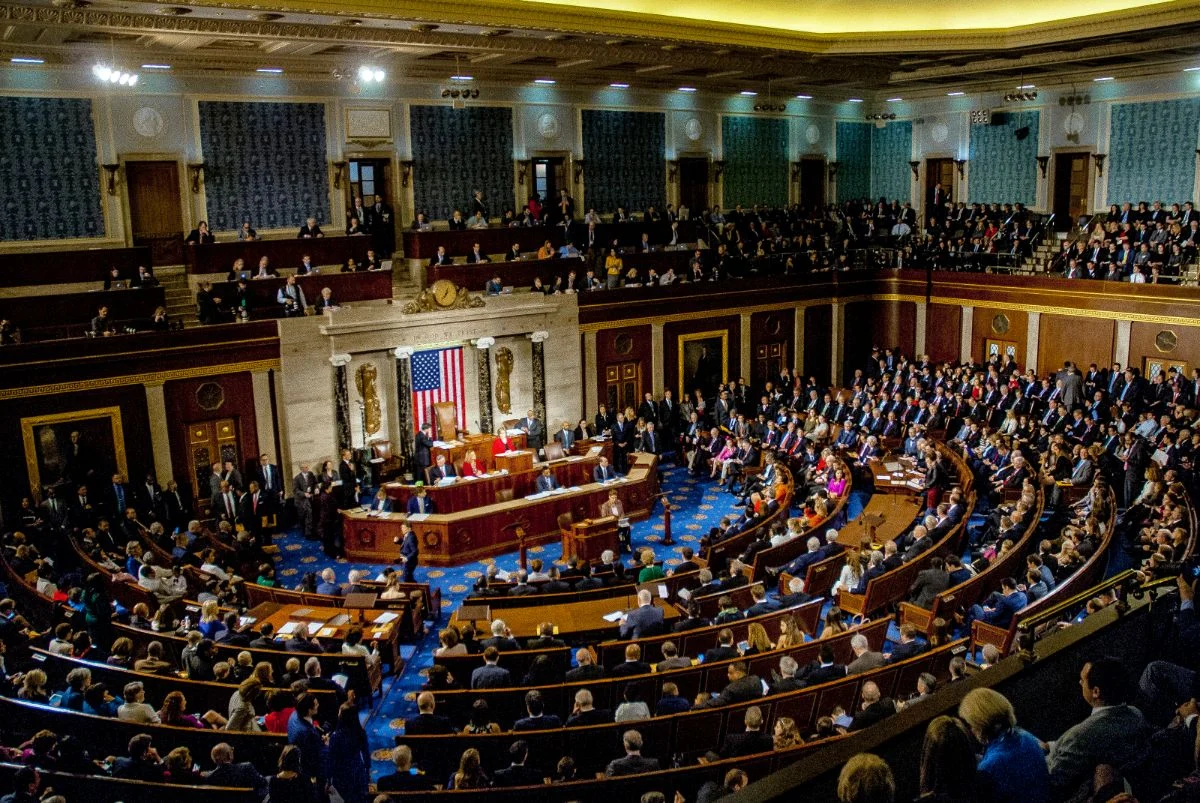
WASHINGTON, D.C. – A significant ripple moved through the corridors of the U.S. Senate this week as Republican Senator John Curtis (R-UT) issued a formal request to the Senate Judiciary Committee, urging a comprehensive investigation into the financial activities of presidential family members. The demand, which marks a rare cross-aisle alignment on the ethics of influence peddling, targets the business dealings, foreign entanglements, and potential conflicts of interest surrounding both Donald Trump Jr. and Hunter Biden.
The move has ignited a firestorm of political debate, casting a spotlight on the blurred lines between private commerce and executive power. As the nation grapples with questions of ethics and governance, the push for transparency has gained momentum from nonpartisan advocacy groups who argue that the integrity of the American political system hangs in the balance.
The Core of the Inquiry: A Demand for Oversight
In a letter addressed to the Senate Judiciary Committee on September 21, 2026, Senator Curtis outlined a series of pointed inquiries regarding the commercial activities of individuals within the immediate circles of the current and former administrations. The senator’s primary contention is that the proximity of these family members to the Oval Office creates an inherent risk of "influence peddling"—a practice wherein family names and political connections are leveraged to secure lucrative business deals, often with foreign entities.
The scope of the proposed investigation is expansive. It seeks to uncover:
- Foreign Influence: Whether business dealings have been used as conduits for foreign governments or entities to exert leverage over U.S. policy.
- Conflicts of Interest: The extent to which presidential family members have profited from sectors currently subject to intense administration regulation or deregulation.
- Transparency in Gifts: A full accounting of gifts, loans, and financial contributions received by these individuals during their family members’ tenures in office.
Curtis argues that the current lack of oversight constitutes a failure of the legislative branch to perform its constitutionally mandated role of checks and balances.
Chronology of Contention: A Brief History of Family Business Concerns
The intersection of presidential family interests and governance is not a new phenomenon, but the scale of the current allegations has prompted unprecedented concern.
- 2020–2024: During the initial years of the decade, national discourse was dominated by investigations into Hunter Biden’s international business dealings, specifically his ties to firms in Ukraine and China. These investigations set a precedent for how Congress scrutinizes the children of high-ranking officials.
- 2025 (The Second Trump Term): Following the inauguration of Donald Trump for his second term, observers noted a marked acceleration in the financial growth of the Trump family business. This period saw the family’s portfolio expand into high-growth sectors, including cryptocurrency, artificial intelligence, and prediction markets.
- Early 2026: Reports surfaced suggesting that various Trump family ventures were the beneficiaries of deregulation policies pushed by the executive branch. Specifically, questions were raised regarding the intersection of taxpayer-funded Defense Department contracts and the family’s private investment vehicles.
- September 2026: Senator John Curtis formalizes his request for a bipartisan probe, explicitly grouping the Trump and Biden family inquiries to emphasize that the investigation is based on the principle of accountability rather than partisan retribution.
Supporting Data: The Financial Landscape
The urgency of the investigation is driven by a series of disclosures that have raised eyebrows in both the financial and ethics communities. Critics point to the timing of specific administration policy announcements alongside the growth of family-linked investment funds.
The Rise of "Policy-Adjacent" Wealth
During the current term, the administration has pursued an aggressive deregulation agenda, particularly in the tech and fintech sectors. Data indicates that investments linked to presidential family members saw significant appreciation following these announcements. For instance, the expansion of the family’s portfolio into AI-driven ventures coincided with the administration’s signing of executive orders that reduced oversight for AI development, effectively lowering the barrier to entry for firms in which the family held significant stakes.
The Defense Department Nexus
One of the more contentious elements of the current debate involves Defense Department contracts. Records indicate that companies associated with presidential family interests have secured a higher volume of government procurement contracts compared to the previous cycle. While there is no evidence of direct illegality, transparency advocates argue that the appearance of a "pay-to-play" environment undermines public trust in the procurement process.
The "Foreign Influence" Variable
In his letter, Senator Curtis highlights the dangers of foreign individuals and companies seeking to curry favor with the administration by investing in family-run businesses. In an era of heightened geopolitical tensions, the concern is that such investments are not merely financial, but are intended to buy access or influence that would otherwise be unavailable to these entities.
Official Responses and Political Reaction
The response to Senator Curtis’s request has been polarized, reflecting the deep divisions within the capital.
The Advocacy Perspective
Maria McFarland Sánchez-Moreno, CEO of RepresentUs, has emerged as a vocal supporter of the inquiry. In a statement released shortly after the letter became public, she emphasized the nonpartisan necessity of the investigation:
"Senator Curtis’s call is a principled one, for Congress to do its job and investigate serious reports of influence peddling by presidential family members—regardless of party. Americans despise corruption, and accountability for it should not be a partisan issue."
Sánchez-Moreno’s organization, which focuses on anti-corruption and democratic reform, has long argued that the current political system allows for a "revolving door" of influence that benefits the elite while disenfranchising the average voter.
The Legislative Response
While some members of the Senate Judiciary Committee have expressed willingness to review the materials provided by Curtis, others remain skeptical. Some Democratic colleagues have voiced concerns that the investigation could be used as a political weapon to distract from other policy priorities. Conversely, some members of the Republican caucus remain hesitant to support a probe that could potentially scrutinize the Trump family, illustrating the delicate political tightrope Curtis is walking.
Implications: The Future of Ethics in Governance
The implications of this investigation, should it proceed, are profound. The primary goal is to establish a clearer set of standards regarding the activities of presidential families, potentially leading to new legislative frameworks.
Restoring Public Trust
At its core, this situation is about the health of the American democratic experiment. When citizens perceive that the highest offices in the land are being used for personal gain, the legitimacy of the entire system is threatened. An investigation, regardless of its outcome, provides a venue for public scrutiny that is essential for a functioning democracy.
Setting New Precedents
Should the Senate Judiciary Committee move forward, it could establish a new precedent for how Congress monitors the relatives of executive officials. This might involve:
- Mandatory Disclosures: Requiring presidential family members to disclose all foreign business dealings and investment interests upon the inauguration of a family member.
- Blind Trusts: Expanding the requirements for blind trusts to cover a broader circle of family members who are actively engaged in commerce.
- Conflict-of-Interest Recusal: Establishing clearer rules for when a president must recuse themselves from policy decisions that directly benefit family-linked enterprises.
The Peril of Inaction
Critics of the status quo argue that inaction is not a neutral position. By failing to investigate, Congress effectively signals that influence peddling is an acceptable byproduct of presidential power. This, they argue, creates a "race to the bottom" where the standard for ethics is lowered with each subsequent administration.
Conclusion
As Senator Curtis’s letter awaits a formal response from the Senate Judiciary Committee, the nation is forced to confront uncomfortable truths about the relationship between political power and private wealth. Whether this call for an investigation leads to substantive reform or remains a symbolic gesture remains to be seen. However, the discourse itself underscores a growing demand among the American electorate for a government that is transparent, accountable, and fundamentally committed to the public interest over private gain.
RepresentUs and other watchdog organizations are expected to continue monitoring the situation, pushing for a rigorous, nonpartisan examination of the evidence. For now, the spotlight remains fixed on Washington, where the Senate must decide if it will rise to the challenge of upholding the ethical standards upon which the American government was founded.
The coming weeks will be critical as committee members weigh the political consequences of launching an inquiry that could redefine the boundaries of presidential conduct for years to come. In the balance, perhaps, is not just the reputations of the families involved, but the very integrity of the democratic institutions that govern the United States.

 Lina Irawan
 Lina Hope






