


 Lina Hope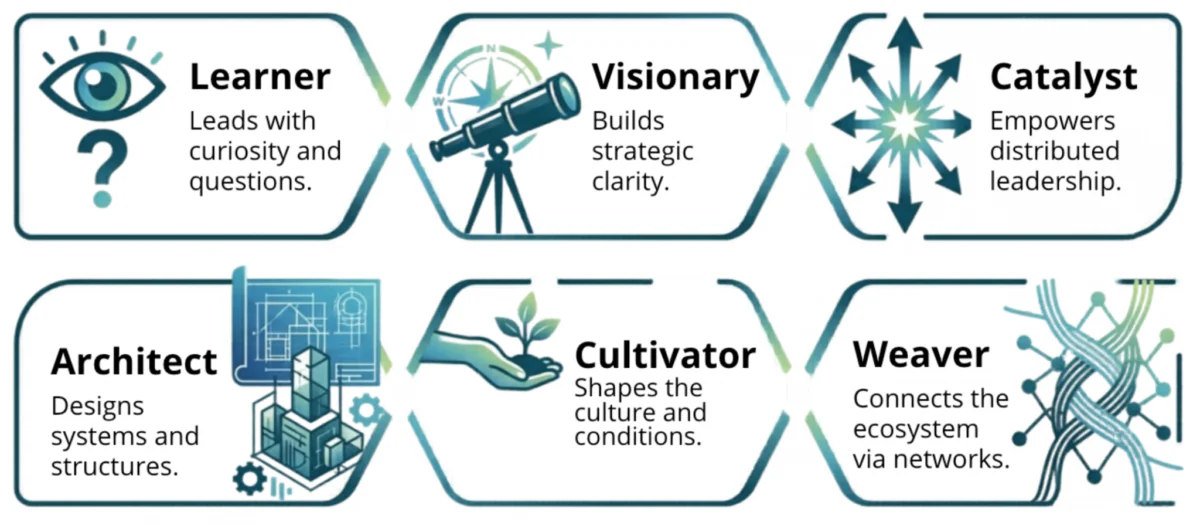
For many education leaders, the daily experience is defined by a relentless cycle of "putting out fires." The to-do lists are endless, the crises are immediate, and the pressure to deliver results in a high-stakes environment is constant. Yet, the current educational landscape is not merely experiencing a rough patch; it is undergoing a profound, catalytic shift.
To lead effectively today, administrators and educators must move beyond reactive management. They must cultivate the capacity to reflect, adapt, and lead through the structural changes currently reshaping the world of Generation Alpha. This requires a fundamental redesign of both how we operate as systems and how we develop the professionals within them.
The Six Big Shifts Reshaping Our Education System
The world today bears little resemblance to the industrial-era models upon which our current school systems were built. Generation Alpha—the first generation born entirely in the 21st century—is growing up in an environment defined by six distinct, accelerating forces. While political cycles certainly add a layer of volatility, the following structural shifts represent the long-term reality that school leaders must address.
1. Technology: From Consumption to Agency
Over the last thirty years, we have transitioned through three macro-leaps in pedagogy:
- Accessing Information: The birth of the internet allowed us to find anything.
- Connecting: The rise of social media enabled us to interact with anyone.
- Building: The Generative AI explosion now allows us to build anything.
Generation Alpha is not merely consuming content; they are becoming creators. With simple text prompts, students can now generate media, code, and entire digital ecosystems. However, this ease of use brings a hidden danger: "cognitive off-loading." Without careful intentionality, students risk a decline in critical thinking skills if they rely too heavily on AI companions to do the heavy lifting of synthesis and problem-solving.
2. The Future of Work: Competency Over Knowledge
In an era where information is ubiquitous and essentially free, the traditional educational value chain has collapsed. The ability to memorize facts is no longer a primary differentiator. Instead, the modern workforce demands curiosity, curation, and judgment.
"Durable skills"—such as empathy, complex problem-solving, and adaptability—have become the new currency. Employers are less interested in a transcript of memorized dates and formulas and more interested in a student’s ability to apply knowledge to demonstrate competency in real-world scenarios.
3. Enrollment: The Demographic Reality
We are currently witnessing a historic demographic cliff. Driven by long-term birth rate decreases, shifting immigration patterns, and a surge in educational alternatives, many public school districts are facing significant, structural enrollment declines.
As ESSER (Elementary and Secondary School Emergency Relief) funding concludes, the "cushion" that helped many districts survive the post-pandemic years has vanished. This is creating a permanent structural tightening that forces districts to make painful decisions regarding their operational footprint, staffing ratios, and physical facilities.
4. Market: The Decentralization of Choice
The educational marketplace has moved from a monopoly to a fragmented ecosystem. With the rapid adoption of universal school choice programs in many states, public funds are increasingly "backpacking" with individual students to their chosen environments.
Micro-schools, homeschooling collectives, and flexible, decentralized providers have evolved from niche alternatives into formidable market forces. For traditional public systems, this necessitates a transition from being the "default option" to being a destination of choice, competing in a landscape where students are increasingly mobile.
5. Learning: The Pedagogical Tug-of-War
Schools are currently caught in an intense conflict between two competing priorities. On one side, established "value networks" continue to force curriculum toward narrow, measurable outcomes like standardized test scores and attendance metrics. On the other side, the labor market and civic society are demanding "Learn Everywhere" approaches, which prioritize real-world learning, civic engagement, and flexible credentialing. Reconciling these two worlds is perhaps the greatest challenge for the modern curriculum director.
6. Staff: The Talent Crisis
Great schools are built on great people. However, data from the RAND Corporation and other research bodies suggests that teacher well-being has reached a critical low. Compounded by a sharp decline in teacher preparation program enrollments, the talent pipeline is drying up. Attracting and retaining top-tier talent is no longer just an HR task—it is a survival strategy.
The Competencies for Every Leader: A New Blueprint
To survive and thrive during this period of disruption, educational leaders must build more resilient, agile organizations. While leadership development is common, many systems lack a clear "Portrait of a Leader" to guide professional growth. By analyzing current research and innovative models—such as those pioneered by KnowledgeWorks and the ASU Next Education Workforce—we can identify six critical personas for the modern leader.
The Six Leadership Personas
1. The Learner
The best leaders today are those who reject the performative pressure to have all the answers. By modeling curiosity, they create a culture of safety where innovation can flourish. A leader who asks "What are we learning?" rather than "Why did this fail?" builds high-trust organizations.
2. The Visionary
Strategic clarity is the antidote to chaos. The Visionary ensures that amidst the noise of policy shifts and enrollment declines, the core mission—human flourishing—remains the north star. Whether it is a classroom teacher or a superintendent, a clear vision provides the necessary "wayfinding" for the entire school community.
3. The Catalyst
Drawing from Self-Determination Theory, the Catalyst understands that motivation thrives on three pillars: autonomy, competence, and relatedness. They do not command; they create conditions where teachers and students feel a sense of agency, belong to a community, and understand the "why" behind their work.
4. The Architect
Architecture is the art of design. The Architect designs structures—schedules, staffing models, and communication loops—that protect the most valuable resource in education: time for student relationships. If the system is designed to favor bureaucracy over human connection, it is the Architect’s role to tear it down and rebuild it.
5. The Cultivator
If the Architect designs the structure, the Cultivator nurtures the ecosystem. They manage the conditions, capacity, and commitment of the staff. This means ensuring that professional development is not a one-off seminar but a continuous process of building the skills necessary to handle modern classroom challenges.
6. The Weaver
The Weaver is perhaps the most important role in a decentralized, market-driven era. They combat professional isolation by connecting their teams to broader learning networks, community partners, and industry experts. By "weaving" their school into the fabric of the wider world, they ensure that learning remains relevant and connected.
Implications and The Path Forward
The realization of this leadership model is not an individual burden; it is a team sport. No single administrator can be a perfect Learner, Visionary, Catalyst, Architect, Cultivator, and Weaver simultaneously. Instead, systems must distribute these roles across leadership teams.
The Urgent Call to Action
The landscape of education is shifting beneath our feet. For those in leadership positions, the following questions are no longer optional—they are mandatory:
- Reflect: Which of the six systemic shifts is posing the greatest threat to your specific school or district?
- Assess: Of the six leadership personas outlined above, which one does your team most desperately need you to embody right now?
- Plan: How will you intentionally develop these competencies this week, this month, and this year?
The students of Generation Alpha deserve adults who are not merely reacting to the fires of the day, but who are actively building a future that reflects the complexity, opportunity, and humanity of the world they will inherit. The "to-do" list may never disappear, but by shifting our focus from management to leadership, we can transform the nature of the work itself. We must stop asking "What fire should I put out next?" and start asking, "How are we building a school system that serves the future?"

 Neng Nana
 Nana
Nana