


 Lina Irawan
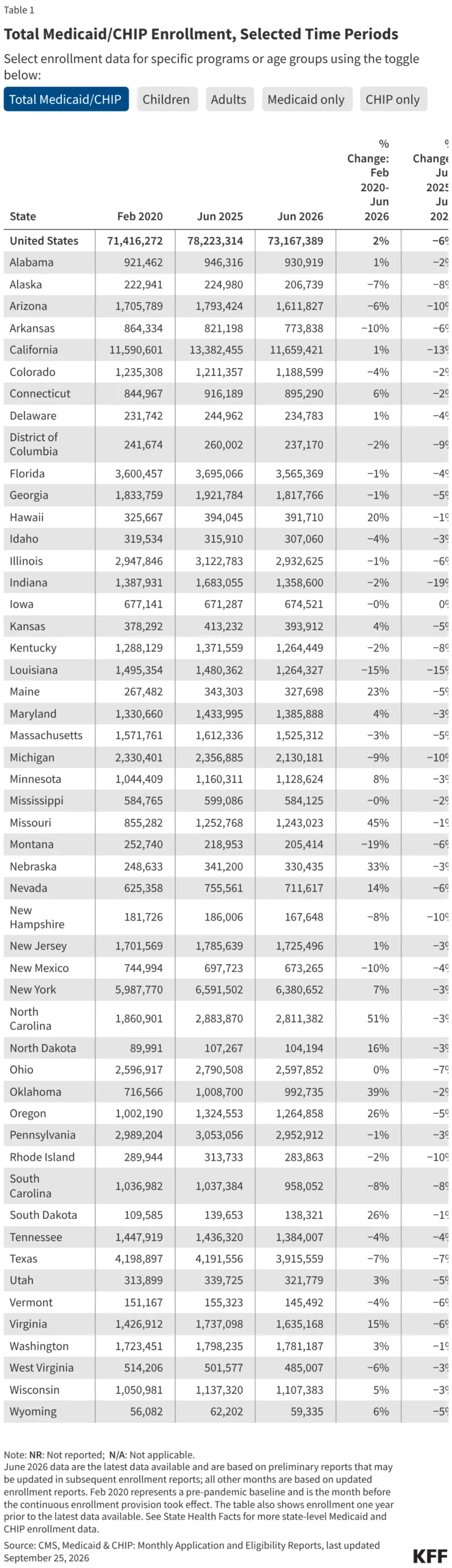
The landscape of the American public health safety net has undergone a seismic shift over the last several years. As the United States moves further into the post-pandemic era, the Centers for Medicare & Medicaid Services (CMS) continues to track the flux of the Medicaid and Children’s Health Insurance Program (CHIP) populations. This report synthesizes the latest enrollment data, analyzes the historical context of the pandemic-era "continuous enrollment" provision, and examines the looming implications of federal policy changes established by the 2025 reconciliation law.
Main Facts: The Current State of Enrollment
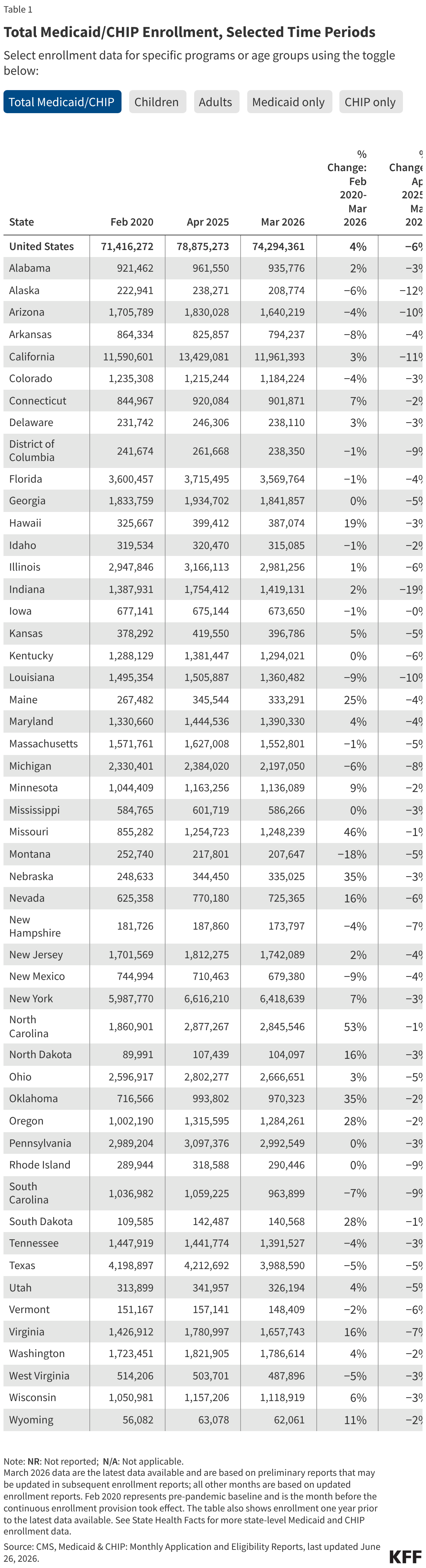
As of June 2026, the national Medicaid and CHIP landscape remains a complex tapestry of varying eligibility criteria and shifting administrative requirements. Monthly reports provided by CMS via the Performance Indicator Project offer a granular, though not exhaustive, look at the population currently covered by these essential programs.
A critical takeaway for policymakers and stakeholders is the distinction between "full-benefit" enrollees and the total population. Current CMS data primarily capture those receiving comprehensive benefits, effectively excluding individuals who rely on Medicaid solely for limited services, such as family planning. Consequently, while these figures serve as a vital barometer for general enrollment trends, they should not be interpreted as a census of the entire Medicaid-eligible population.
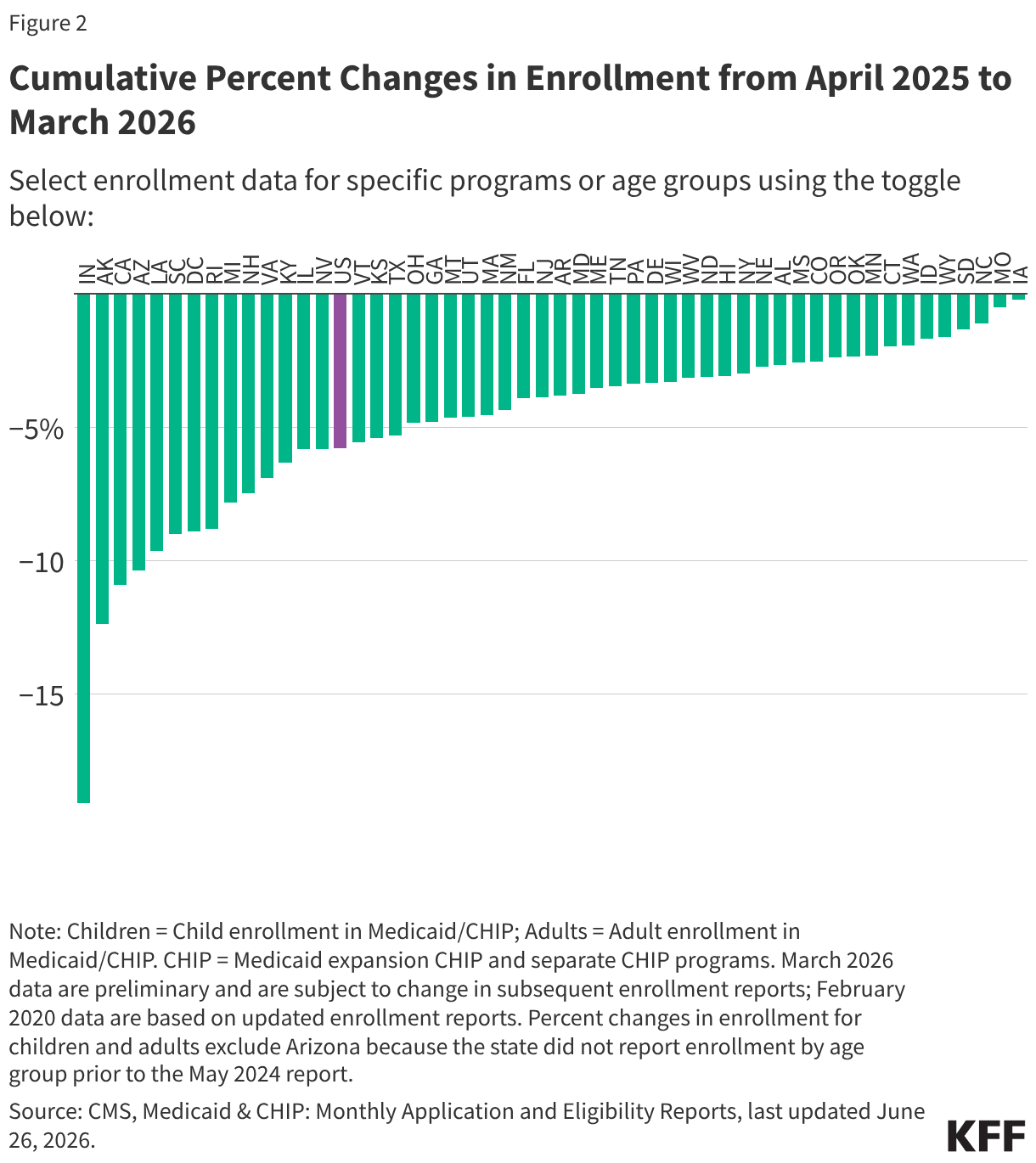
Key enrollment metrics as of mid-2026 suggest that while the immediate post-unwinding volatility has begun to stabilize, the long-term trajectory for enrollment is being shaped by new legislative pressures. The 2025 reconciliation law, which introduced stringent work and reporting requirements for certain expansion-group adults and those in specific 1115 waiver programs, is fundamentally altering the growth potential of the program. Analysts project that these requirements, which took effect in January 2027, will exert downward pressure on enrollment numbers over the coming decade.
Chronology: From Pandemic Protections to Redeterminations
To understand the current enrollment figures, one must look back to the onset of the COVID-19 pandemic. In early 2020, the federal government enacted the Families First Coronavirus Response Act, which included a "continuous enrollment" provision. This policy prohibited states from disenrolling individuals from Medicaid, regardless of changes in their eligibility status, in exchange for enhanced federal matching funds.
- February 2020: Representing the pre-pandemic baseline, this period serves as the primary benchmark for assessing how programs have grown and subsequently contracted.
- 2020–2023: The continuous enrollment period, characterized by unprecedented stability in coverage for tens of millions of Americans.
- 2023–2024 (The Unwinding): As the continuous enrollment provision expired, states began the massive administrative undertaking of "unwinding"—redetermining the eligibility of millions of enrollees. This period was marked by high rates of procedural disenrollment, where individuals lost coverage not necessarily because they were ineligible, but because they failed to complete the complex renewal paperwork.
- September 2024: The last major update for archival unwinding data. By this point, most states had finalized their primary redetermination cycles.
- January 2027: The implementation of new work and reporting requirements under the 2025 reconciliation law, marking the start of a new era of eligibility management.
Supporting Data: Dissecting Renewal Outcomes
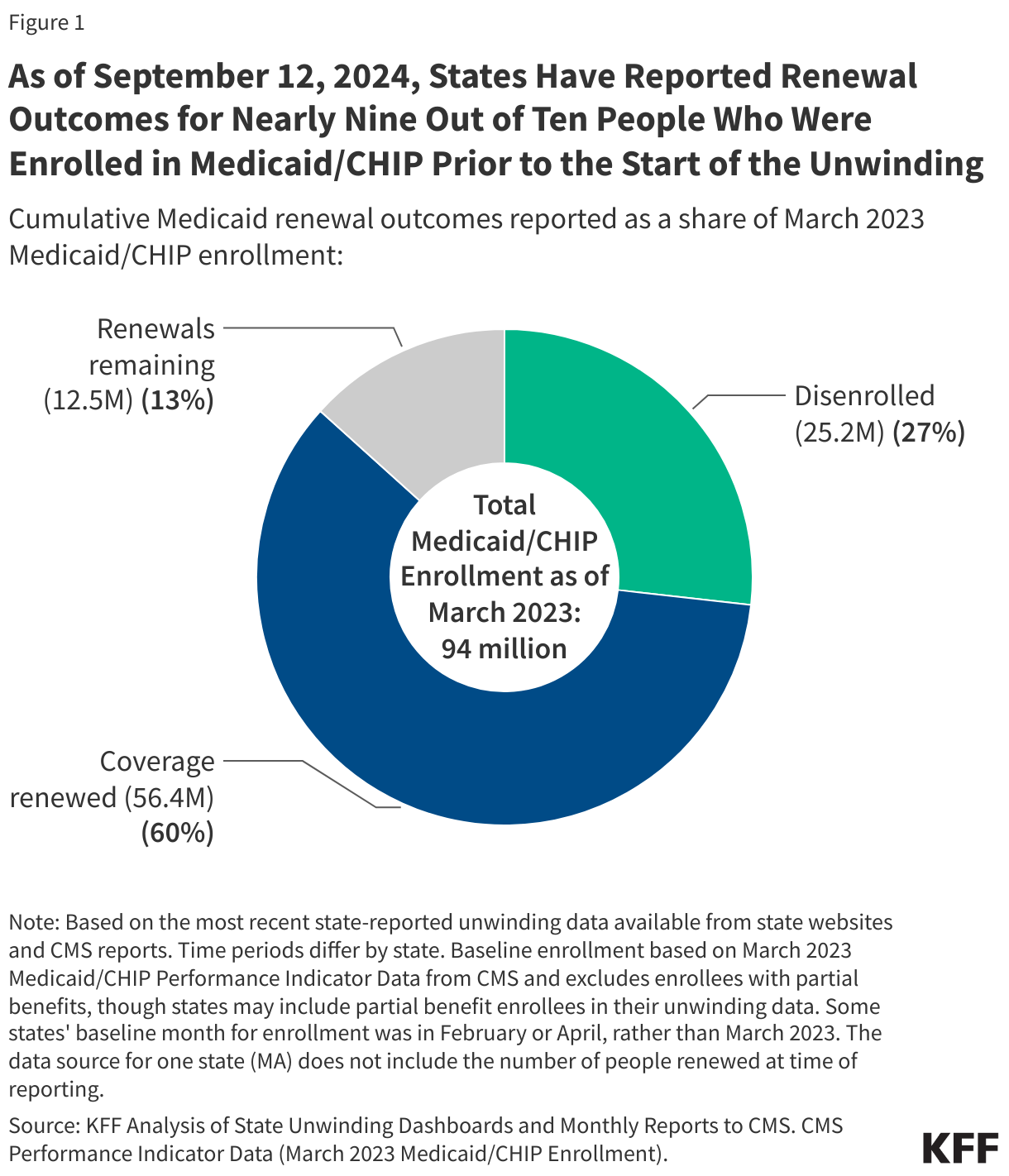
The "unwinding" process revealed deep systemic vulnerabilities in state administrative processes. As of September 12, 2024, the data indicated that states had reported renewal outcomes for nearly 90% of those enrolled prior to the unwinding.
The Procedural Disenrollment Crisis
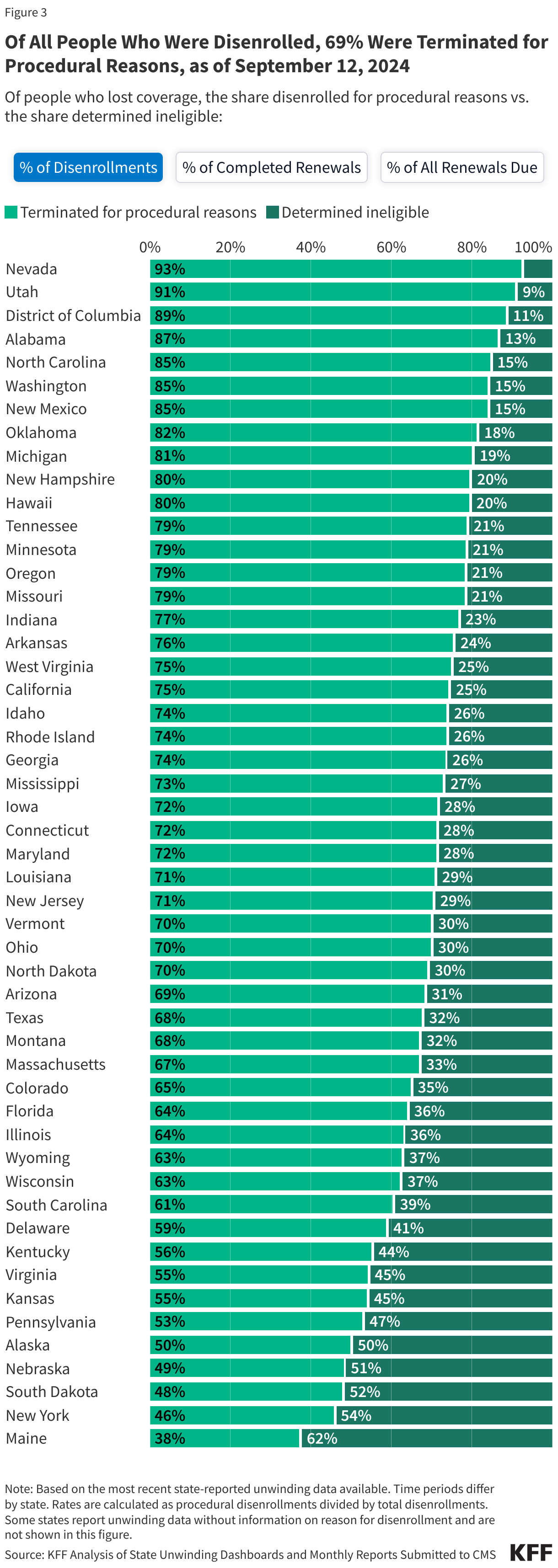
One of the most concerning findings from the unwinding period was the prevalence of "procedural disenrollment." When individuals were disenrolled, a staggering 69% were terminated due to procedural reasons—often a failure to return a renewal form or a lack of communication from state agencies. This suggests that millions of people may have been disenrolled despite potentially remaining eligible for coverage.
Regional Variation
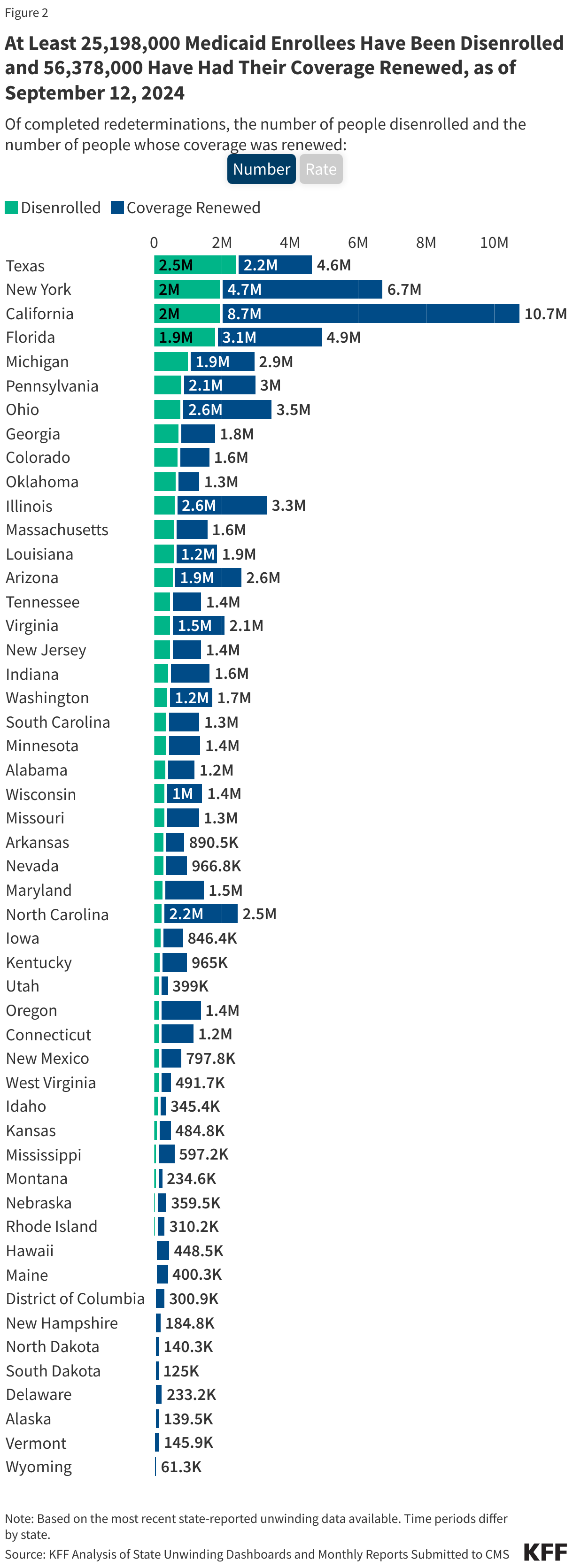
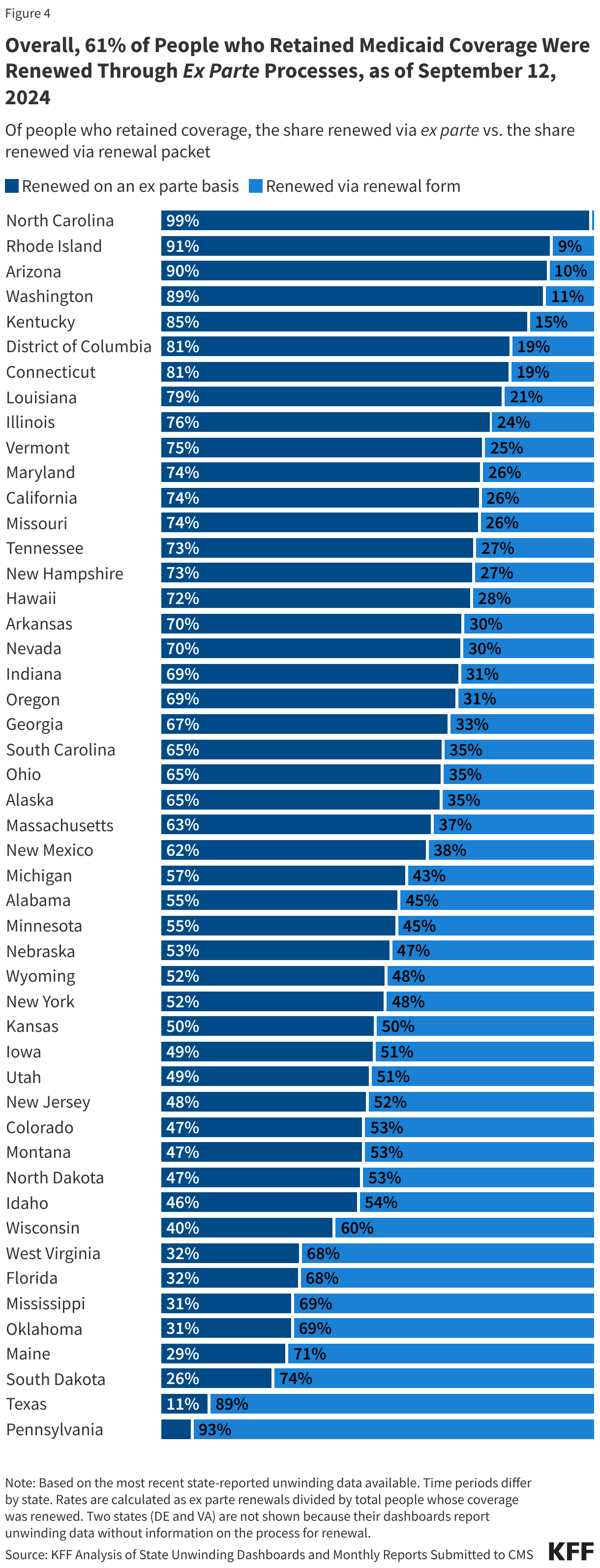
The data highlight a wide disparity in how different states managed the transition. For instance, disenrollment rates among completed redeterminations varied drastically, ranging from as low as 12% in North Carolina to as high as 57% in Montana. This variance underscores the impact of state-specific administrative capacity, outreach efforts, and the utilization of ex parte renewals (the process of verifying eligibility automatically using available data, rather than requiring the enrollee to submit new information). Overall, 61% of those who retained coverage were successfully renewed through these automated ex parte processes.
Official Responses and Methodology
The CMS monthly reports are the gold standard for monitoring the pulse of these programs, yet they are not without limitations. The data presented in this tracker are subject to the reporting schedules of individual states, which can result in a lag between actual enrollment changes and the publication of official figures.
Furthermore, CMS and state-level reporting often differ. States sometimes maintain proprietary dashboards that capture more up-to-date or granular information than the federal government’s consolidated datasets. The data provided by the Centers for Medicare & Medicaid Services through the Performance Indicator Project are considered preliminary for the most recent months, acknowledging that these figures may be adjusted as states finalize their case processing.
Implications: The Future of Medicaid
The shift toward more restrictive eligibility, particularly the work requirements mandated by the 2025 reconciliation law, represents a significant departure from the policy philosophy that governed the program during the pandemic.
Impact on Vulnerable Populations
The primary concern among health policy experts is the potential for "coverage gaps" to widen. As states implement new reporting requirements, the administrative burden on enrollees increases. History has shown that when hurdles are placed in the way of maintaining coverage, the most vulnerable—including those with cognitive impairments, limited English proficiency, or unstable housing—are the most likely to be disenrolled, even if they remain qualified for benefits.
The 10-Year Outlook
The 2025 reconciliation law is projected to reduce Medicaid enrollment over the next decade relative to previous baseline expectations. This reduction is not merely a reflection of a healthier economy or lower need, but a direct consequence of the new policy architecture. The challenge for states will be balancing the mandate to enforce these new requirements with the responsibility to maintain access to care for low-income populations.
Data Transparency and Advocacy
For researchers, advocates, and policymakers, the focus must remain on high-quality, transparent data. The ability to monitor enrollment by eligibility pathway and demographic group is essential for understanding whether these policy changes are disproportionately affecting specific subgroups. As the landscape continues to evolve, trackers like those maintained by KFF and CMS remain the most critical tools for holding state and federal systems accountable.
Conclusion
The story of Medicaid and CHIP from 2020 to 2026 is one of rapid expansion followed by a rigorous, often turbulent, contraction. While the immediate chaos of the post-pandemic unwinding has largely subsided, the program is entering a new phase defined by heightened administrative rigor and legislative reform. As the 2027 mandates take full effect, the data will continue to serve as the definitive lens through which we measure the health of the American safety net. Ensuring that this data remains accessible and accurate is not just a matter of bureaucratic record-keeping—it is a fundamental necessity for protecting the health and well-being of the millions of Americans who rely on these programs.
For questions regarding these data or to explore further, stakeholders are encouraged to visit the official Medicaid.gov enrollment reports or contact the KFF research team at [email protected].

 Ali Ikhwan

 Reynand Wu