

 Pevita Pearce
By Naima Morelli
Paris is a city that prides itself on its ability to compartmentalize. It is a metropolis of refined aesthetics, where the clinking of champagne flutes at a vernissage is typically shielded from the grit of the streets. Yet, during the 2026 edition of Paris Art Week, the veil between the elite cultural sphere and the visceral reality of civil unrest dissolved entirely. As international collectors and gallerists descended upon the capital to celebrate the pinnacle of the art market, they were met not just with the curated silence of the white cube, but with the acrid, unmistakable scent of burning plastic and the cacophony of police sirens.
This year’s Art Week became a surreal theater of extremes. While millions of dollars changed hands inside the reinforced, police-guarded walls of the Grand Palais, the streets of the Marais and beyond were transformed into a chaotic landscape of tear gas, shattered glass, and protest. It was a week that forced a difficult, perhaps overdue, question: What is the role of art when the city that hosts it is burning?
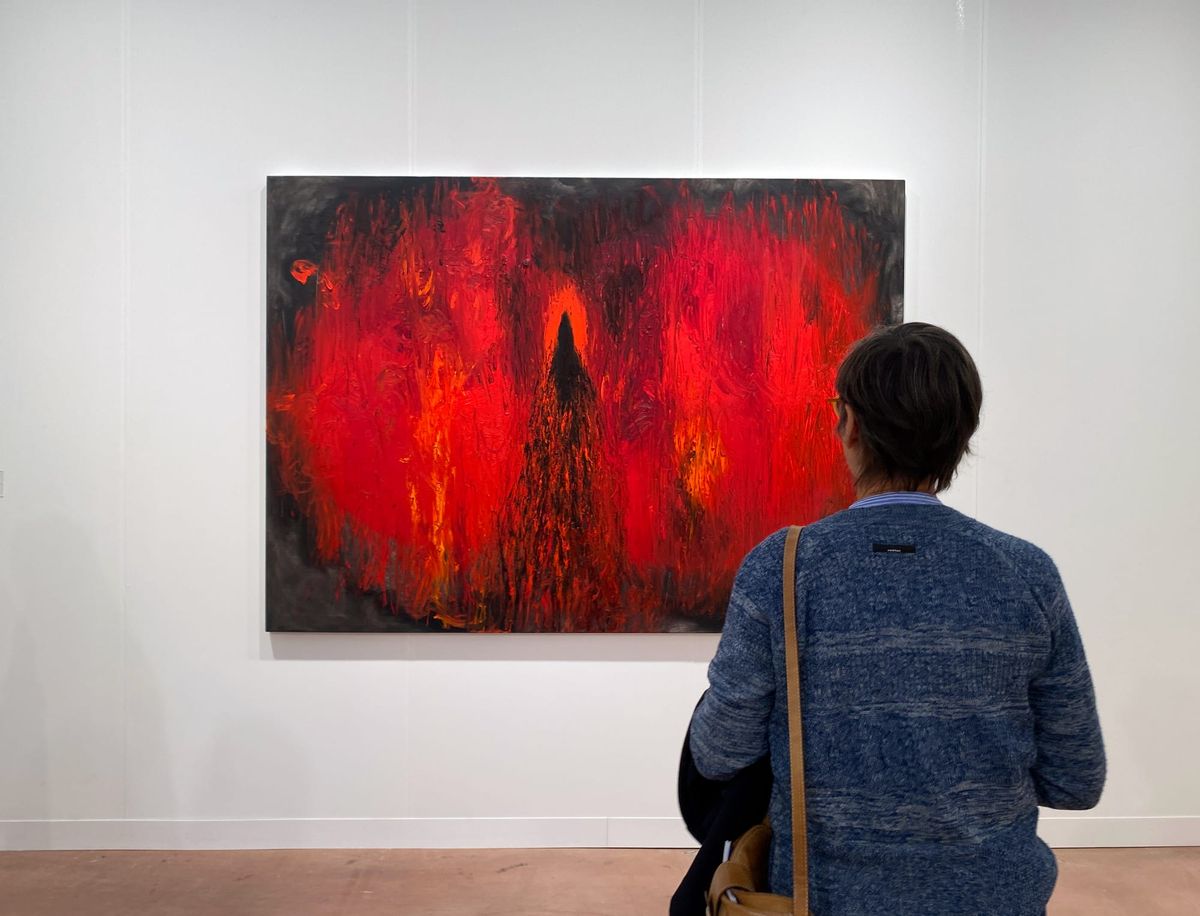
The Paradox of the Parisian Vernissage
"The people in the art world are courageous," a prominent collector remarked to me during the opening of Asia Now, the first of the season’s fairs. "But I would still like to be back at my hotel before 7 pm, you know, just in case."
For those who frequent the Parisian circuit, crises are becoming a grim tradition. In 2022, it was the cost-of-living strikes; in 2023, the city was paralyzed by high-level terror alerts that redirected air traffic and turned arrivals into an odyssey. Yet, 2026 felt distinct. Stepping off the train at Gare du Nord on Saturday, October 17, the atmosphere was thick with tension. Black-clad protesters surged through the boulevards, fleeing police squads, while firefighters battled localized blazes.
The juxtaposition was jarring. My friend, a resident of the Marais, had spent weeks planning an "aesthetic weekend"—a carefully curated itinerary of gallery openings and fairs. Her reality, however, was a frantic flight from police lines on the Boulevard de Sébastopol. "We had to run!" she told me later, her voice still trembling. "When the police start hitting, they hit indiscriminately." Her experience was not an anomaly; it was the baseline of a city struggling with deep-seated grievances.

A Chronology of Escalation
The unrest did not happen in a vacuum, but the collision between the high-octane art calendar and the street protests created a domino effect of institutional closures and cancellations:
- October 15: The Foreign Ministry postponed the PASSAGES design exhibition at the Quai d’Orsay. With a title meaning "disobedient," the irony was not lost on the public, as the ministry deemed the social climate too volatile for the event.
- October 17: Clashes intensified across Paris. The Grand Palais, the heartbeat of Art Basel Paris, was placed under a mandatory lockdown at 5 pm, trapping staff and installers inside for hours.
- October 19: The Jeu de Paume canceled its VIP opening for the Stan Douglas retrospective.
- October 20: Students from the École du Louvre blocked the entrance to the museum, forcing a total closure. That evening, the École des Beaux-Arts canceled the opening of the Gina Pane exhibition.
- October 22: Art Basel Paris announced it would shutter its doors two days early, citing the need to safeguard visitors ahead of anticipated weekend unrest.
The Aesthetic of Dissent: Voices from the Street
As the city groaned under the pressure, the art world remained divided in its response. French-Moroccan artist El Mehdi Largo, who chose to boycott the fairs entirely, sat with me in a café on rue Poissonnière. Looking out at the debris of smashed glass and incinerated bicycles, he noted, "I think the art fairs, in this context, are rather grotesque. Then again, art fairs are pretty grotesque in any context."
Largo’s critique cuts to the heart of the modern art economy—a system, he argues, that prioritizes capital movement over creative expression. "For the elites, it could be art, or it could be thoroughbred horses; it won’t make any difference," he added.
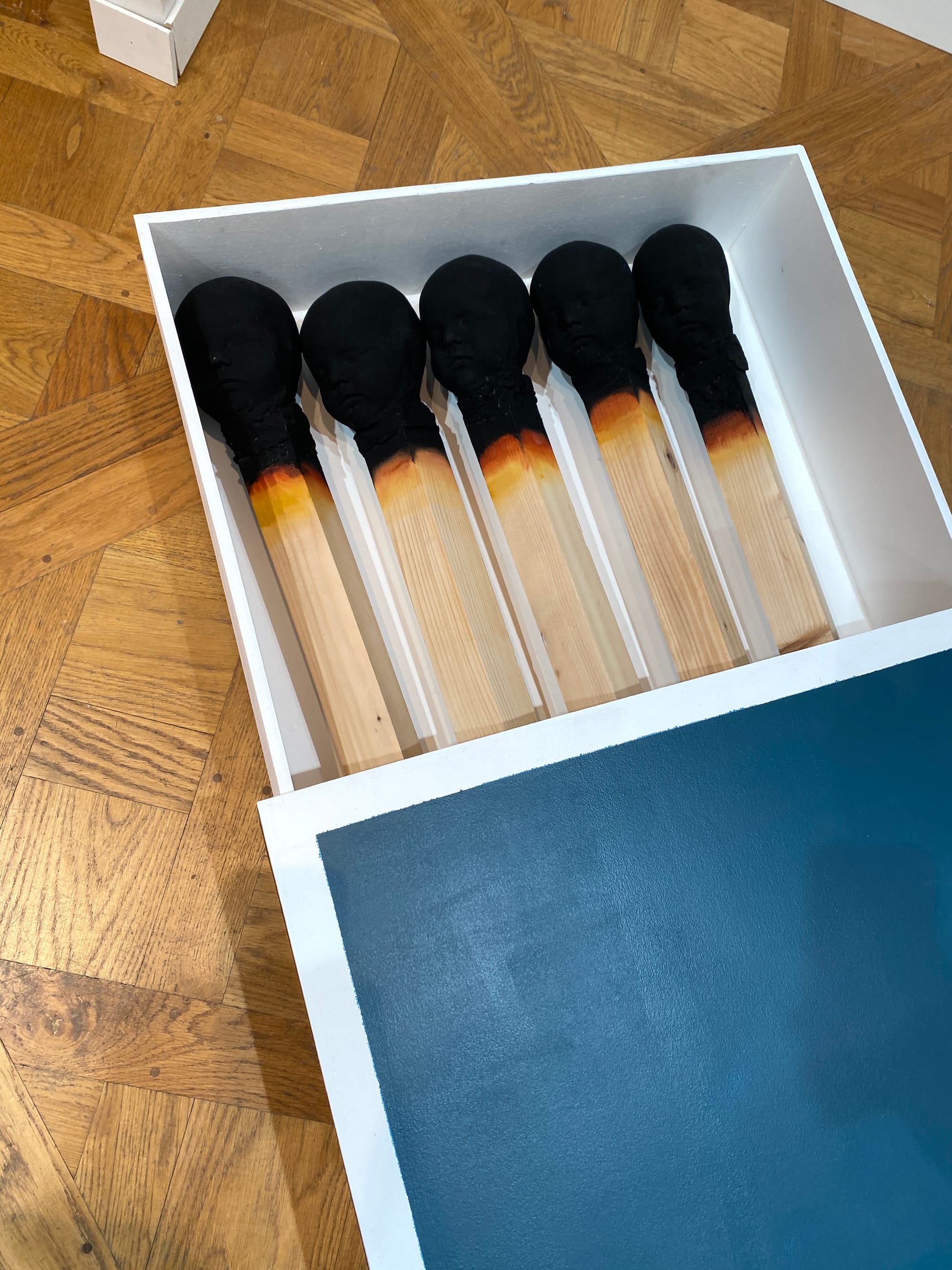
This sentiment was mirrored by a Lebanese friend of mine, who sought refuge in Paris after the bombing of Beirut. Watching the unrest, she observed a different kind of anger. "In Lebanon, people were so hungry, but they still have their dignity; they would never loot," she said. "Here, people are really, really angry."
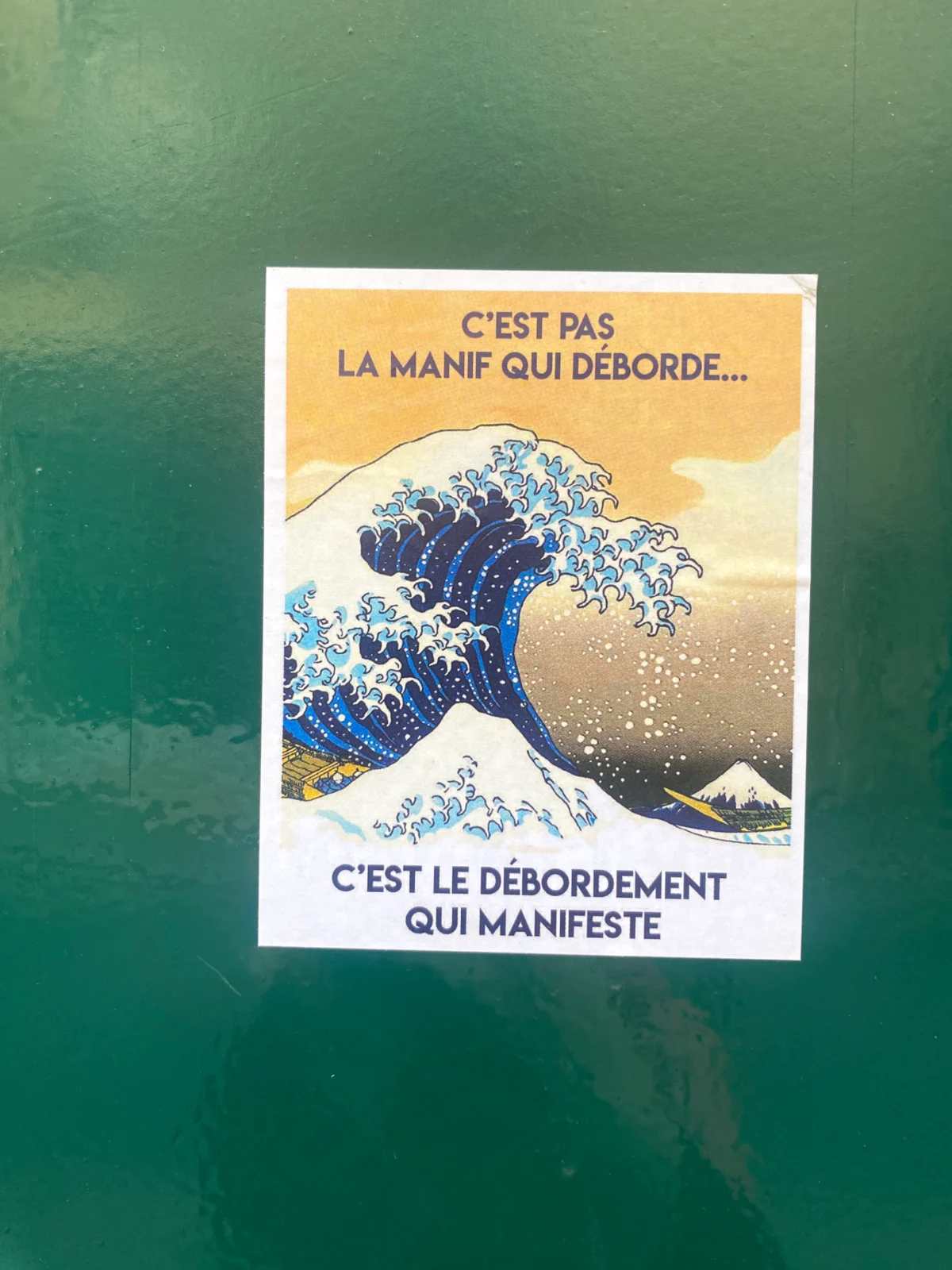
The walls of Paris became a canvas for this anger. A handwritten sign, tucked among anti-bird spikes, quoted Simone Weil: "Very few minds discover that things and beings exist." A few blocks away, the message was less philosophical: "Nique la police." It was a city engaged in a debate about the value of human existence, while elsewhere, dealers were pricing pieces in the millions.
Institutional and Official Responses
The official response was one of defensive containment. By Tuesday, the Grand Palais was transformed into a fortress, ringed by concrete anti-ram barriers. Private security details and police patrols became permanent fixtures of the landscape.
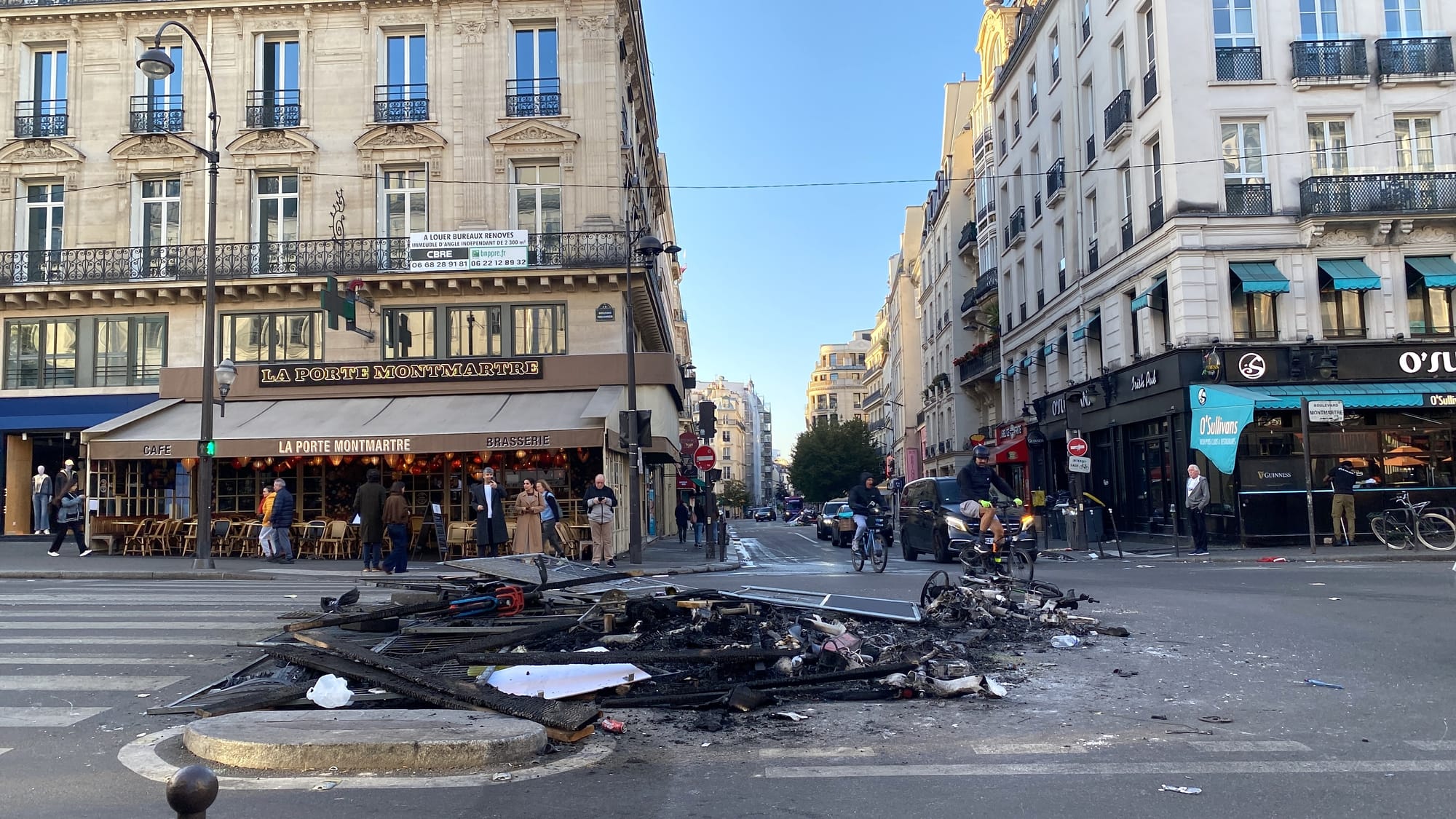
However, the "business as usual" narrative propagated inside the fairs was increasingly fragile. While some collectors, like Selim Bouafsoun from Tunisia, maintained that "manifestations are a right" and felt safe within the fair’s walls, others were less convinced. The removal of public art, such as Alicja Kwade’s 14-foot stone stack, L’élévation des Mondes, signaled a retreat. Kwade’s own commentary on social media—lamenting the destruction while acknowledging the legitimacy of protest—highlighted the precarious tightrope artists are expected to walk.
The Implications: Is Art Still Relevant?
The decision to close Art Basel Paris early was a landmark moment in the history of the event. It acknowledged that the "art world" could no longer pretend the city was merely a backdrop for commerce.
I sat with Marina Vinogradova, director of the NIKA Project Space in Dubai, in the shadow of the Chapelle Saint-Louis de la Salpêtrière. As we discussed the existential weight of painting in the 21st century, the conversation was literally drowned out by the roar of police helicopters and sirens. Her represented artist, Iraqi-Finnish creator Adel Abidin, offered a perspective that bridged the divide.
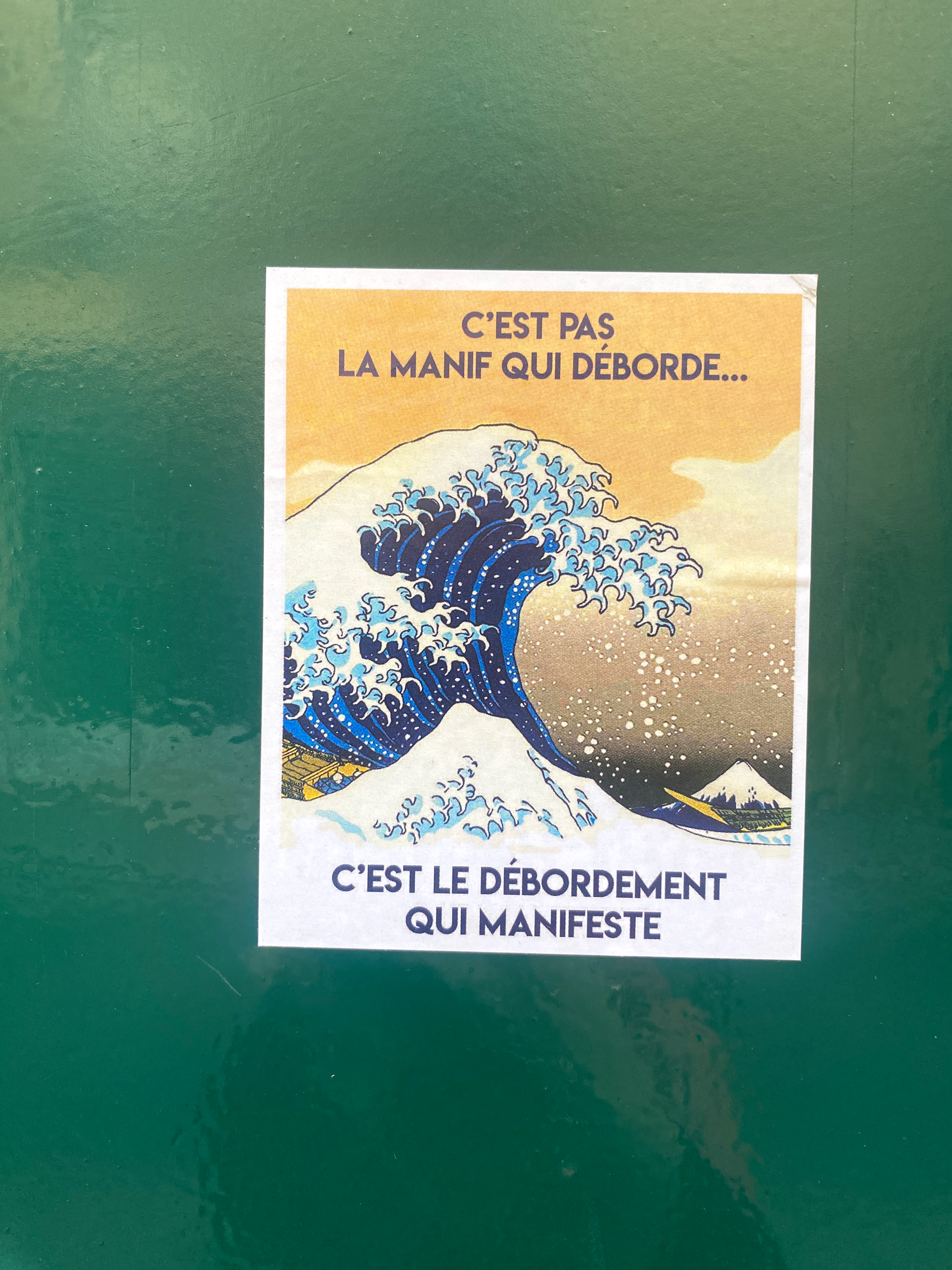
"While I condemn the vandalism, I think it’s inspiring to see that people can protest and have a voice," Abidin said. "I wish I’d had that when I was living in Baghdad." For Abidin, art and protest are not binary opposites; they are both "gestures" that challenge the status quo. He remains an idealist, believing that change is the sum of these actions.
Yet, for others, the disillusionment is total. Returning to my conversation with El Mehdi Largo, the cynicism was palpable. "They instrumentalize our suffering," he said, referring to the way social issues are often commodified within the fair’s white walls. "They’re only there to decorate the conversations of the people who can afford them."
As I left Paris, the cleaning crews were already at work, scrubbing the graffiti and replacing the windows. The city was returning to its polished, postcard-perfect state, preparing to welcome the next cycle of tourists and collectors. But the scent of burning plastic, the sight of students blocking the Louvre, and the genuine fear of the residents who had to run from the police remained as a shadow over the week.
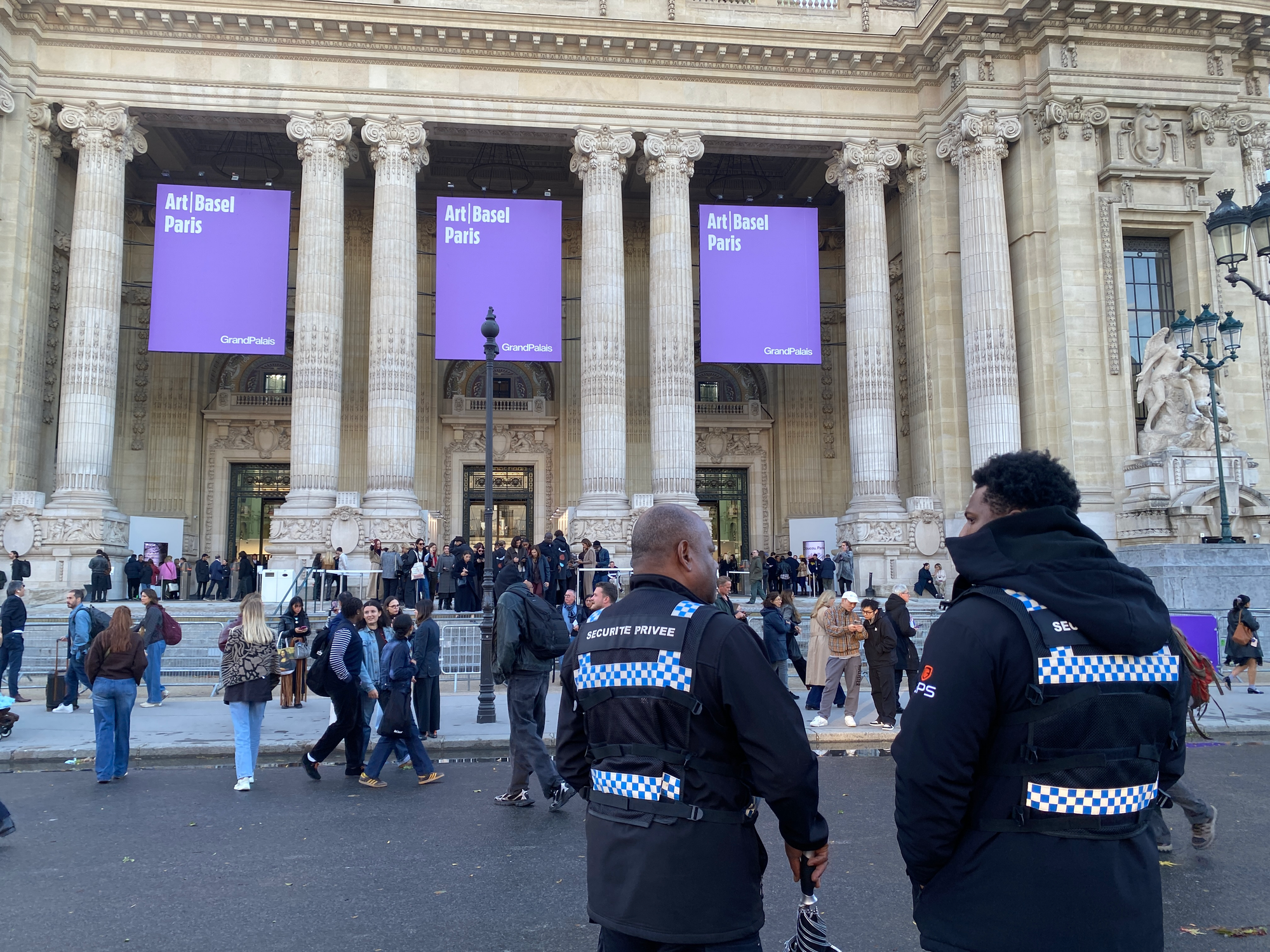
Paris Art Week 2026 will be remembered not for the works sold or the trends established, but for the moment the "temples of art" were forced to acknowledge that the world outside their walls—the world of the dispossessed, the angry, and the marginalized—is the only world that truly matters. Whether the art market can learn from this remains to be seen, but as Largo noted, "There is no way out, is there?"


 Rifan Muazin

 Neng Nana





