



 Evan Lee Salim
ISTANBUL, October 13, 2026 — As Türkiye prepares to welcome the international community to Istanbul for the 2026 United Nations Climate Change Conference (COP31), a troubling paradox has emerged. While the government positions itself as a central player in global climate diplomacy, domestic authorities are systematically arresting, prosecuting, and intimidating the very citizens advocating for environmental protection.
A comprehensive report released today by Human Rights Watch (HRW) details a widespread crackdown on environmental defenders, journalists, and local residents. From the coal-rich forests of Muğla to the gold-exploration sites of the eastern Black Sea, the state’s response to nonviolent protest has been characterized by the use of force, arbitrary detention, and a judicial "sword of Damocles" that keeps activists in a perpetual state of legal limbo.
The Cost of Dissent: A Pattern of Intimidation
The upcoming COP31 summit is intended to be a platform for collaborative climate action. However, Deniz Bayram, assistant Europe and Central Asia researcher at Human Rights Watch, argues that the current domestic environment is antithetical to the goals of the conference.
"With Türkiye about to host the annual UN climate change summit, its environmental crackdown is a salient reminder of its intolerance of dissent," Bayram said. "Turkish authorities should listen to people’s concerns about the environmental impact of activities such as mining in their areas and address them, instead of arresting and prosecuting protesters."
The HRW report, based on interviews with 23 people including community members, lawyers, and journalists, highlights a disturbing trend: the criminalization of civic participation. Charges against environmental defenders are frequently broad and nebulous, including "illegal gathering," "resisting public officials," and "spreading false information." In many cases, these charges function less as genuine legal proceedings and more as a mechanism to suppress local opposition to industrial projects.
Chronology of Conflict: From Akbelen to the Black Sea
The struggle to protect Türkiye’s natural landscape is not new, but it has intensified as the state pushes for industrial expansion in sensitive ecological zones.
The Akbelen Forest (2023–2026)
Since 2019, residents of İkizköy have fought a protracted legal battle to prevent the expansion of an open-pit lignite mine into the Akbelen forest. Despite the forest being legally protected, clearing began in earnest in July 2023. Gendarmes utilized tear gas and water cannons against villagers, and dozens were arrested. By August 2023, approximately three-fifths of the forest had been razed, even as court cases concerning the environmental impact remained pending.
The Perşembe Plateau Gold Protests (2026)
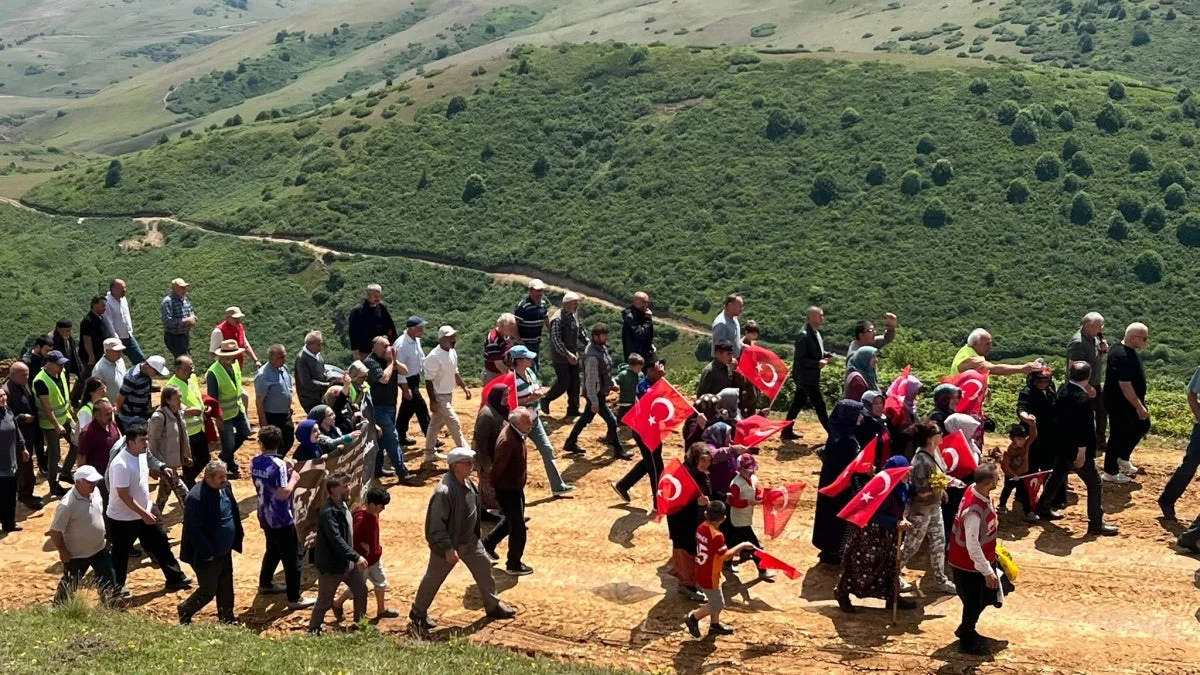
In the eastern Black Sea region, residents of the Perşembe Plateau have faced a similar fate. Faced with gold mining exploration that threatens their water supply and pastoral way of life, residents began protesting in early 2026. The state’s response was swift. In July 2026, over 50 protesters were confronted by gendarmes, leading to the arrest of 15 individuals. Witnesses described being held for hours in detention without explanation, with some forced to sign documents pledging to abstain from future protests.
Supporting Data and Evidence of Excessive Force
The documentation provided by Human Rights Watch paints a grim picture of the treatment of these defenders. In the Black Sea region, incidents of physical abuse have been reported, with victims providing medical records and photographic evidence of injuries sustained during altercations with law enforcement.
- Detention Tactics: In the Perşembe Plateau, residents reported being dragged into unmarked white vans, suffering physical abuse that resulted in visible bruising on the wrists, arms, and chests of protesters.
- Surveillance: The use of signal jammers at protest sites—a tactic previously seen in Akbelen—has become a hallmark of the state’s efforts to isolate communities and prevent the documentation of police activity.
- Judicial Burden: The "chilling effect" is not limited to the act of protesting. Ongoing investigations that last for years force activists to repeatedly appear before authorities, draining their financial resources and psychological well-being. A 75-year-old woman in Denizli, for instance, remains embroiled in an appeals process after being fined for allegedly "beating" mining company staff—an accusation she vehemently denies.
The Silence of the State: Official Responses
In September 2026, Human Rights Watch formally contacted the Interior Ministry, along with the Chief Prosecution Offices in Muğla, Ordu, and Giresun, seeking clarification on these incidents and requesting a response to the documented findings. As of the time of publication, none of these entities have provided a response.
This silence is echoed at the local level. When Nuriye Dilek, an activist in the Black Sea region, attempted to report her mistreatment—including being dragged and having her clothing torn by security forces—to the governor of Ordu, her concerns were dismissed. Instead of addressing the allegations of violence, the governor reportedly questioned her presence at the protest, effectively blaming the victim for the state’s aggressive response.
Implications for COP31 and Global Climate Governance
The crackdown on environmentalists is part of a broader, more systemic narrowing of civic space in Türkiye. This extends to the suppression of other groups, including the detention of activists protesting anti-LGBT policies in Istanbul in September 2026.
The implications for COP31 are profound. For a host nation to be credible in its commitment to climate change, it must recognize that environmental policy cannot be divorced from human rights.
1. The Necessity of Civil Society
International climate agreements, such as the Paris Agreement, emphasize that the success of climate goals depends on the active, uninhibited participation of civil society. When governments treat environmental defenders as security threats, they undermine the very grassroots efforts required to hold corporations and states accountable for environmental degradation.
2. Obligation of the Host
As the host of COP31, Türkiye has a heightened responsibility to uphold international human rights standards, including those enshrined in the European Convention on Human Rights (ECHR) and the International Covenant on Civil and Political Rights (ICCPR). The UN Human Rights Committee’s General Comment No. 37 clearly mandates that peaceful assemblies should be facilitated, not criminalized. By failing to do so, Türkiye risks transforming its moment on the world stage into a showcase of democratic backsliding.
3. A Call to Action for International Delegates
Human Rights Watch has called upon states attending COP31 to break their silence. International delegations, NGOs, and global climate leaders have a responsibility to speak out against the harassment of Turkish activists. Reminding the host government that the right to peaceful assembly is a non-negotiable component of climate justice is essential.
"The Turkish government has ignored environmental protections and turned on local people who are speaking out against environmental damage to their communities," Bayram concluded. "States attending COP31 should speak out against Türkiye’s crackdown on environmental defenders and remind their hosts that civil society participation is critical to achieving COP goals."
As the world gathers in Istanbul, the eyes of the climate movement will be on both the conference halls and the surrounding hillsides. Whether Türkiye chooses to embrace the input of its citizens or continue its path of suppression will define not only its legacy as a COP host but also the efficacy of its environmental future. Without the protection of those who guard the forests and the waters, the promises made at COP31 may ring hollow, drowned out by the silence of a suppressed citizenry.


 Iffa Jayyana

 Ammar Sabilarrohman




