




 Lina Hope
Introduction: The Cycle of the Uniform
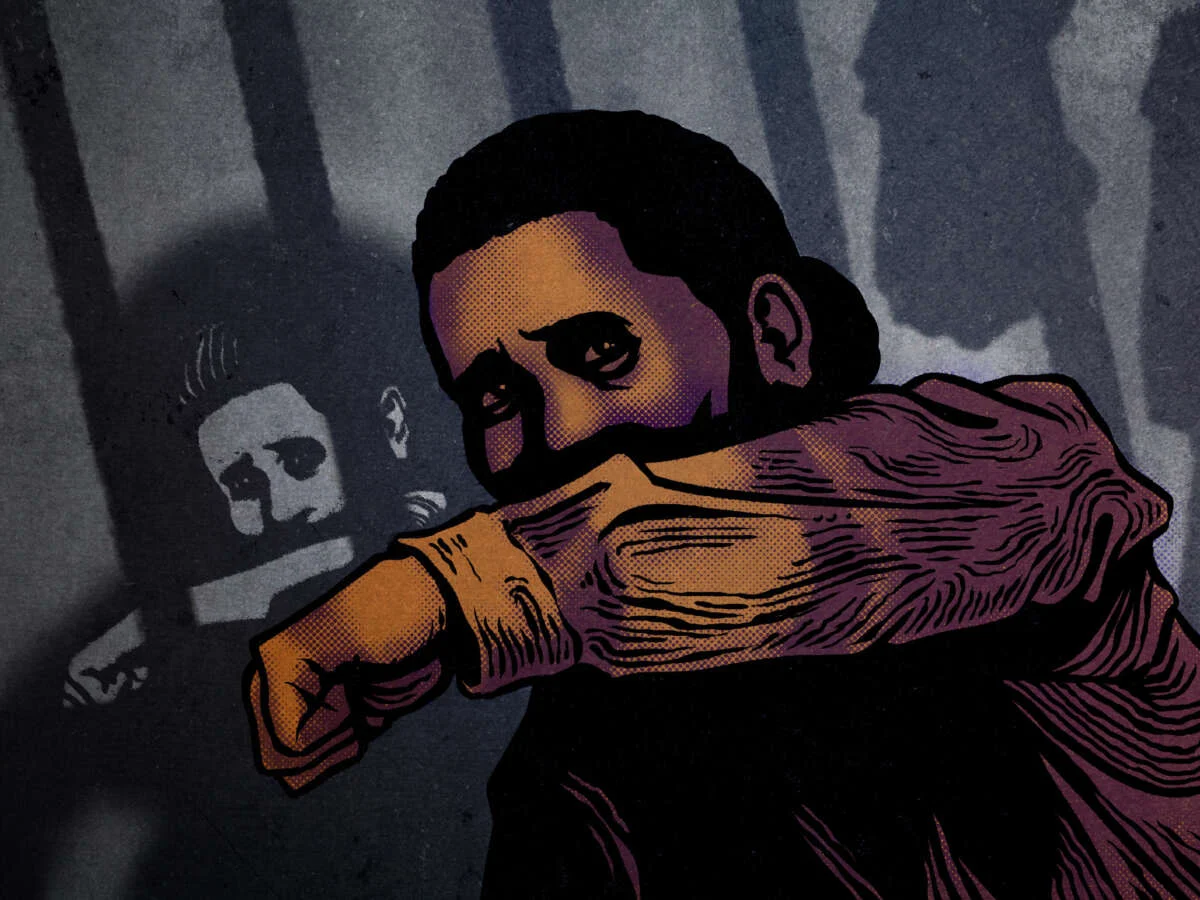
For the millions of individuals who have passed through the American carceral system, the "man in blue"—the shorthand for the authority figures who oversee their daily lives—is rarely viewed as a protector. For those who enter the system with a history of childhood abuse, sexual violence, or systemic trauma, the prison environment functions not as a corrective institution, but as a site of profound psychological reenactment.
When an incarcerated person is shouted at, searched without consent, or subjected to constant surveillance, their nervous system does not register these as "policy" or "procedure." It registers them as a return to the site of their earliest violations. This article explores the systemic intersection between childhood trauma and the modern carceral state, examining how the mechanisms of prison—designed for control—effectively weaponize the past against the prisoner.
Chronology of Control: From Domestic Violence to State Violence
To understand the impact of prison on trauma survivors, one must view the trajectory of their lives not as a series of disconnected events, but as a continuous arc of power imbalances.
- The Formative Years: For many survivors, the initial trauma occurs within the family unit or at the hands of trusted figures. The child learns that "safety" is a conditional state maintained through obedience, silence, and the dissociation of the self from the body.
- The Point of Contact: Upon entry into the carceral system, the individual is stripped of their autonomy. The search, the booking, and the initial commands serve as an immediate trigger. The state assumes the role of the primary abuser, utilizing the same language of "protection" and "order" to justify violations of physical boundaries.
- The Daily Routine: Throughout their sentence, the survivor is subjected to a relentless cadence of triggers: being startled from sleep, being watched during intimate moments, and being physically restrained. Each instance reinforces the neural pathways forged in childhood, cementing the belief that the body does not belong to the self, but to the authority figure.
- The "Release": Even when an individual is legally freed, the psychological imprisonment persists. Without intentional, trauma-informed intervention, the survivor carries the reenactment into the world, often struggling to disentangle the voice of the state from the voice of the abuser.
Supporting Data: The Prevalence of Trauma in Incarcerated Populations
The carceral system is populated by individuals whose histories are statistically overrepresented by experiences of abuse. According to data from the Bureau of Justice Statistics and various civil rights advocacy groups:
- The Gendered Reality: Women and gender-nonconforming people in the criminal legal system report staggeringly high rates of prior physical and sexual abuse. Studies suggest that over 70% of incarcerated women have experienced severe physical or sexual violence prior to their incarceration.
- The Neurobiology of Confinement: Trauma is not merely an emotional memory; it is a physiological one. When a survivor is triggered, the amygdala activates a "fight, flight, or freeze" response. In a prison setting, these reactions—such as a panic attack or a reflexive defensive movement—are often categorized by staff as "noncompliance" or "defiance," leading to further punishment or the use of force.
- The Failure of Design: Despite the prevalence of trauma, the design of modern correctional facilities is inherently antagonistic to healing. The architectural features—fluorescent lighting, constant noise, lack of privacy, and rigid, punitive hierarchies—are the exact opposite of what clinical psychologists identify as a "trauma-informed environment."
Official Responses and Systemic Defense
When confronted with the argument that prisons are fundamentally re-traumatizing, officials within the Department of Corrections (DOC) and other law enforcement agencies typically point to the mandates of security and safety.
The Security Defense
Proponents of the current system argue that practices such as strip searches, body checks, and intensive surveillance are necessary to prevent the entry of contraband and to maintain the physical safety of both inmates and staff. They argue that these policies are "neutral" and applied across the board, without regard to the individual history of the inmate.
The Policy Gap
However, critics and trauma experts argue that "neutrality" is a fallacy when the population being governed is not neutral. A search policy that may be perceived as a routine check by a non-traumatized individual is experienced as a violation by a sexual assault survivor. The refusal of the system to distinguish between these experiences—or to adopt trauma-informed protocols—is viewed by advocates as a willful blindness that prioritizes administrative ease over human rights.
Implications: The Weaponization of the Psyche
The implications of this systemic failure are profound and ripple far beyond the prison walls.
1. The Erasure of Rehabilitation
If the goal of the carceral system is, as claimed, to rehabilitate individuals for re-entry into society, then the current reliance on trauma-triggering practices is counterproductive. By reinforcing the dynamics of abuse, the prison system ensures that survivors remain in a state of high-stress activation, which inhibits cognitive growth, emotional regulation, and the development of prosocial behaviors.
2. The Criminalization of Survival
When a survivor responds to a perceived threat, they are often punished for that reaction. This creates a cycle where the individual is essentially "doubly punished"—once for the original trauma they survived, and again for the nervous system’s natural response to that trauma being re-triggered. This criminalization of survival instincts makes the prospect of genuine psychological recovery nearly impossible while incarcerated.
3. The Power of Testimony
The act of writing and speaking about this experience is a form of resistance. By naming the "man in blue" not as a protector, but as a mirror to past abusers, survivors begin to reclaim their narrative. This is why the voices of the incarcerated are so vital to the discourse on justice reform. They provide the "truth from the inside" that exposes the chasm between the system’s stated purpose and its actual impact.
Conclusion: Breaking the Spell of Compliance
The carceral system relies on a foundational lie: that control is care, and that punishment is protection. For the survivor of abuse, this lie is particularly insidious because it mirrors the gaslighting tactics often used by their own abusers.
To break this spell, society must move beyond the narrow metrics of "order" and "compliance." We must acknowledge that when we subject bodies that have already been violated to further systematic violation, we are not creating justice—we are perpetuating harm.
True freedom for the survivor does not arrive with a release paper or the cessation of a guard’s yelling. It arrives when the survivor realizes that their fear is not a weakness, that their reactions are not flaws, and that they have the power to define their own truth. As long as our prisons remain factories of trauma, they will continue to produce more damage than they resolve. It is time for a paradigm shift that recognizes the humanity of the individual, the history of the body, and the necessity of healing over control. The uniform may hold the keys, but it does not have to hold the final word.


 Rifan Muazin

 Ammar Sabilarrohman






