



 Nana Muazin

Introduction: A Fragile Mandate
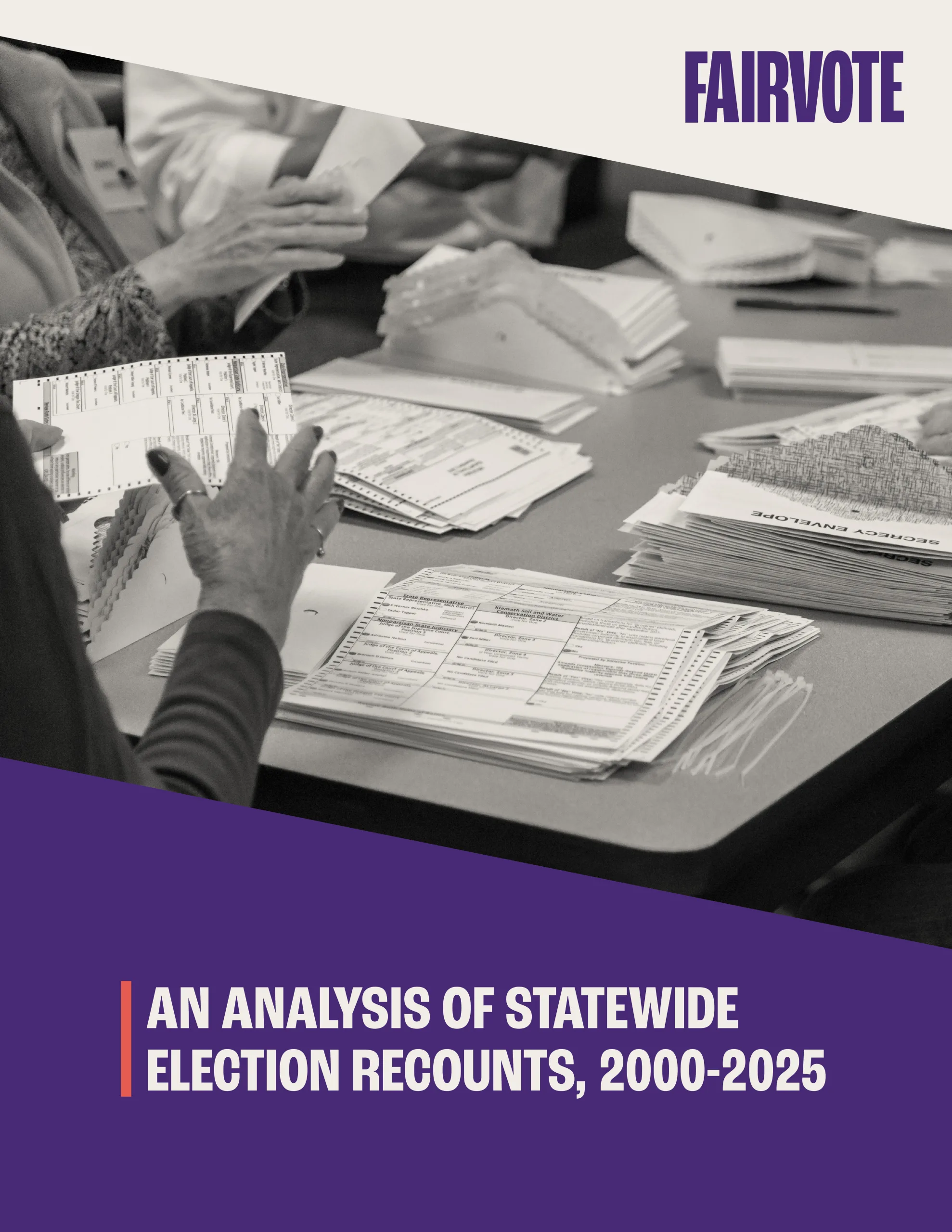
As the dust settles on the 2026 primary elections, a troubling trend has reached a historic zenith: the rise of the "plurality victor." According to a comprehensive new report released this morning by the nonpartisan advocacy group FairVote, 125 candidates secured nominations for congressional and statewide offices despite receiving less than 50% of the vote. This figure represents the highest incidence of plurality wins since FairVote began tracking the data in 2018, signaling a profound shift in how American candidates ascend to power.
In a system historically predicated on the concept of majority rule, these results raise urgent questions about the health of the democratic process. When a candidate wins a primary with 30% or 40% of the vote, the remaining majority—often split among several other contenders—is effectively silenced. As FairVote’s data underscores, we are witnessing a cycle where political candidates are increasingly "elected by a fraction of a fraction of voters," raising the stakes for the upcoming November general elections.
The 2026 Landscape: Main Facts and Data
The 2026 primary cycle has been defined by extreme volatility, driven by a convergence of high-profile retirements and the aggressive, mid-decade redrawing of electoral maps. The data from FairVote’s "Fewest Votes Wins" report paints a stark picture of the current electoral environment:
- 125 Plurality Victories: A record-breaking number of candidates won their primaries without securing a majority of the vote.
- The Freshman Impact: Most alarmingly, 21 individuals poised to join the U.S. House of Representatives as "likely winners" in uncompetitive districts achieved their nominations without majority support.
- Representational Gaps: These 21 individuals are expected to account for between 20% and 40% of the incoming House freshman class. This means that a significant portion of the legislative body—in seats where the general election is essentially a formality—will have been vetted by a small minority of their constituents.
These figures are not merely statistical anomalies; they represent a fundamental departure from the democratic ideal of broad-based support. When primary voters act as the final arbiters of who holds power in safe, gerrymandered districts, the lack of a majority mandate creates a legislative class beholden to ideological fringes rather than the broader electorate.
Chronology of a Trend: From 2018 to the Present
To understand the current crisis, one must look at the historical trajectory of primary elections over the last eight years.
2018–2022: The Early Warnings
When FairVote initiated its longitudinal study in 2018, the prevalence of plurality victories was already a subject of concern among political scientists. Early data suggested that multi-candidate fields, exacerbated by the rise of polarization, were leading to "spoiler effects" within primaries. Candidates with strong, vocal bases—but lacking widespread appeal—began to consistently defeat more moderate candidates who split the vote among themselves.
2024: The Catalyst of Mid-Decade Gerrymandering
The 2024 cycle served as a laboratory for modern election engineering. The use of sophisticated data modeling allowed state legislatures to create "locked" districts. By minimizing competitive general elections, these maps shifted the primary to the primary battleground. In these contests, the cost of running a campaign spiked, and the influence of small-dollar donors and activist groups grew, further fracturing the vote in primary fields.
2026: The Breaking Point
The 2026 cycle has been defined by an unprecedented number of congressional retirements. This "open seat" phenomenon triggered a scramble for power, resulting in overcrowded primary ballots. In many districts, five, six, or even ten candidates vied for a single nomination. Without a mechanism to consolidate support, the candidates who emerged were frequently those who won a small, dedicated slice of the electorate, leaving the majority of voters with a nominee they did not support.
Supporting Data: Why Plurality Wins Occur
The FairVote report identifies two primary structural drivers for the explosion of plurality winners:
1. The Fragmentation of the Electorate
In an era of deep political tribalism, primary electorates are becoming increasingly segmented. When several candidates run on similar platforms, they cannibalize each other’s votes. In a first-past-the-post system, there is no "runoff" or secondary preference to account for the desires of the broader electorate. Consequently, the winner is often the candidate who manages to hold onto their base while others split the remainder, rather than the candidate with the broadest appeal.
2. The Gerrymandering Paradox
While gerrymandering is often criticized for its impact on general elections, its impact on the primary is even more insidious. By creating districts where one party has an insurmountable lead, parties have essentially handed the keys to their base. In these "safe" districts, the winner of the primary is guaranteed a seat in Congress. When that primary winner is chosen by a plurality, the general election becomes a rubber stamp for a candidate who may lack a true mandate.
Official Responses and Expert Perspectives
The publication of the 2026 report has prompted a flurry of commentary from across the political spectrum.
FairVote researcher Bryan Huang, in his summary analysis, argues that the current system is "mathematically ill-equipped to handle the realities of modern primary politics." According to Huang, the persistence of the plurality model is a choice, not a necessity. "We are effectively choosing to let a minority of the base decide the future of the nation’s districts," Huang noted in his recent briefing.
Conversely, some traditionalists argue that the primary system is functioning as intended: as a filter for party ideology. However, this perspective is increasingly being challenged by lawmakers who find themselves representing districts where the electorate is deeply divided. Reform-minded legislators point out that when a representative enters office with only 30% of the primary vote, their capacity to compromise or represent the diverse views of their constituents is significantly diminished.
Implications for American Democracy
The implications of this shift are profound, impacting everything from legislative stability to public trust.
The Erosion of Governing Mandates
When a legislator is elected by a plurality, they enter office without a clear mandate from their constituents. This creates a perpetual cycle of insecurity, where members of Congress feel pressured to cater to the narrow interests of the activists who turned out in the primary, rather than the constituents who will be voting in the general election.
The Rise of Extremism
Plurality wins naturally favor candidates who can mobilize a "hardcore" base. In a crowded field, a candidate doesn’t need to win over the middle; they simply need to be the most intense voice in the room. This has led to a measurable increase in ideological rigidity, as candidates fear that reaching out to the median voter will dilute their support and cause them to lose their base to a more extreme rival.
The Need for Structural Reform
FairVote and other advocacy groups are doubling down on two primary solutions to combat the plurality crisis:
- Ranked Choice Voting (RCV): By allowing voters to rank candidates in order of preference, RCV ensures that the eventual winner has the support of a majority of voters, either through first-choice support or through the redistribution of votes from eliminated candidates. This eliminates the "spoiler" effect and incentivizes candidates to appeal to a broader cross-section of the electorate.
- Proportional Representation: By moving toward multi-member districts where seats are allocated based on the total share of the vote, proportional representation would ensure that legislative bodies more accurately reflect the political diversity of the population, rather than the current "winner-take-all" model that forces voters into binary choices.
Conclusion: The Path Forward
The 2026 primary season serves as a loud warning bell for the American democratic experiment. As the number of plurality victors continues to climb, the disconnect between the governed and their representatives grows ever wider.
The data provided by FairVote is not merely a critique of a single election cycle, but a diagnostic tool for a structural failure in the democratic process. Whether through the adoption of Ranked Choice Voting or more systemic changes like proportional representation, the need for reform has never been more urgent. If the goal of a representative democracy is to ensure that the government derives its power from the consent of the governed, then a system that routinely allows candidates to win with the support of only a minority of the electorate must be addressed.
As we look toward the 2026 general election and beyond, the question remains: will the American political system adapt to ensure that the "fewest votes" no longer "win," or will we continue to allow a fraction of a fraction to dictate the direction of the nation? The evidence presented in this report suggests that time is running out to preserve the integrity of the ballot box.

 Raul Delapena Setiawan
 Sagoh