



 Nana Muazin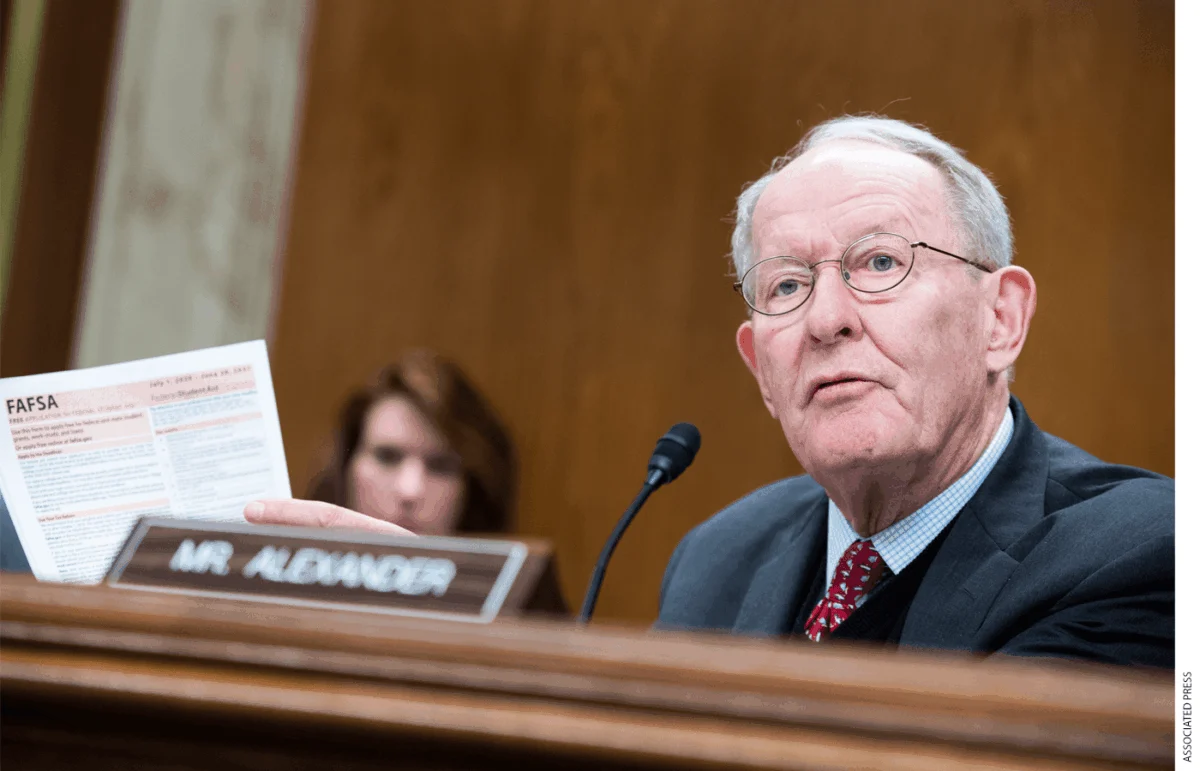
The Free Application for Federal Student Aid (FAFSA) is far more than a bureaucratic requirement; it is the cornerstone of American higher education accessibility. Serving as the primary gateway to federal grants, loans, and work-study opportunities for approximately 17 million students and their families annually, the form acts as the vital machinery that determines who can afford a college degree. For at least 6 million students, the FAFSA is the absolute prerequisite for securing the financial support necessary to step onto a campus. However, a years-long effort to simplify this critical document recently descended into a systemic failure, highlighting the dangerous gap between legislative ambition and executive execution.
The Quest for Simplification: A Bipartisan Vision
For decades, the FAFSA was notorious for its labyrinthine complexity. Prospective students and their parents were often forced to navigate a dense, jargon-filled process that required the manual entry of tax information already held by the federal government. This complexity acted as a de facto barrier, disproportionately discouraging the very low-income families who relied most heavily on Pell Grants and federal assistance.
Former Republican Senator Lamar Alexander of Tennessee—who had previously served as a two-term governor and as the U.S. Secretary of Education during the creation of the original form—made the simplification of FAFSA his legislative crusade. Alexander famously utilized a seven-foot-long paper printout of the FAFSA form as a prop during Senate Health, Education, Labor, and Pensions Committee hearings. The visual was undeniable: a document so unwieldy it threatened to intimidate any applicant.
Alexander’s argument was simple: Why should families be forced to dig through archaic tax filings to provide information the government already possessed? In 2019, working alongside Democratic Senator Doug Jones of Alabama, Alexander introduced bipartisan legislation aimed at slashing the number of questions from 108 to approximately 18. The bill sought to reduce verification obstacles and provide a streamlined path for students to estimate their aid packages. Before retiring in 2020, Alexander successfully saw his vision codified into law via the Consolidated Appropriations Act of 2021, which was signed by President Donald Trump.
A Chronology of the 2024 "Debacle"
While the law was intended to usher in a new era of accessibility, the implementation phase—managed by the U.S. Department of Education—resulted in a catastrophic failure.
- December 2023: After months of delays, the redesigned web form finally went live, only to face immediate system crashes. The traditional October launch date was abandoned, leaving families in a state of high-stakes limbo.
- Early 2024: The crisis deepened as students with parents lacking Social Security numbers found themselves locked out of the system entirely. Colleges were unable to receive the necessary student data, preventing them from issuing financial aid award letters on time.
- Mid-2024: Reports emerged that hundreds of thousands of applications required manual reprocessing due to significant calculation errors. A Government Accountability Office (GAO) investigation later concluded that the Department of Education had failed to provide adequate oversight of its vendors, ignored internal procedures, and maintained a disastrous lack of communication with both higher education institutions and applicants.
- Summer 2024: Recognizing the collapse, the Department pivoted toward crisis management. Jeremy Singer, president of the College Board, was brought in as an executive advisor. The Department initiated a series of 46 listening sessions with nearly 300 organizations to gather feedback and stabilize the platform.
Senator Alexander, once the champion of the reform, famously labeled the fallout "a big mess," lamenting that his legacy project had been undermined by a lack of operational discipline.
The Human Consequences of Administrative Failure
The FAFSA collapse was far more than a series of IT bugs; it was a systemic failure of government assistance with profound human consequences. For students, the inability to access financial aid data meant they could not compare offers from different universities, effectively paralyzing the enrollment process for an entire generation of high school seniors.
Families delayed critical financial decisions, while colleges—unsure of how many students would actually be able to afford attendance—faced unprecedented uncertainty in their budget and recruitment cycles. Community-based organizations and high school counselors, who serve as the frontline support for first-generation students, were left powerless, unable to guide their students through a system that remained opaque even to the government agencies running it.
Jeremy Singer offered a scathing, yet remarkably candid, summary of the failure: "Two moms can’t produce a baby in four and a half months." His point was clear: the project suffered from a fatal mismatch between the ambition of the software’s design and the lack of technical leadership and project management required to deliver it at scale.
Stabilization and the Road to Recovery
The recovery effort initiated in late 2024 represents a masterclass in crisis stabilization. By moving away from defensive posturing and toward a strategy of transparency and rigorous testing, the Department of Education managed to turn the tide.
The release of the 2026–27 FAFSA form on September 24, 2025—the earliest launch in the history of the program—marked a significant turning point. By late October of that year, internal metrics indicated that over 96 percent of users reported high levels of satisfaction with the interface. The Department reported that by March 2026, more than 10 million forms had been successfully completed and processed, signaling a return to operational normalcy.
Strengthening the System: Fraud Prevention and Future Outlook
As the FAFSA system stabilizes, the focus has shifted toward technological sophistication. Recognizing that the streamlined form could potentially be exploited by bad actors, the Department of Education announced in April 2026 the implementation of real-time identity screening.
This new initiative utilizes advanced fraud-risk screening to flag or halt suspicious applications at the point of submission. This not only protects the integrity of the federal aid pool but also reduces the administrative burden on colleges, which previously had to manually filter out fraudulent applications after the fact. The Department reported that it successfully prevented more than $1 billion in federal student aid fraud between January 2025 and mid-2026.
Implications for Public Policy
The saga of the FAFSA reform serves as a sobering case study in the complexities of modernizing government infrastructure. The lessons are threefold:
- Complexity vs. Capacity: Legislative bodies often underestimate the operational weight of their mandates. While the intent to simplify the FAFSA was universally lauded, the executive branch’s capacity to execute such a complex software project was insufficient, leading to a catastrophic gap between law and reality.
- The Need for Agile Governance: The successful stabilization of the system required a move away from rigid, top-down management toward a model of constant feedback loops, vendor accountability, and external expert consultation. The involvement of organizations like the College Board proved instrumental in bridging the gap between bureaucratic theory and user reality.
- Restoring Trust: The recovery of the FAFSA program demonstrates that government failures, while devastating, are not necessarily permanent. However, the cost of regaining public trust—particularly among the low-income populations the FAFSA is designed to serve—is significant.
Moving forward, the success of the FAFSA will depend on maintaining this newfound administrative discipline. As the system moves toward more automated and fraud-resistant processes, the goal remains the same as it was in Senator Alexander’s time: to ensure that a student’s financial future is not determined by their ability to navigate a form, but by their potential to succeed in the classroom. The "big mess" of 2024 has become a cautionary tale for policymakers, but the resilience of the current system offers a blueprint for how a broken piece of government machinery can be rebuilt into a reliable, efficient, and essential public service.

 Neng Nana
 Nana
Nana