

 Neng Nana
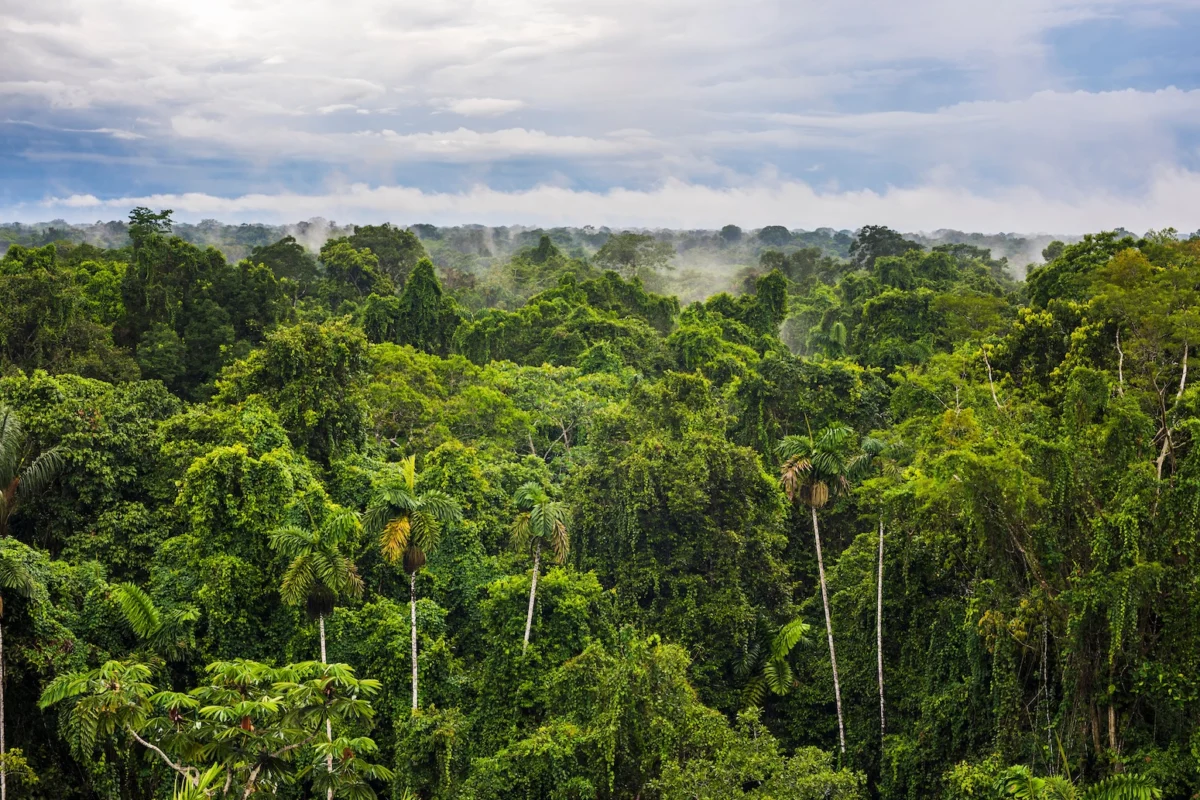
As Brazil approaches a pivotal presidential election, the future of the Amazon—the "lungs of the planet" and a critical buffer against global climate collapse—hangs in a delicate balance. New analysis from Carbon Brief reveals that the leadership of President Luiz Inácio Lula da Silva has effectively kept an area of forest roughly the size of New Jersey standing, preventing a surge in deforestation that characterized his predecessor’s tenure. However, with the polls showing a dead heat between the incumbent and Flávio Bolsonaro, the son of former President Jair Bolsonaro, the global environmental community is bracing for a potential reversal of these hard-won gains.
The Magnitude of the "Lula Effect"
The numbers are stark. Since taking office in 2023, Lula’s administration has prioritized the enforcement of Brazil’s flagship Forest Code, which mandates that landowners preserve and restore native vegetation. According to sophisticated modeling conducted by an international research team, at least 20,000 square kilometers (km²) of the Amazon have been spared from the chainsaw under Lula’s watch.
To put this into perspective, this preserved area is roughly equivalent to the size of the U.S. state of New Jersey, the nation of Slovenia, or the country of Belize. This is not merely a statistical victory; it is a profound climate achievement for the world’s fourth-largest greenhouse gas emitter, whose national emissions profile is historically driven by land-use change and deforestation.
A Chronology of Conflict and Restoration
The recent history of the Amazon is a tale of two vastly different governance philosophies:
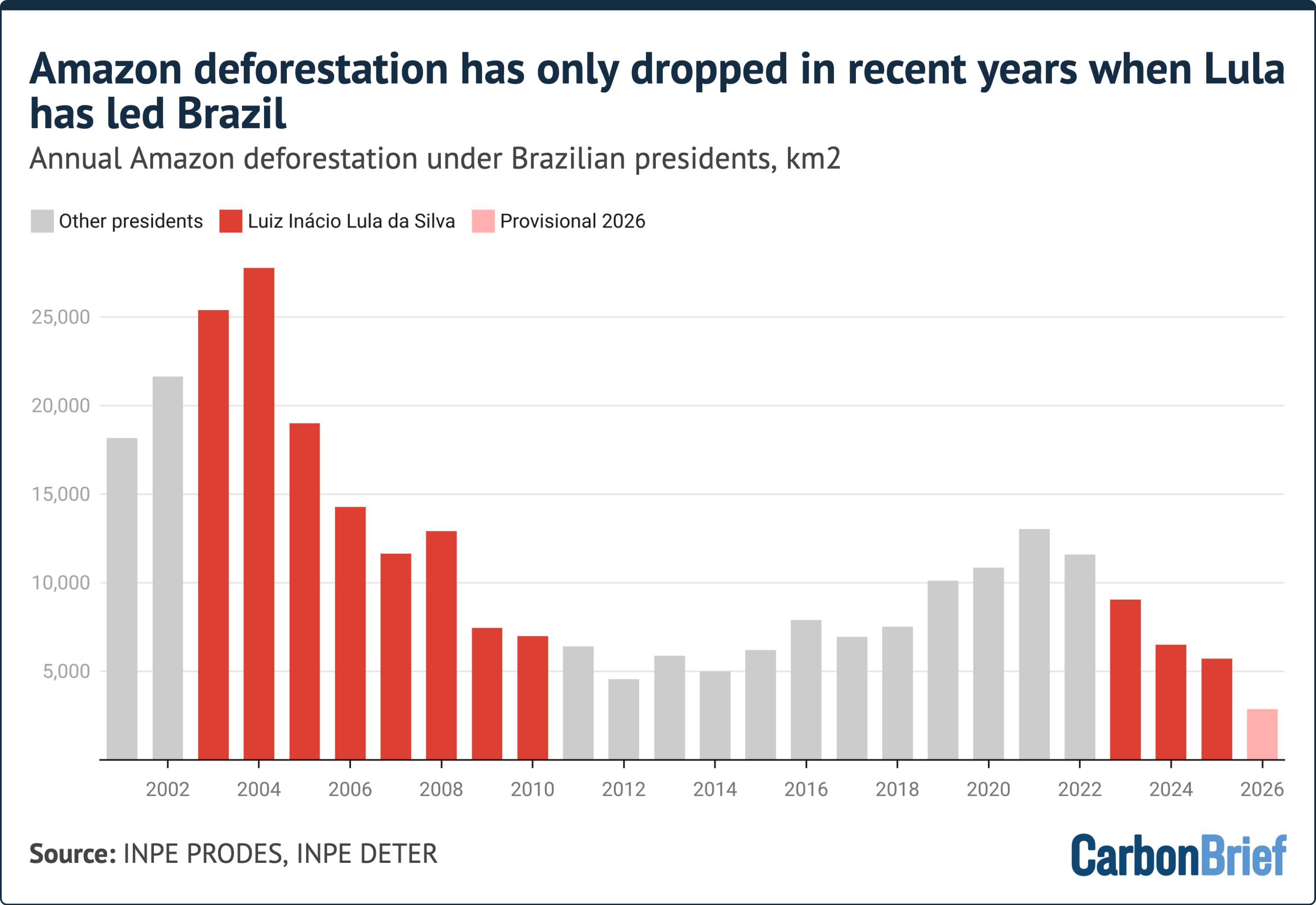
- 2019–2022 (The Bolsonaro Years): Jair Bolsonaro’s presidency marked a period of aggressive deregulation. His administration systematically weakened federal environmental agencies, slashed budgets for the Brazilian Institute of the Environment and Renewable Natural Resources (IBAMA), and openly championed the interests of the agribusiness sector over conservation. The result was an unprecedented spike in forest loss, with annual deforestation rates soaring as high as 11,594 km² in 2022.
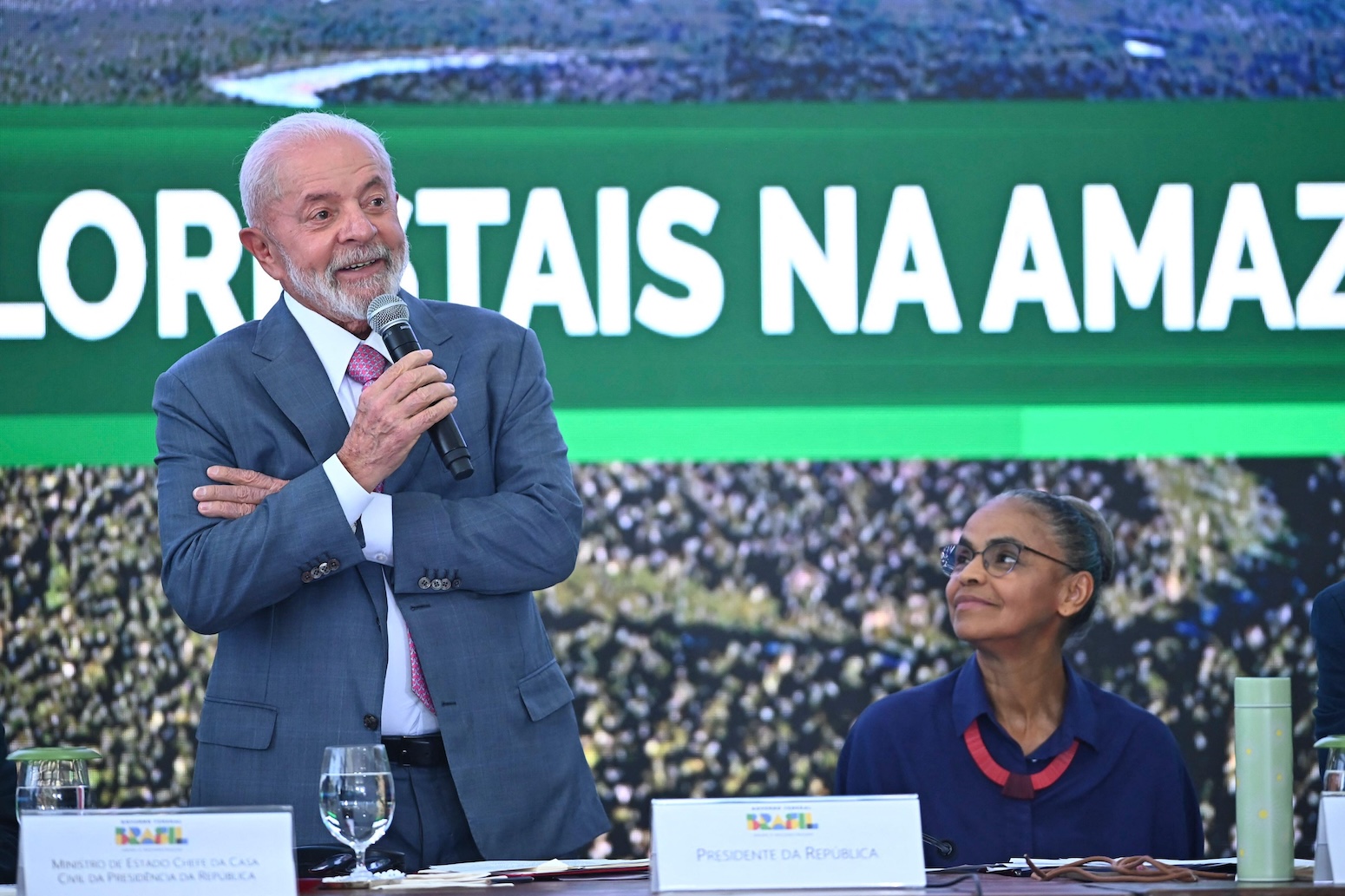
- 2023–2026 (The Lula Reversal): Upon his inauguration, Lula promised "zero deforestation by 2030." Under the stewardship of Environment Minister Marina Silva, the government reinstated the Action Plan for the Prevention and Control of Deforestation in the Legal Amazon (PPCDAM). Enforcement was ramped up, and policing efforts were modernized. The impact was immediate: annual deforestation dropped to 5,731 km² by 2025.
- 2026 (The Election Threshold): As of late 2026, preliminary satellite alerts suggest that total forest loss for the year could hit its lowest level since records began in 1988, provided the political momentum for conservation remains intact.
Supporting Data: Modeling the "No-Enforcement" Scenario
The 20,000 km² figure is derived from the GLOBIOM-Brazil model, developed by researchers at the University of Oxford, the International Institute for Applied Systems Analysis, and Brazil’s National Institute for Space Research (INPE).
The researchers compared the actual results of the Lula administration against a "baseline" scenario—a proxy for a continued Bolsonaro-style approach where the Forest Code is ignored or actively dismantled. Dr. Aline Soterroni, who led the 2023 study, notes that this projection is "relatively conservative."
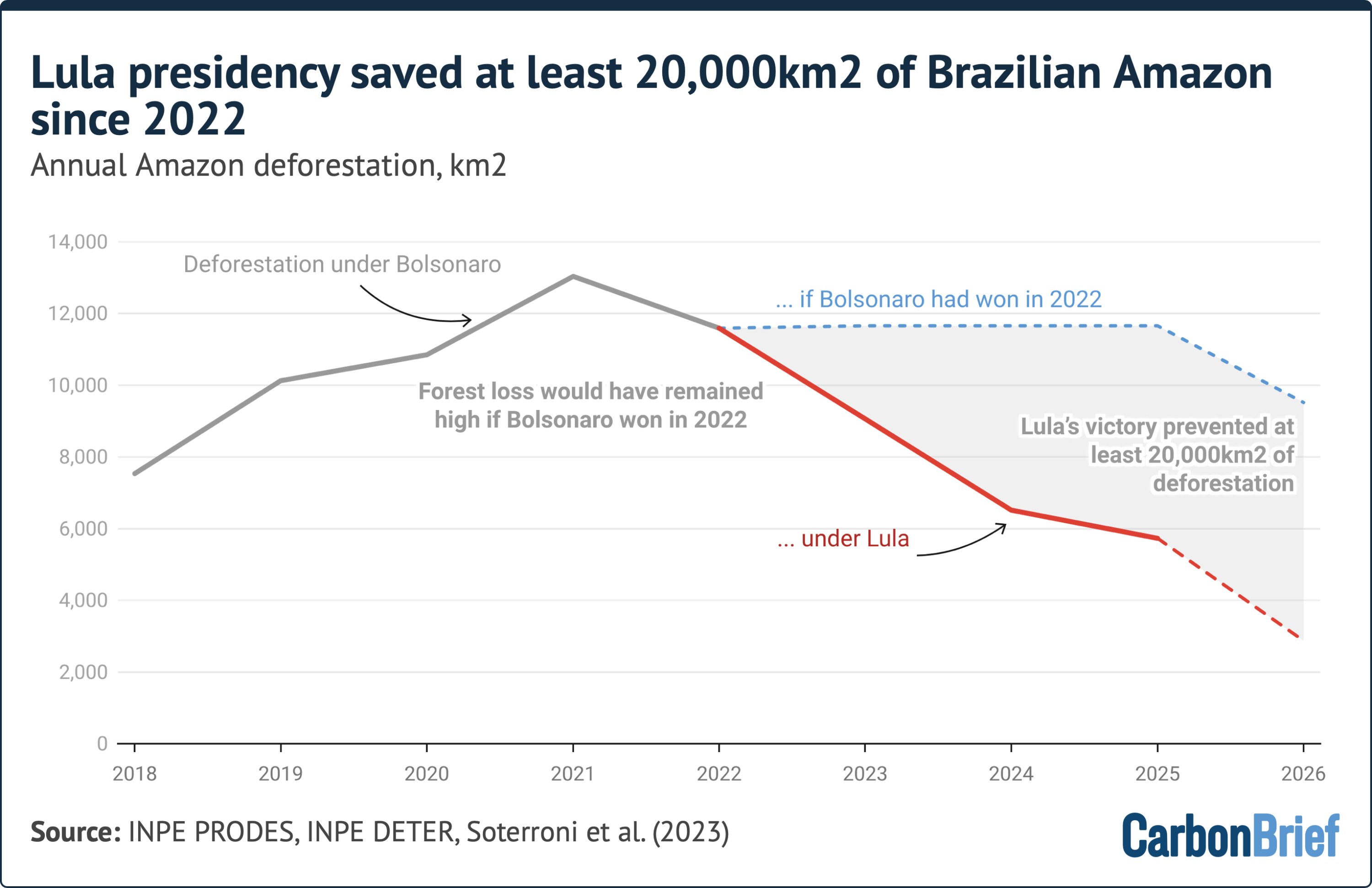
"The key message from our modeling is the contrast between these trajectories," says Dr. Soterroni. "Weak environmental governance keeps deforestation substantially higher, and our model shows how quickly the forest responds to political will. Actual deforestation under a different leadership could have been much higher, as our model does not fully account for the potential explosion in illegal land-grabbing and wildcat mining that occurs when the state signals that environmental laws are optional."
Official Responses and Expert Outlook
The political stakes could not be higher. Jair Bolsonaro is currently serving a term in prison for his role in plotting a coup following his 2022 electoral loss, yet his influence remains deeply entrenched in the Brazilian electorate. His son, Flávio Bolsonaro, has stepped into the breach, running a campaign that mirrors his father’s rhetoric.
Claudio Angelo, international policy coordinator at Brazil’s Climate Observatory, provides a grim assessment of a potential opposition victory. "At the risk of sounding alarmist, I have been saying that Lula’s re-election is the only thing standing between us and a wide destruction of the Amazon," Angelo states. He points to Flávio Bolsonaro’s legislative history, specifically his past attempts to formally dismantle the Forest Code, as evidence that the "zero deforestation" pledge found in his current platform is largely performative.
Dr. Patricia Pinho, deputy science director at the Amazon Environmental Research Institute (IPAM), warns of the human cost. "I don’t think we can afford four years of increasing deforestation and violence against Indigenous peoples," she notes. "The Bolsonaro era showed that the deconstruction of environmental institutes can be done very, very quickly. In a matter of months, they can destroy what has been built over decades."
The "Devastation Bill" and Legislative Hurdles
While the executive branch holds significant power in shaping environmental policy, the composition of the Brazilian Congress presents a persistent challenge. Currently, right-leaning parties hold half the seats in both chambers. This legislative power balance led to the 2025 passage of the so-called "devastation bill," a piece of legislation that effectively weakens environmental licensing requirements—a bill that even a presidential veto could not fully neutralize.
Furthermore, the recent collapse of the Amazon soy moratorium—a voluntary agreement where major grain traders pledged not to buy soy from deforested land—poses a new, structural threat. Researchers estimate that the end of this moratorium could trigger an additional 14,000 km² of deforestation by 2036, regardless of who occupies the presidential palace.

Global Implications: A Regional Shift
The upcoming election in Brazil is not occurring in a vacuum. Throughout South America, a rightward shift in governance has placed the majority of the Amazon basin under the control of administrations that explicitly prioritize industrial extraction over conservation. Mongabay reports that if Flávio Bolsonaro wins, nearly 95% of the Amazon will be governed by political coalitions that favor the expansion of mining and large-scale agribusiness.
This would represent a significant setback for global climate goals. Dr. David Lapola, an ecologist at the University of Campinas, warns that a shift in power would "consolidate the view that environmental protection is solely a matter of political preference, and not a crucial need for the survival of all people."
Conclusion: The Choice Ahead
As Brazil goes to the polls on October 4th, the voters face a binary choice that carries weight far beyond the borders of the Amazon. On one side, Lula’s platform offers a continuation of the current, albeit imperfect, trajectory of enforcement and international cooperation. On the other, the Bolsonaro camp offers a return to a philosophy of unbridled exploitation.
The data provided by Carbon Brief and the international research community is clear: political will is the most effective tool for forest preservation. The 20,000 km² of standing forest is a testament to what is possible when a government decides that its most precious natural resource is worth saving. The question now is whether the Brazilian electorate will choose to keep that forest standing for the next four years, or allow the clock to be turned back to an era of rapid, irreversible loss.
The world is watching, but the future of the Amazon will be decided, as it always has been, in the ballot boxes of Brazil.


 Nila Kartika Wati

 Dwi Wanna