



 Asro
Asro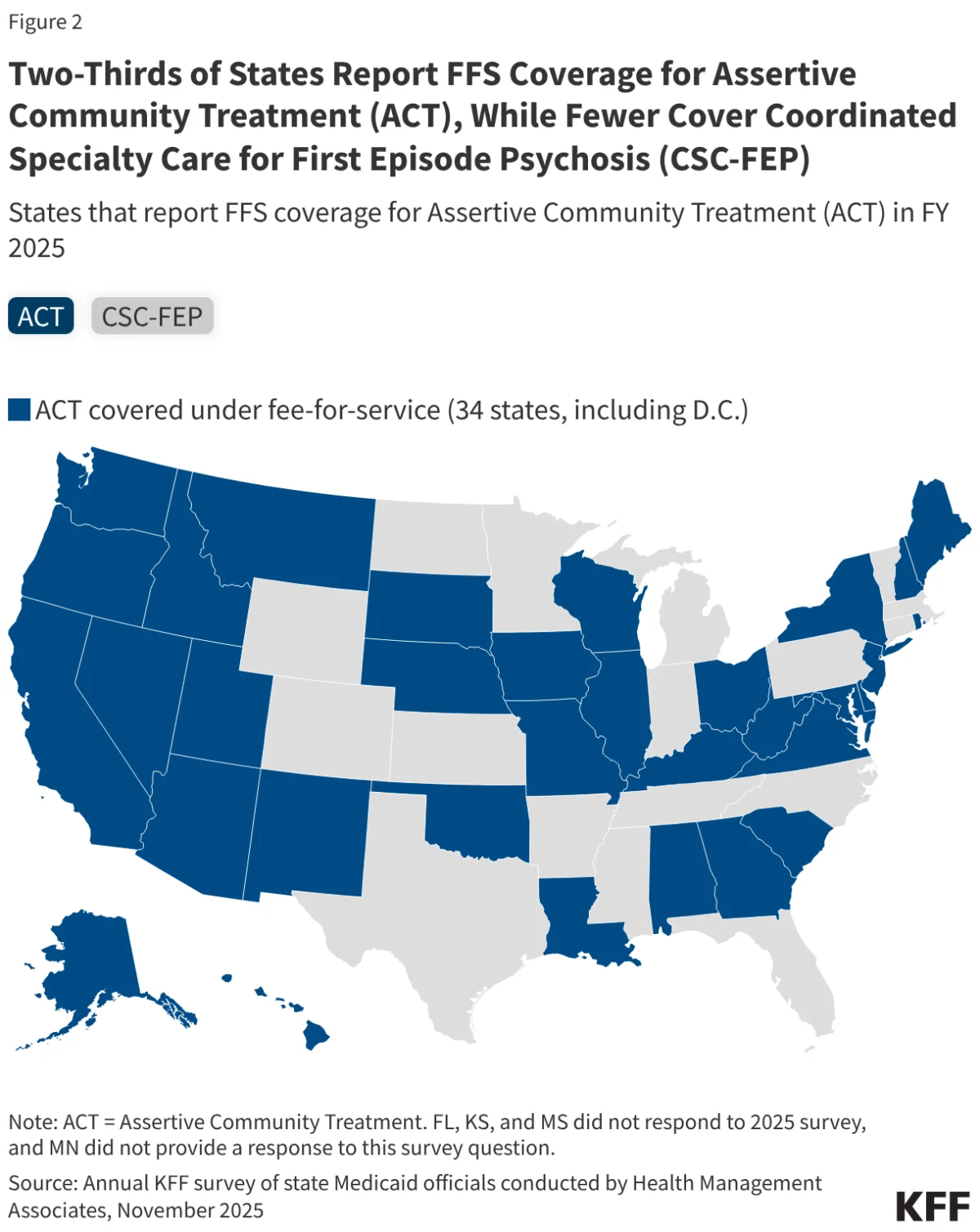
Medicaid stands as the single most critical pillar of the American mental health and substance use treatment infrastructure. Currently, the program provides essential coverage for nearly one-third of all adults living with mental illness and roughly one-quarter of those struggling with substance use disorders (SUD). For the most vulnerable populations—including those battling severe mental illness (SMI) and nearly half of all adults with opioid use disorder (OUD)—Medicaid is not merely a funding source; it is the primary gateway to life-saving clinical services and pharmaceutical interventions.
However, a precarious new landscape is emerging. While the last decade has been defined by state-led efforts to expand the behavioral health continuum, recent federal policy shifts and a tightening fiscal environment are threatening to stall or even reverse these gains.
The State of Play: A Decade of Expansion Faces New Headwinds
For ten consecutive years, KFF’s annual Medicaid budget surveys have consistently identified behavioral health as the most frequently cited category for benefit expansion. Across the country, state programs have aggressively sought to close long-standing gaps in community-based treatment, residential care, and crisis intervention services.
These expansions were fueled by both the urgent need to address the opioid epidemic and the availability of federal support via the SUPPORT Act and the American Rescue Plan Act (ARPA). States have increasingly integrated behavioral health into primary care through models like the Collaborative Care Model (CoCM) and have prioritized the establishment of Certified Community Behavioral Health Clinics (CCBHCs)—a model that provides a broad, comprehensive array of services in a single setting.
Despite this progress, the fiscal outlook for 2026 and beyond is increasingly turbulent. The 2025 federal reconciliation law has introduced new mandates, most notably the requirement for states to implement work and reporting requirements for Medicaid expansion adults. Because this expansion population includes a high concentration of individuals with behavioral health needs, policy experts fear that these administrative hurdles will trigger significant coverage losses. When coverage is interrupted, the immediate casualty is often the continuity of psychiatric medication and the stability of outpatient therapy, potentially forcing patients into more expensive and acute care settings.
Chronology: From Pandemic Response to Fiscal Contraction
- 2015–2022 (The Era of Expansion): In the wake of the Affordable Care Act’s expansion and the height of the opioid crisis, state Medicaid programs focused on broadening access to the behavioral health continuum. This era saw the rise of peer support services and the integration of behavioral health into school-based settings.
- 2023–2024 (Workforce Stabilization): States began focusing heavily on provider payment rates. Recognizing that low reimbursement was a primary driver of workforce shortages, over half of states implemented fee-for-service (FFS) rate increases for outpatient behavioral health clinicians.
- 2025 (The Turning Point): The introduction of the 2025 federal reconciliation law signaled a shift in federal priorities. New administrative requirements and a tightening fiscal climate began to impact state budgets.
- 2026–2027 (The Contraction): Projections indicate a slowdown in benefit enhancements. Some states, such as California, have signaled plans to shift the financial burden of mobile crisis response from the state level to individual counties, raising concerns about the sustainability of statewide crisis infrastructure.
Supporting Data: Provider Types and Clinical Models
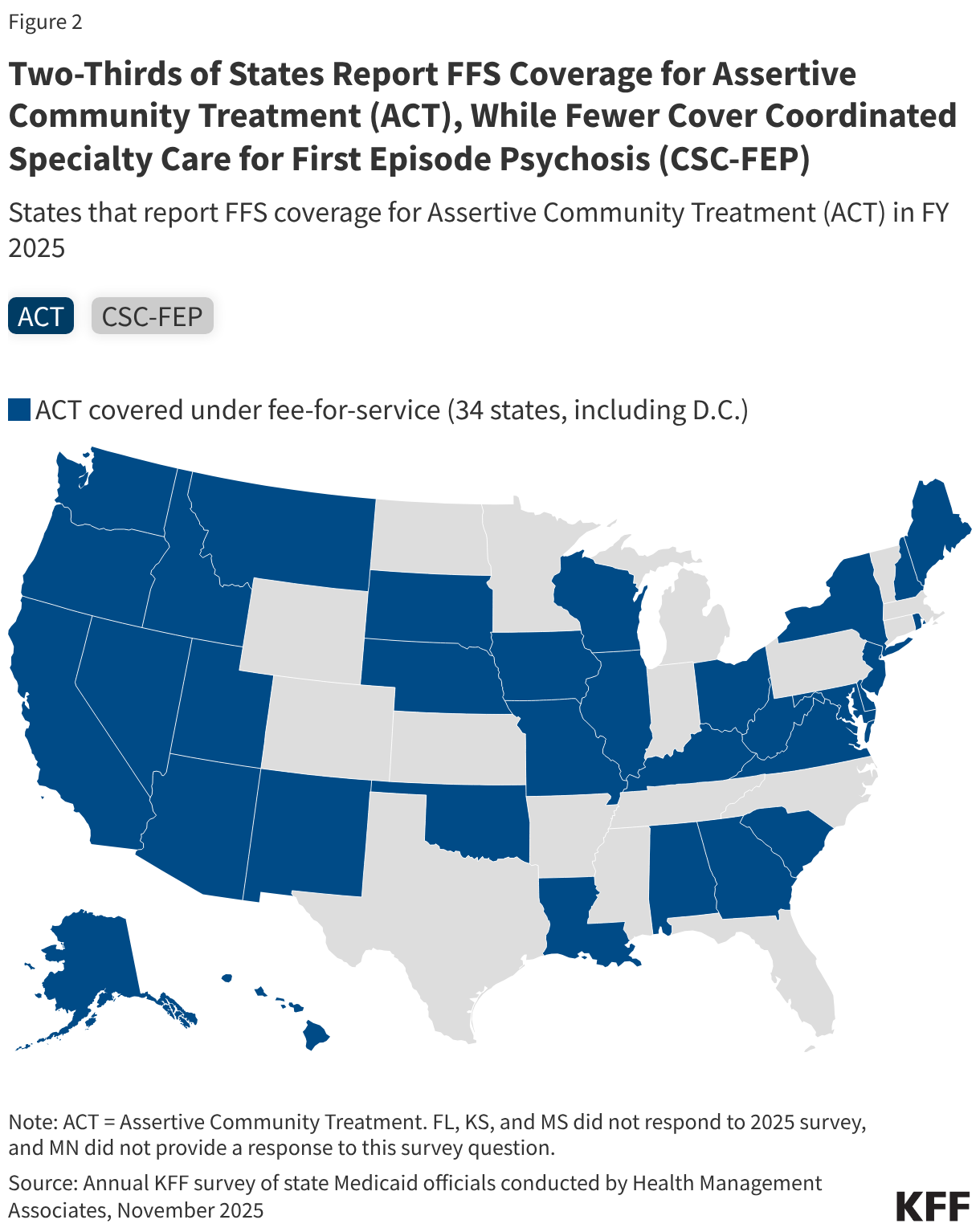
The FY 2025 KFF budget survey provides a granular look at how states are managing specialized care for SMI, specifically through Certified Community Behavioral Health Clinics (CCBHCs), Assertive Community Treatment (ACT), and Coordinated Specialty Care for First Episode Psychosis (CSC-FEP).
Certified Community Behavioral Health Clinics (CCBHCs)
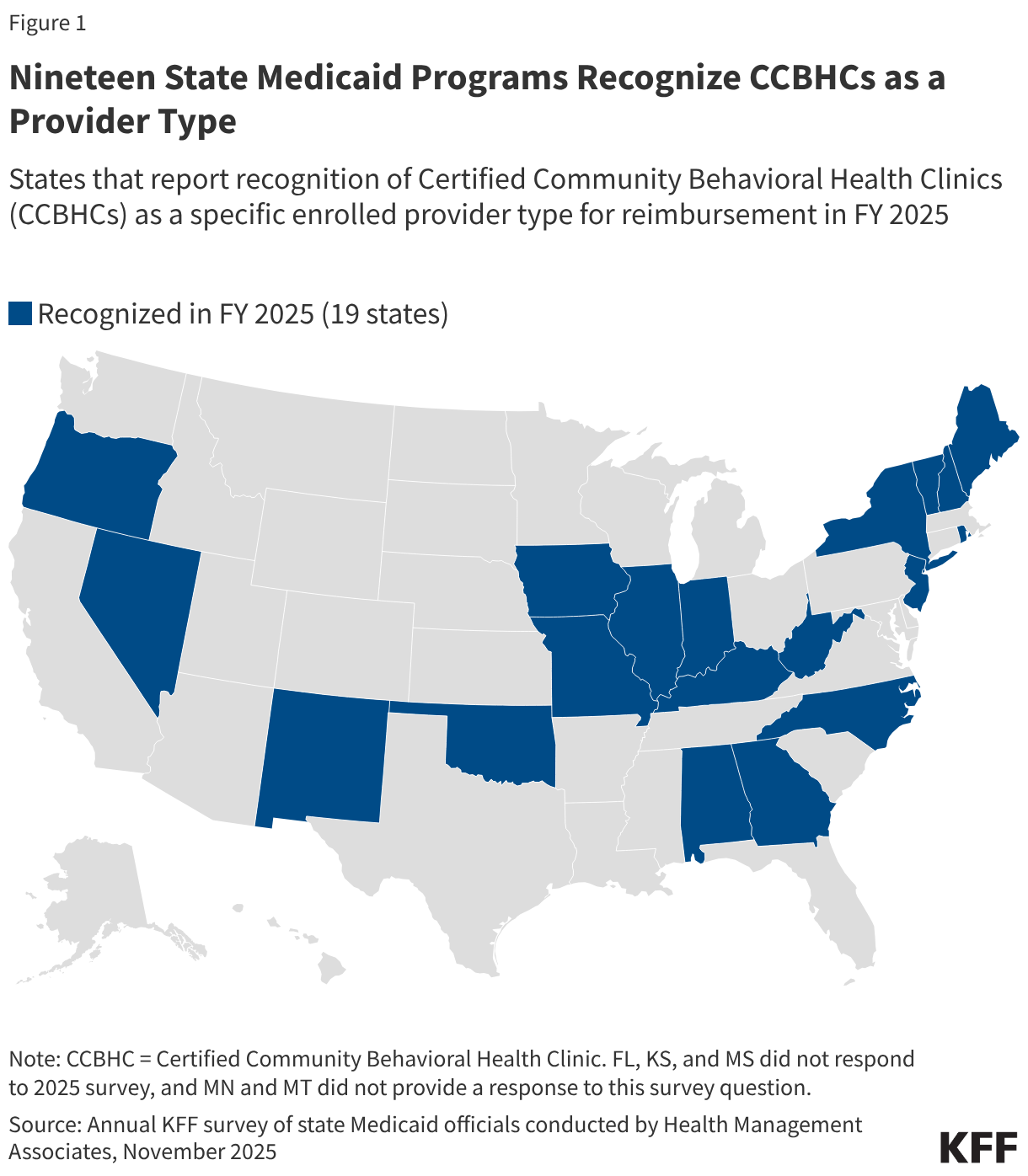
Recognition of CCBHCs as a distinct provider type has surged. In 2022, only nine states recognized CCBHCs; by 2025, that number had grown to 19. These clinics are designed to serve patients regardless of their ability to pay and offer a "one-stop" approach to behavioral health. While formal state recognition simplifies billing and data collection, it also requires significant administrative overhead, which remains a barrier for some jurisdictions.
Assertive Community Treatment (ACT)
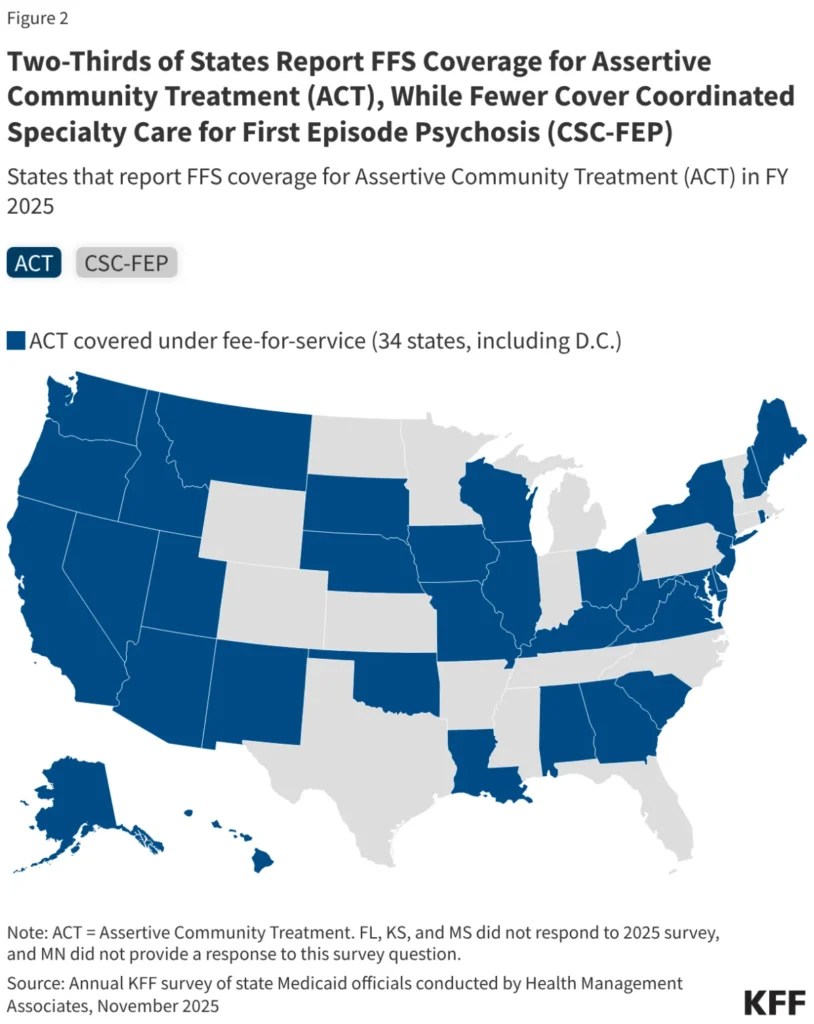
ACT is a high-intensity, evidence-based model for individuals with the most severe mental health needs, utilizing multidisciplinary teams to provide 24-hour support. As of 2025, 34 states report FFS coverage for ACT. While the model is clinically proven to reduce hospitalizations, it is under-utilized. In 2023, only 27% of mental health facilities reported offering ACT services. The vulnerability of these programs was highlighted in Idaho, where budget cuts led to the temporary suspension of ACT services—a disruption that, according to local reports, had fatal consequences for some enrollees.
Coordinated Specialty Care for First Episode Psychosis (CSC-FEP)
This early intervention model is perhaps the most significant under-served area in Medicaid. Only seven states reported FFS coverage for CSC-FEP in 2025. While several states have plans to add this coverage by 2026, the current lack of widespread adoption means many young people experiencing their first psychotic break are not receiving the coordinated medication management and family support necessary to prevent long-term disability.
Official Responses and Policy Implications
State Medicaid officials are currently walking a tightrope. On one hand, they face pressure to improve clinical outcomes and reduce the reliance on emergency departments. On the other, they are grappling with the end of pandemic-era federal funding and the looming reality of the 2025 reconciliation law.
"The slowdown in rate increases is a clear indicator of fiscal anxiety," notes one policy analyst. "When you look at the 2026 projections, where only about one-quarter of states are planning to further increase outpatient behavioral provider rates, it suggests that the momentum of the last few years is being throttled by budgetary constraints."
The primary concern among advocacy groups is the "work requirement" provision. By making Medicaid eligibility contingent on employment reporting, states risk creating a "coverage cliff." For an individual with schizophrenia or severe substance use disorder, the administrative burden of reporting work hours can be a insurmountable obstacle. If these individuals lose their Medicaid coverage, they lose their access to the very medications that keep them stable enough to work in the first place.
Implications for the Future of Care
The trajectory of Medicaid behavioral health policy is at a crossroads. While the evidence-based models (CCBHC, ACT, and CSC-FEP) have shown that targeted, intensive, and integrated care works, the systemic infrastructure to support them is fragile.
1. The Risk of Fragmentation: As states shift funding responsibilities to counties (as seen in the California proposal), there is a significant risk that behavioral health access will become a "zip code" issue. Patients living in affluent counties with strong local tax bases may continue to receive high-quality care, while those in rural or economically depressed areas may see their services disappear.
2. The Need for Data Transparency: The push to recognize CCBHCs as distinct provider types is a positive step toward better data. Without the ability to track these services through claims data, states cannot effectively measure the success of their interventions or justify the long-term ROI of behavioral health spending to skeptical budget committees.
3. Balancing Fiscal Responsibility with Public Health: The challenge for the coming years will be proving that investing in outpatient and intensive community-based care—like ACT and CSC-FEP—is the only way to reduce the astronomical costs associated with frequent psychiatric hospitalizations and long-term disability.
Ultimately, the gains made in the last decade demonstrate that Medicaid can be a powerful engine for behavioral health transformation. However, as federal support becomes more restrictive and state budgets tighten, the commitment to these programs will be tested. The question is no longer whether we know what treatments work, but whether the political and fiscal will exists to ensure they are accessible to every American who needs them.


 Ali Ikhwan
 Asep Darmawan