



 Raul Delapena Setiawan
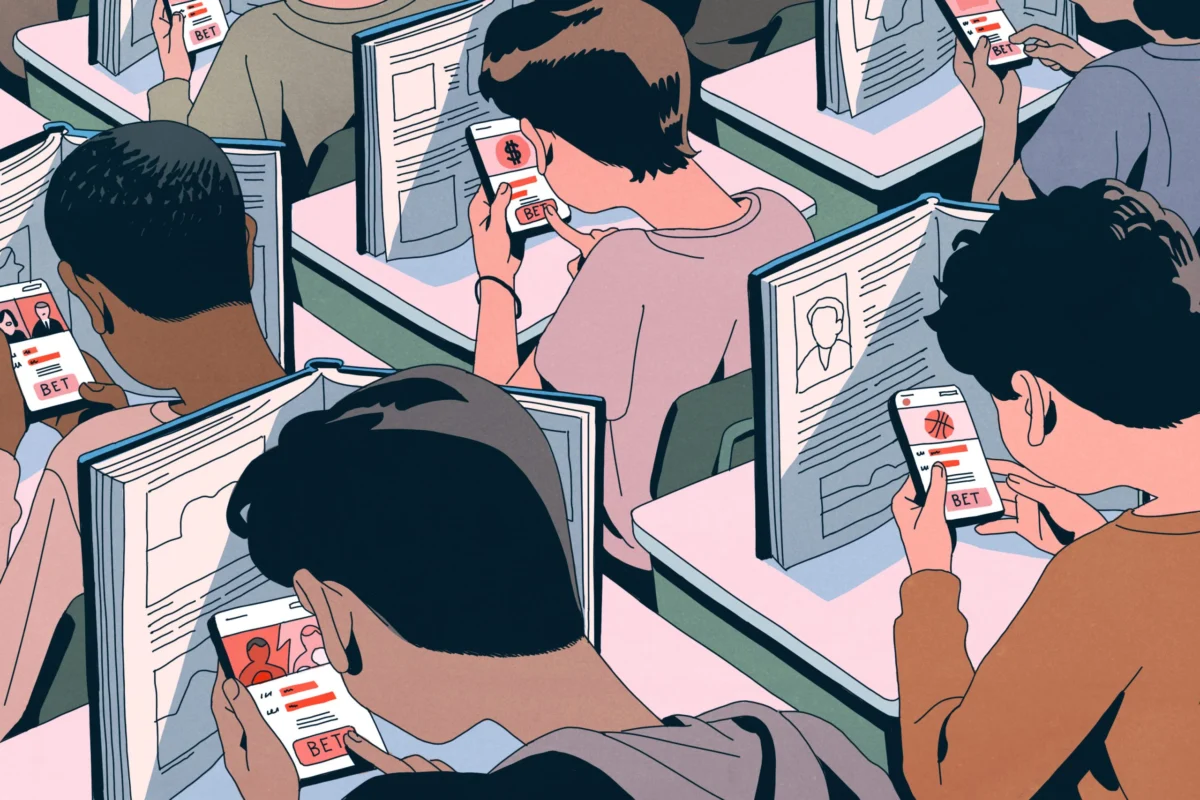
The American educational landscape is undergoing its most significant transformation in a century. Once defined by the rigid boundaries of zip-code-assigned public schooling, the system is rapidly decentralizing. As universal school choice programs—ranging from Education Savings Accounts (ESAs) to robust voucher systems—take root in states like Arizona, Florida, Indiana, and Ohio, the traditional monopoly on education is dissolving.
Proponents argue this shift is not merely a policy change but a fundamental realignment of power, placing the autonomy of families above the bureaucracy of the state. Evidence suggests that this evolution is creating a rising tide that lifts all boats, benefiting students in both private and public sectors, while simultaneously catalyzing a wave of innovation that is reshaping the classroom.
The Chronology of Change: From Niche Policies to Universal Access
The road to universal choice was not built overnight. For decades, school choice existed primarily as a marginal policy—small-scale scholarship tax credits or limited voucher programs designed for specific demographics, such as students with special needs or those in failing districts.
- The Early 2000s: Educational choice was largely viewed as a localized, niche experiment. Policy debates were dominated by concerns over the "slippery slope" of public funding for private institutions.
- The 2016 Turning Point: As parental dissatisfaction grew, a new cohort of political leaders began to view school choice not as a liability, but as a potent electoral asset. The messaging shifted from "fixing failing schools" to "empowering families."
- The 2020–2022 Catalyst: The COVID-19 pandemic served as a massive accelerant. As schools shuttered, parents gained unprecedented visibility into the curricula and instructional methods of their local districts. This "window into the classroom" sparked a demand for alternatives that, in many states, lawmakers were eager to meet.
- The Universal Era (2022–Present): Arizona, followed quickly by Florida, Arkansas, and others, moved to decouple funding from the institution and attach it to the student. The transition to universal ESAs marked the end of the pilot-program era and the beginning of a systemic, market-based approach to K-12 education.
Supporting Data: Who Is Winning in the New Era?
The success of these programs can be measured through a diverse set of metrics, from standardized test scores to the explosion of entrepreneurial ventures.
1. The Students: A Two-Fold Victory
Perhaps the most surprising finding in modern educational research is that school choice benefits both those who leave the public system and those who remain within it.
For students transitioning to private or charter programs, the benefits are clear. Research consistently shows that students who exercise choice often report improved mental health, reduced experiences of bullying, and better access to individualized instruction. Longitudinal studies on Ohio’s voucher program have linked participation to higher rates of college enrollment and persistence.
Conversely, students remaining in traditional public schools are also seeing gains. The competitive pressure introduced by school choice incentivizes public districts to improve. A 2023 study by economist David Figlio regarding Florida’s schools demonstrated that students remaining in public classrooms showed improved math and reading scores and lower rates of absenteeism. Similar patterns were identified in Ohio by Figlio and Matthew Chingos, who found that public school students in choice-rich environments graduate and enter higher education at higher rates than their counterparts in districts with no competition.
2. The Rise of Private and Hybrid Models
Data from Susan Pendergrass indicates a robust supply-side response to universal funding. While national private school growth remained stagnant for years, states with universal ESAs have seen explosive expansion. Arizona’s private school count jumped from 314 in 2011 to at least 400 in 2021, and exploded further to 661 participating vendors after the 2022 expansion. Indiana’s private schools, once operating at half-capacity, are now reporting waitlists and facility expansions.
3. Education Entrepreneurship and Customization
The most profound shift is in how funds are spent. In 2013, roughly 72 percent of Arizona ESA families used their funds exclusively for tuition. By the 2023–24 school year, that figure plummeted to 13 percent. Today, 87 percent of families utilize their ESAs for a "portfolio" approach—combining private tutoring, online courses, specialized therapies, and extracurriculars. This has fueled a surge in microschooling, with the National Microschooling Center estimating roughly 95,000 such entities serving 1.5 million children nationwide.
Official Responses and Political Implications
The political calculus surrounding school choice has undergone a radical transformation. Historically, school choice was a contentious issue that many legislators avoided for fear of backlash from powerful teachers’ unions.
Today, the sentiment has shifted. Governors such as Ron DeSantis (FL), Greg Abbott (TX), Kim Reynolds (IA), and Sarah Huckabee Sanders (AR) have championed universal choice as a cornerstone of their platforms. For these leaders, the data is clear: advocating for parental rights and educational options is a winning electoral strategy.
One Midwestern State Speaker of the House noted that what was once considered a "career-ending" vote is now among the most popular items in a caucus meeting. The shift reflects a broader alignment between voters who prioritize educational customization and the legislators who facilitate that freedom.
Implications: The New Paradigm
The transition to universal choice has broad implications for the future of American society:
- Civic Engagement: Emerging research suggests that students in choice programs exhibit higher levels of civic tolerance and community engagement. By stepping out of the "default" system, families are taking a more active role in their child’s upbringing, which often correlates with greater social responsibility.
- The End of the "Zip Code" Monopoly: The most significant implication is the death of the "zip code lottery." For generations, a family’s socioeconomic status dictated the quality of their child’s education. Universal choice decouples quality from geography, theoretically narrowing the achievement gap by empowering low-income families to access the same high-quality options previously reserved for the wealthy.
- The "Market-Correction" of Education: As the supply of educational services expands to meet the diverse needs of students—from neurodivergent learners to gifted athletes—the static nature of the traditional classroom is being replaced by a dynamic, responsive market. This is not merely a change in funding; it is a change in the fundamental philosophy of American education.
Conclusion: A Sustainable Future?
As universal school choice continues to expand, the focus is shifting from "whether" it works to "how" it can be scaled sustainably. The evidence is compelling: when families are treated as primary stakeholders in their children’s education, the result is a more competitive, more innovative, and more equitable landscape.
The data indicates that we are moving toward a future where education is no longer a one-size-fits-all product delivered by the state, but a tailored service chosen by the family. In this new era, the "winners" are not just the entrepreneurs or the politicians—they are the students who, for the first time in history, are being offered an education as unique as they are.


 Asep Darmawan