



 Evan Lee Salim
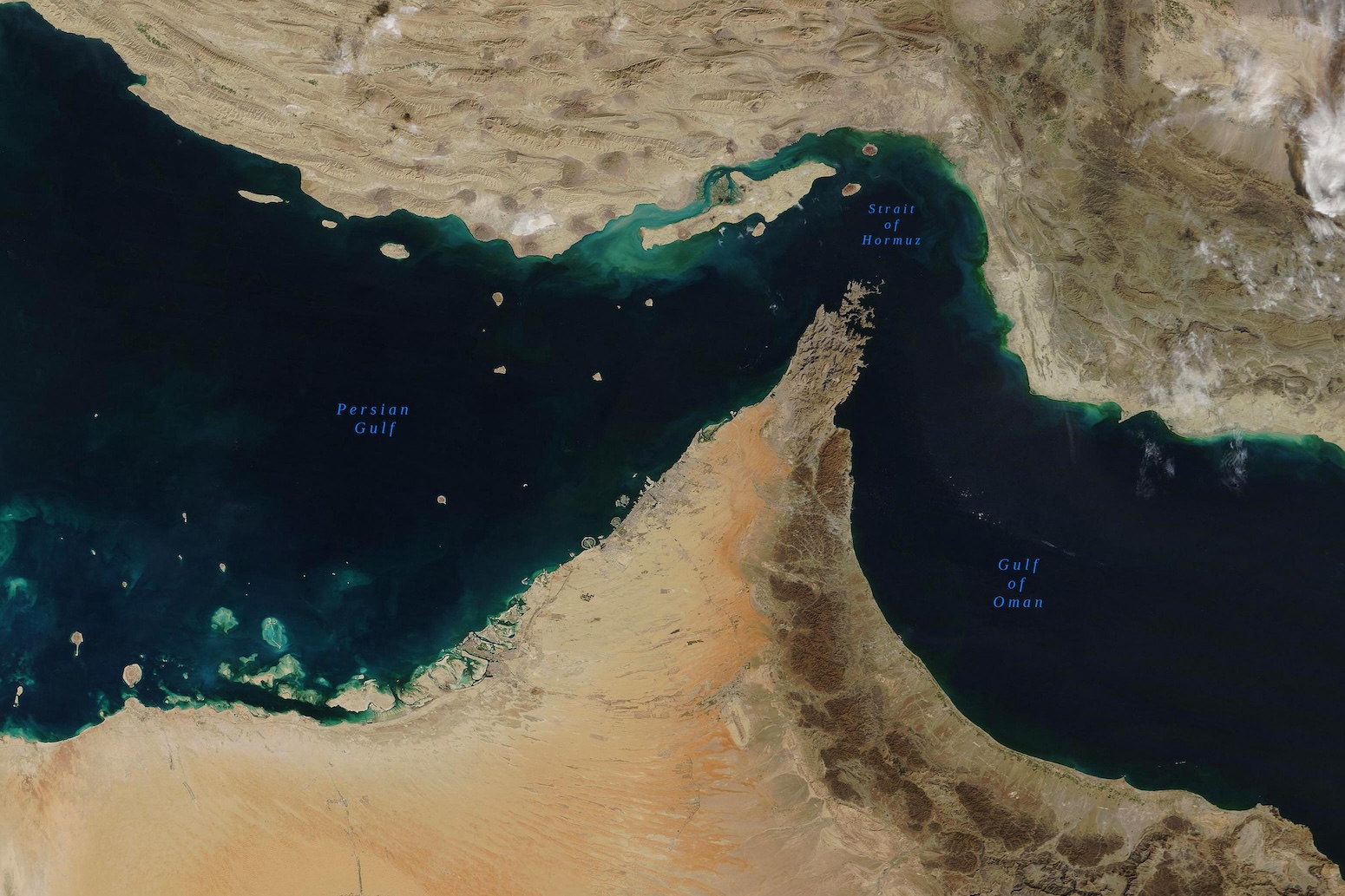
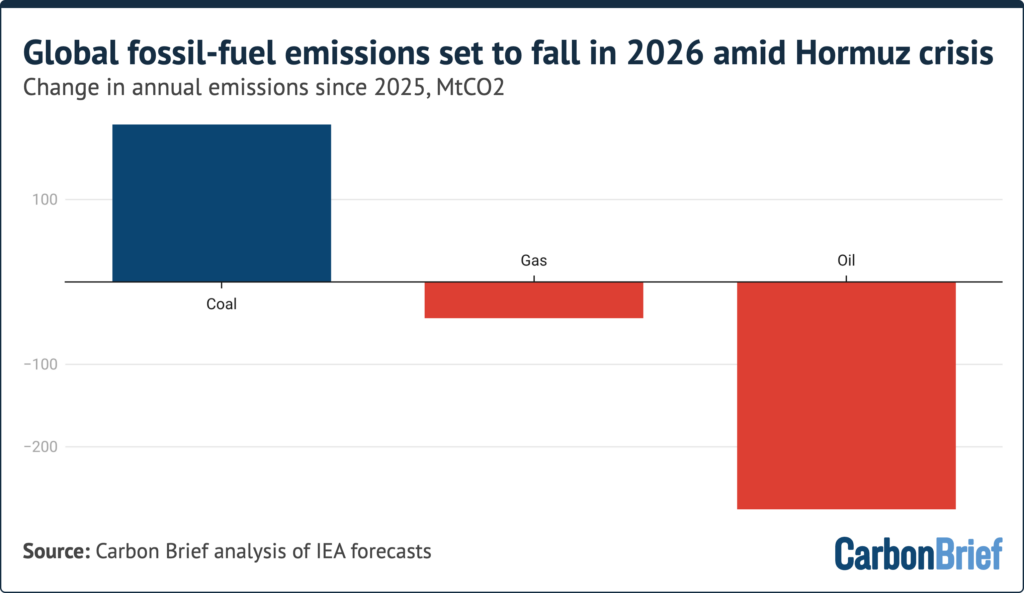
As the geopolitical landscape remains fractured by the ongoing US-Iran conflict, a counterintuitive trend has emerged in the global climate narrative. New analysis from Carbon Brief suggests that global fossil-fuel emissions are on track to decline by approximately 0.5% in 2026. While the volatility in the Strait of Hormuz has sent shockwaves through energy markets, the resulting economic friction and high prices are acting as a catalyst for an accelerated—albeit painful—transition away from traditional hydrocarbons.
Main Facts: A Shift in Energy Consumption
The disruption of trade routes through the Strait of Hormuz—the world’s most vital maritime oil chokepoint—has fundamentally altered the global energy equation. With oil and gas prices experiencing sustained upward pressure, the economic incentive to maintain reliance on these fuels has eroded.
While some media outlets have sounded the alarm over a “return to coal,” the data tells a more nuanced story. Although global coal demand is projected to rise by 1.2% this year, this increase is largely overshadowed by the substantial drop in oil and gas consumption. Because fossil fuels constitute roughly two-thirds of total global greenhouse gas emissions, the dramatic contraction in oil demand is, in aggregate, successfully pulling down the global emissions total.
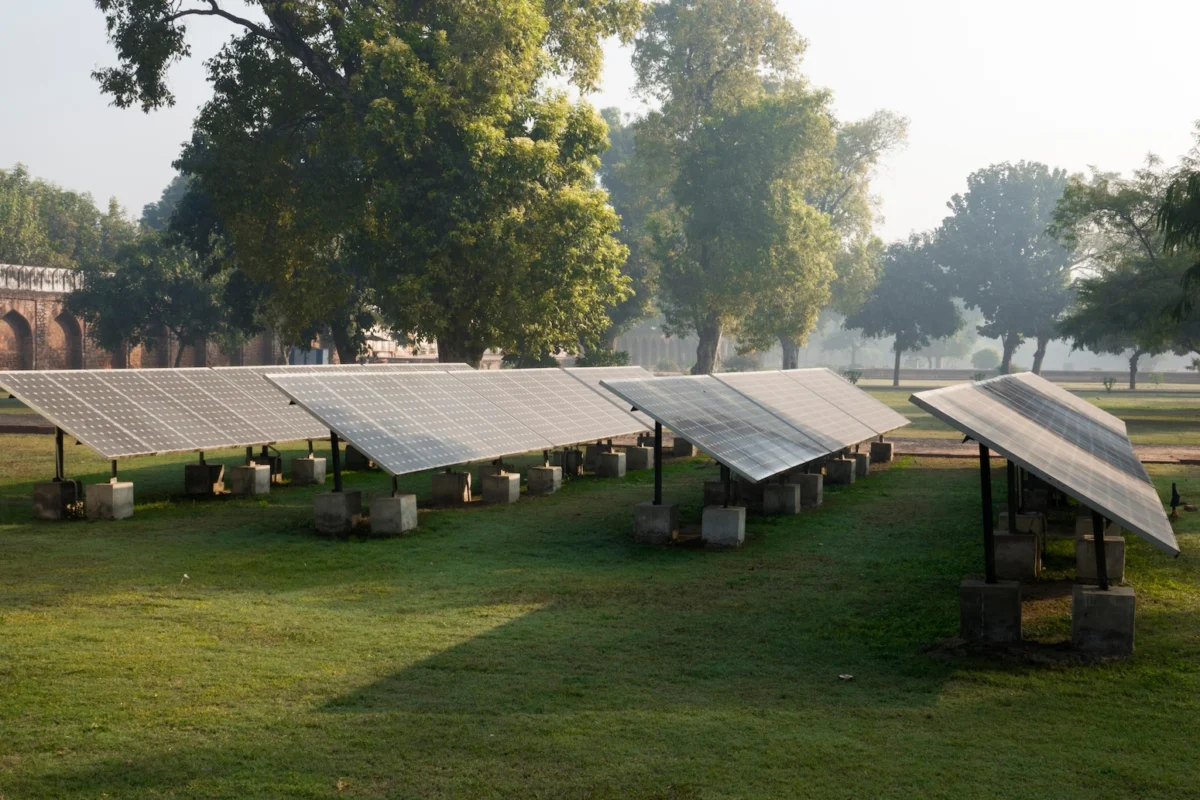
The shift is not merely a temporary blip; it represents a fundamental change in how nations view energy security. Faced with the volatility of the Hormuz crisis, governments are finding that domestic clean energy alternatives are no longer just an environmental imperative, but a matter of national survival.
Chronology of the 2026 Energy Shock
The path to this year’s emissions decline was paved by a series of cascading events that began in early 2026.
- January 2026: The International Energy Agency (IEA) released its initial projections, anticipating a rise in global oil demand by 930,000 barrels per day (bpd). At this stage, the conflict was nascent, and markets remained largely optimistic about the stability of supply chains.
- March-May 2026: As the conflict intensified, the blockade of the Strait of Hormuz shifted from a threat to a daily reality. Global gas prices surged, forcing energy-dependent nations to reconsider their procurement strategies.
- July 2026: The IEA’s mid-year report signaled a critical pivot, projecting a 0.6% drop in global gas demand. This marked the moment when high prices began to force industrial and residential behavioral changes.
- September 2026: The scale of the impact became clear. The IEA revised its oil demand forecast from the initial growth projection to a staggering 2,500,000 bpd reduction—a 2.4% decline from 2025 levels. Simultaneously, data emerged indicating that the "return to coal" was constrained by infrastructure limitations, as few countries possess the capacity to pivot large-scale energy systems to coal overnight.
Supporting Data: The Anatomy of the Decline
The IEA’s comprehensive updates provide the empirical backbone for this analysis. The decline is not uniform; it is a result of divergent trends across different fuel types, exacerbated by environmental and systemic factors.
The Coal Conundrum
While coal demand has ticked up by 1.2%, it is crucial to understand that much of this is independent of the Hormuz crisis. The IEA points to a powerful El Niño event as a primary driver, which has increased cooling demand while simultaneously crippling hydropower output. Additionally, China—the world’s largest coal consumer—has struggled with inefficiencies, resulting in a significant amount of "wasted" wind and solar energy that might have otherwise displaced coal.
The Collapse of Oil Demand
The most dramatic feature of the 2026 energy landscape is the collapse of oil demand. What was initially viewed as a temporary market fluctuation has hardened into a structural trend. The "consensus" forecast, supported by data from institutions like Morgan Stanley, confirms that the decline is widespread. As fuel prices have reached prohibitive levels, the market has responded with a rapid adoption of electric vehicles (EVs). In regions as diverse as Australia, Thailand, and Europe, EV market shares have reached record highs, effectively destroying the "last mile" of oil demand in the transportation sector.
Official Responses and Strategic Realignment
International organizations and government bodies are currently grappling with the reality that the post-2026 energy world will look drastically different from the pre-crisis era.
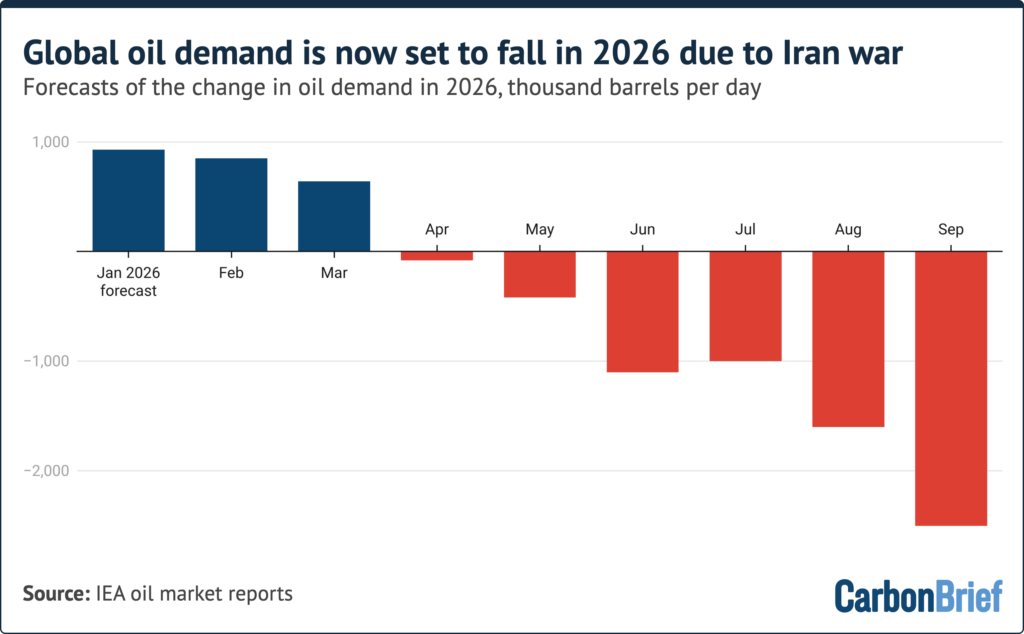
The IEA has notably walked back its previous assertions regarding the peak of oil demand. Last year, the consensus suggested oil demand might not peak until 2030. Now, the IEA anticipates that oil use will remain essentially flat for at least two years.
This sentiment is echoed by industry experts. Sverre Alvik, vice president at the consultancy DNV, noted in a recent assessment: "For every month the conflict lasts, the probability of permanent oil demand destruction increases."
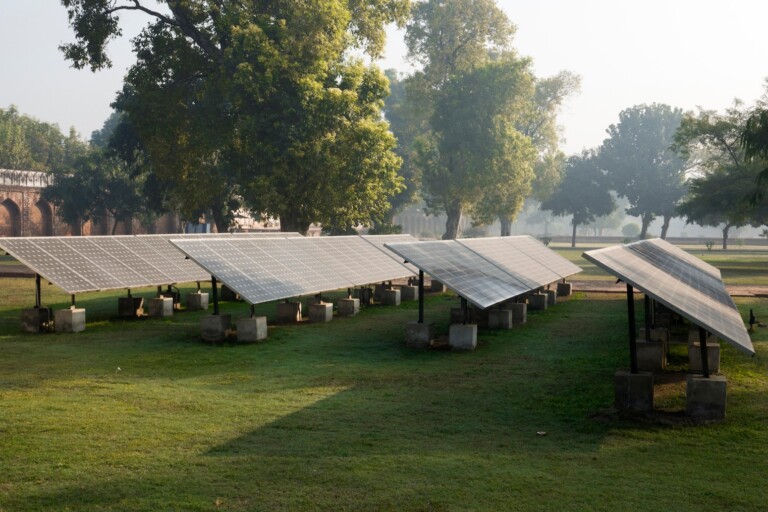
Governments that had previously bet their future on Liquefied Natural Gas (LNG) are now experiencing "buyer’s remorse." Developing nations, particularly in Asia, are finding that the $9.4 billion price tags associated with recent LNG imports are fiscally unsustainable. As a result, there is a visible diplomatic and economic pivot toward accelerating domestic renewable energy projects. These nations are choosing to leapfrog the reliance on volatile international gas markets, favoring long-term investments in solar, wind, and domestic battery storage.
Implications: The Long-Term Energy Transition
The 2026 crisis has inadvertently acted as an "accelerant" for the global energy transition. By creating a high-cost environment for fossil fuels, the conflict has provided the economic justification for investments in renewables that might have otherwise taken a decade to materialize.
A Permanent Structural Shift
The most significant implication is the potential for "permanent demand destruction." As households and industries adopt EVs, heat pumps, and localized renewable grids to escape the volatility of the Hormuz-dependent oil market, these consumers are unlikely to switch back to fossil fuels once the conflict subsides. The infrastructure of the transition is being built under the pressure of necessity.
The Climate Paradox
While it is grim that a war is the primary driver of this emissions reduction, the climate outcome remains significant. If global emissions do indeed fall by 0.5% in 2026, it would represent a rare decoupling of economic activity from carbon intensity during a period of extreme geopolitical tension. However, this progress is fragile. The IEA warns that if gas prices were to suddenly ease, there is a risk that coal demand could surge once more, creating a "see-saw" effect that could stall long-term decarbonization goals.

Geopolitical Stability and Energy Autonomy
The lesson of 2026 is clear: energy independence is inextricably linked to the climate transition. Nations that rely on centralized, maritime-dependent fossil fuel imports are inherently vulnerable to the geopolitical instability of chokepoints like the Strait of Hormuz. Conversely, nations investing in decentralized, domestic renewable energy are effectively "insulating" their economies from global conflicts.
As we look toward 2027 and beyond, the central question for policymakers is not how to return to the pre-2026 status quo, but how to institutionalize the gains made during this crisis. The momentum toward electrification and efficiency is no longer a niche environmental goal; it is now the cornerstone of global economic resilience.
The 0.5% reduction in 2026 emissions may be the first, painful step toward a world where energy security is defined not by the control of shipping lanes, but by the capture of the sun, the wind, and the efficiency of our own technological infrastructure. The crisis in Hormuz has proven that while the world may be slow to change for the sake of the climate, it will move with incredible speed when forced to do so by the harsh realities of the market.


 Nila Kartika Wati
 Laily UPN





