

 Rifan Muazin
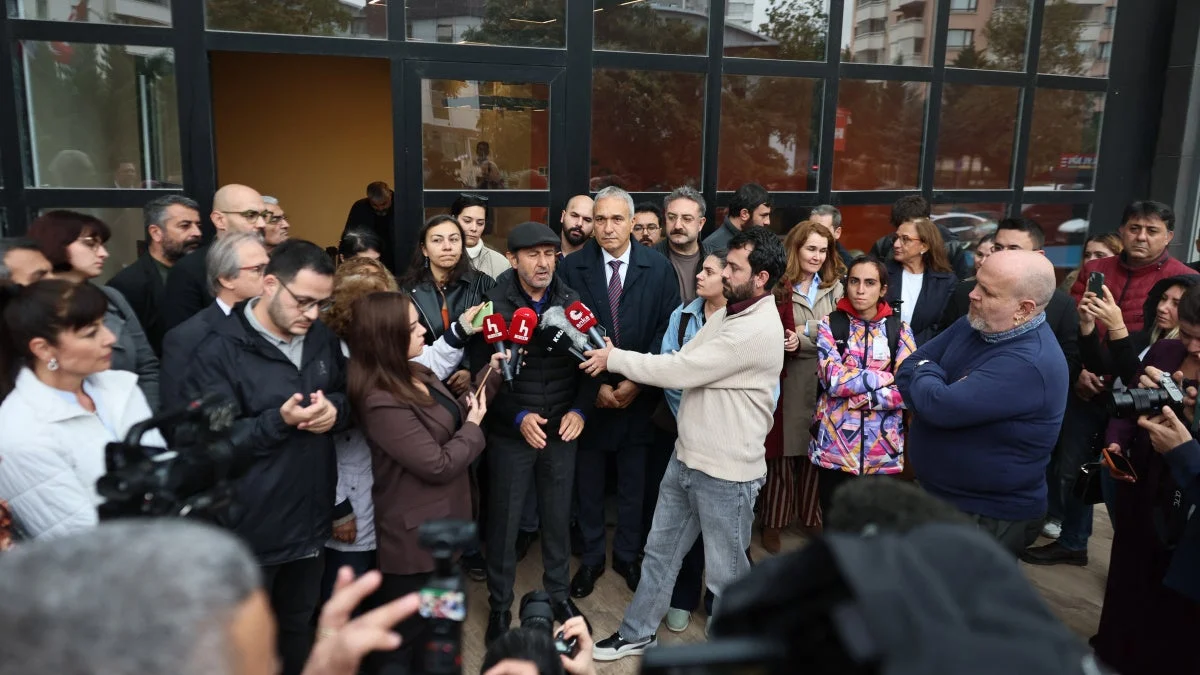
ISTANBUL – In a move that has sent shockwaves through the Turkish media landscape and drawn international condemnation, authorities in Türkiye executed a dawn raid on October 14, 2026, effectively dismantling one of the country’s most prominent independent voices. Halk TV, a widely-watched television network known for its critical stance toward the administration of President Recep Tayyip Erdoğan, was seized by government-appointed administrators. The move, which saw the immediate termination of live broadcasting, serves as the latest chapter in what critics describe as an systematic dismantling of press freedom in the nation.
The Dawn Raid: A Sudden End to Independent Discourse
The operation began before sunrise, as law enforcement officials entered the Istanbul headquarters of Halk TV. The raid was not merely a physical occupation of the premises but a calculated administrative takeover. By mid-morning, a government-appointed board of trustees, operating under the authority of the Savings Deposit Insurance Fund (TMSF)—a state body attached to the presidency—had assumed full control of the network’s operations.
The transition was abrupt and absolute. As journalists were forcibly removed from their desks, the station’s programming was halted. Viewers who tuned in to follow the day’s breaking news were instead met with the surreal sight of an old Turkish film playing on a loop, a stark visual metaphor for the silencing of a contemporary political watchdog.
The timing of the seizure was far from coincidental. It occurred on the very day that Ekrem İmamoğlu, the Mayor of Istanbul and a leading opposition figure, took the stand to begin his defense in a high-stakes, politically charged trial that many international observers characterize as an attempt to remove him from the political arena.
A Chronology of Suppression
The takeover of Halk TV is not an isolated incident but the culmination of a long-term strategy of "lawfare" employed against independent media.
- Pre-2026: Throughout the previous decade, the Turkish government has systematically utilized the TMSF to seize private enterprises deemed hostile to the administration. This legal mechanism, originally designed to address financial crimes, has increasingly been repurposed as a tool for political censorship.
- October 12, 2026: Human Rights Watch and other advocacy groups report a sharp escalation in internet censorship and the blocking of access to independent digital news portals, signaling a broader crackdown on the flow of information.
- October 14, 2026 (06:00 AM): Turkish police initiate the raid on Halk TV’s headquarters.
- October 14, 2026 (09:00 AM): The Istanbul Prosecutor’s Office issues arrest warrants for the owner of Halk TV and 16 other individuals, citing allegations of bribery, money laundering, and tender rigging.
- October 14, 2026 (10:30 AM): The station’s live feed is cut while an anchor is in the middle of a segment investigating a major investment fund scandal involving high-ranking figures within the ruling party.
The Pretext of "Financial Crimes"
The legal justification provided by the Istanbul prosecutor’s office hinges on complex financial allegations. By framing the takeover as a standard criminal investigation into bribery and money laundering, the government attempts to shield the action from charges of censorship.
However, legal experts and media analysts argue that the financial investigation is a flimsy pretext. The pattern is well-established: when an outlet becomes a liability to the ruling party, the state initiates a "financial review," places the company under the management of the TMSF, and effectively installs loyalists to oversee the editorial content. This methodology has been used repeatedly over the past ten years to neutralize dissenting media groups, effectively bringing them into the orbit of the government’s state-aligned propaganda machine.
The Role of Halk TV in a Polarized Democracy
In a nation where the vast majority of the public still relies on television as their primary source of information, the loss of Halk TV is a devastating blow to democratic pluralism.
For years, Halk TV has stood as a bastion for voices excluded from the state-dominated mainstream media. Its journalists have been among the few to provide rigorous coverage of:
- The Politically Motivated Trials: The network provided extensive coverage of the legal proceedings against Mayor Ekrem İmamoğlu, offering a counter-narrative to the state’s characterization of the trial.
- Corruption Allegations: Halk TV was a central hub for reporting on persistent allegations of systemic corruption within the ruling party and the executive branch.
- Opposition Unity: The network provided a platform for the New Party (Yeni Parti) and other opposition figures to communicate their policy alternatives to the public, challenging the government’s attempts to fracture the opposition.
The Investment Fund Scandal: The Trigger?
The specific catalyst for the raid appears to be a segment that was live on air just moments before the plug was pulled. The station was in the midst of an investigative report into an "investment fund bubble" that had recently burst. The report reportedly implicated high-level figures associated with President Erdoğan’s inner circle.
The fact that the station was silenced while covering a story of such high public interest suggests that the government’s threshold for "acceptable" reporting has vanished. The message was clear: there are no untouchable stories, and there are no safe havens for critical journalism.
Implications for Turkish Democracy
The implications of the Halk TV takeover are profound and multifaceted:
The Erosion of Information Access
By silencing a major news channel, the government has significantly narrowed the spectrum of reality available to the Turkish public. When television is the primary source of news for the citizenry, the control of that medium equates to the control of public opinion. The "monotonous" nature of remaining state-aligned outlets ensures that the public is largely insulated from news that might challenge the government’s authority.
The Chilling Effect on Journalism
The prosecution and jailing of journalists, coupled with the seizure of news outlets, create an atmosphere of paralyzing fear. Reporters are now faced with a stark choice: participate in self-censorship to survive or face the threat of imprisonment and the destruction of their professional livelihoods. This climate of intimidation is effectively driving the most talented voices out of the profession or into exile.
Violation of Fundamental Rights
The suppression of Halk TV is a direct violation of the right to freedom of expression as enshrined in international human rights treaties to which Türkiye is a signatory. Furthermore, it violates the public’s right to access information, a cornerstone of any democratic society. By turning the channel into a state-managed mouthpiece, the authorities have betrayed the trust of the electorate and undermined the democratic process.
A Call for Reversal
International observers, including the Committee to Protect Journalists (CPJ) and various human rights organizations, have called for the immediate reversal of the takeover. The argument is simple: a healthy democracy requires a diverse, pluralistic media environment where varied opinions can be debated openly.
Without such an environment, the electoral process loses its legitimacy, as voters are unable to make informed decisions based on a full picture of the political landscape. The takeover of Halk TV is not merely a legal or administrative event; it is a profound setback for the democratic aspirations of the Turkish people.
Conclusion
As the scene of an old, irrelevant film continues to play on the screens where Halk TV once challenged power, the Turkish public is left to grapple with a quieter, more controlled media landscape. The government’s move to seize the network has achieved its short-term goal of silencing a critic, but in doing so, it has further isolated Türkiye from the community of democratic nations.
The struggle for the future of the Turkish press is far from over, but the events of October 14 serve as a stark reminder of the fragility of independent journalism in the face of an authoritarian shift. The international community, observers argue, must remain vigilant and continue to demand that the authorities respect the rights of journalists and the fundamental necessity of a free press in a functional democracy.

 Reynand Wu
 Layla Zulfa






