
 Reynand Wu
"Weekend Reading on Women’s Representation" serves as a vital pulse-check on the status of women in politics, the judiciary, sports, and the private sector. As we navigate a complex global landscape, the stories of those breaking barriers—and those facing unprecedented backlash—remind us that representation is not merely a numbers game; it is a foundational pillar of a functional, equitable democracy.
A Global Milestone: The 51st Anniversary of Iceland’s Women’s Strike
This weekend marks the 51st anniversary of the historic Icelandic women’s strike. In 1975, 90 percent of women in Iceland walked off the job to protest wage discrepancies and demonstrate the indispensable role of women in the national economy. The demonstration was a catalyst for monumental change: within a year, the Icelandic parliament passed a law guaranteeing equal rights.
This momentum led to the election of Vigdís Finnbogadóttir in 1980, the world’s first democratically elected female head of state. Today, Iceland remains a global beacon for gender parity, currently led by President Halla Tómasdóttir. Recent leaders, including former Prime Minister Katrín Jakobsdóttir and current Prime Minister Kristrún Frostadóttir, continue to emphasize a leadership style rooted in empathy. As Frostadóttir noted in a recent profile, "A good leader is a good human being… It’s good to be smart, but at the end of the day, empathy will get you really far."
Chronology of Challenges: Violence and Political Intimidation
While Iceland illustrates the success of institutionalizing gender equity, the United States and other nations are grappling with a chilling trend: the weaponization of violence against women in public life.
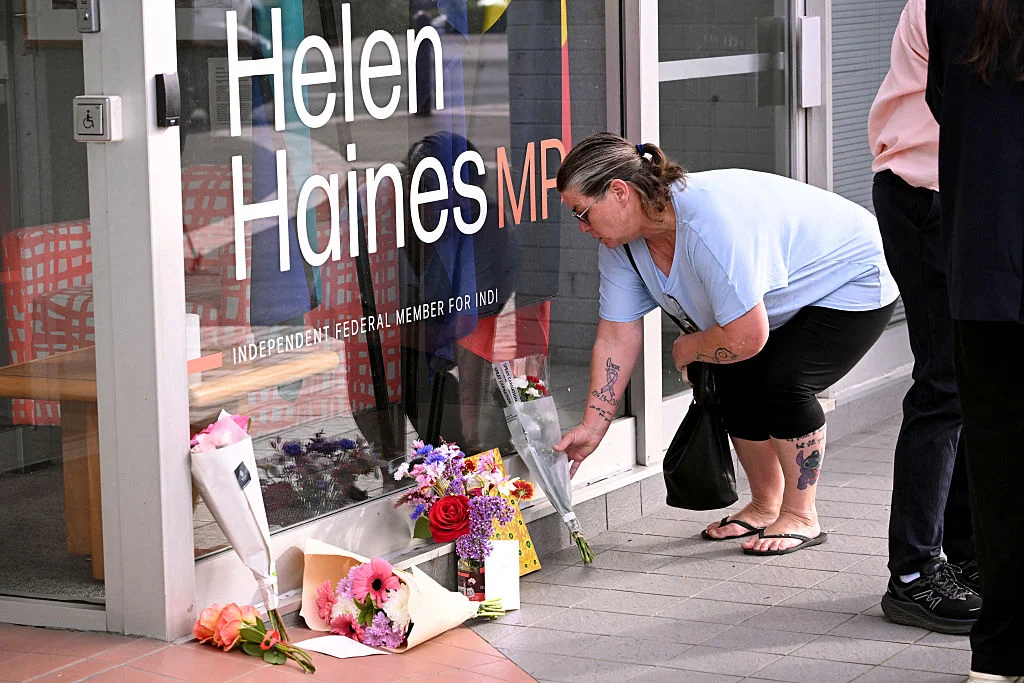
- October 20, 2026: Australian Independent MP Helen Haines was struck by a car outside her electorate office in what authorities describe as a "deliberate act." Witnesses reported the driver reversed to strike her a second time. Haines remains in critical condition.
- Recent Weeks: Reports of the brutal sexual assault of Arizona congressional candidate Bernadette Greene-Placentia have highlighted the disproportionate threats faced by women.
- The "New Normal": A recent New York Times investigation confirms that violent threats against public officials have become a "new normal," forcing candidates to treat their homes like fortresses and reconsider their political careers.
Supporting Data: The High Cost of Democracy for Women
The data confirms that the hostility directed toward women is systemic rather than anecdotal. A comprehensive report from the Westminster Foundation for Democracy, produced in partnership with King’s College London, analyzed over 500 studies to conclude that when women participate in politics, society as a whole benefits. Despite these gains, the barriers to entry—and retention—are escalating.
Research from the Brennan Center reveals that women in state and local offices are three to four times more likely than their male counterparts to experience gender-based abuse. The statistics are even more stark for women of color:
- 66% of female parliamentarians have been subjected to humiliating sexual or sexist remarks.
- 44% have faced specific threats of death, rape, or abduction.
- 22% have been subjected to acts of sexual violence.
These figures represent a "hostile work environment" that discourages qualified women from seeking office. As Wisconsin State Assembly Minority Leader Greta Neubauer noted, potential candidates now frequently ask about the safety of their families before agreeing to run.
Official Responses and Political Strategy
The political response to this climate of fear varies. In Arizona, Secretary of State Adrian Fontes has authorized the use of campaign funds for personal security, a necessary intervention in an era where progressives like State Senator Analise Ortiz must install home security systems and train in self-defense to safely participate in the democratic process.
Conversely, some campaigns have descended into vitriol. In the Ohio gubernatorial race, candidate Vivek Ramaswamy faced widespread condemnation for an ad targeting opponent Amy Acton. The ad featured Acton’s mother—who had previously lost custody of her children due to domestic abuse—accusing her daughter of "lying" about her past. The move was widely labeled "despicable" by political analysts and observers, illustrating how desperate campaigns may weaponize a candidate’s history of trauma to gain a political edge.
Implications: The 2026 Midterms and Future Representation
As we approach the November 3rd midterms, the landscape for women’s representation is precarious.
The U.S. Senate
Representation in the Senate is currently at 27 seats. Depending on the outcome of three key toss-up races, that number could either drop to 26 or rise to 29. The appointment process for replacements in states where sitting Senators are running for governor will be a critical factor in maintaining or increasing these numbers.
The Gubernatorial Landscape
The office of governor is a primary indicator of executive power. With 14 states currently led by women, the potential for growth is significant. In the 2026 cycle, women are major party nominees in 19 Democratic campaigns. If these candidates succeed, the number of women governors could reach as high as 20; if they face a string of close losses, it could drop to nine.
The Federal Judiciary and Executive Oversight
A disturbing development in the current cycle is the targeting of women leaders by federal agencies. The recent search of Rep. Ilhan Omar’s home, occurring just 22 days before the election, has drawn comparisons to the FBI’s controversial 2016 interference in the Hillary Clinton campaign. This follows a pattern of investigations directed at prominent Black women leaders, including New York Attorney General Letitia James and Fulton County District Attorney Fani Willis, raising concerns about the politicization of the Department of Justice.
International Perspectives: Lessons from Ghana and Sweden
Democracy remains a global challenge. In Ghana, the International Institute for Democracy and Electoral Assistance (IDEA) has identified that while the nation’s electoral administration is robust, its inclusivity is failing. Persistent gender-based discrimination and intimidation threaten to make the democracy "strong in form but weakened in substance."
Similarly, in Sweden, researchers have found that even in gender-balanced institutions, hidden inequalities persist. A study of Swedish MPs found that women are expected to engage more deeply with citizens’ personal problems than men, who are more frequently permitted to disregard such demands on their time. This "hidden labor" continues to shape the conditions of leadership, even in nations at the forefront of gender parity.
Reflection: The "Measure for Measure" Reality
The challenges facing women today find a haunting echo in literature. At the Folger Theater’s recent production of Shakespeare’s Measure for Measure, the heroine Isabella’s struggle against the abuse of power by the city’s leader, Angelo, resonates with modern #MeToo testimonies. When Angelo tells Isabella, "My false outweighs your true," he articulates the precise mechanism of gaslighting that many women in public office face today.
As the production underscores, the battle for equality is not merely about gaining access to a seat at the table; it is about changing the underlying structures that allow the "false" to outweigh the "true."
Conclusion
We are at a crossroads. Whether in the halls of Congress, the governor’s mansions of the United States, or the parliaments of Europe, the presence of women is a prerequisite for a just society. However, as the evidence of threats, violence, and intimidation grows, so too must our resolve.
The work of representation requires more than just casting a ballot; it requires a collective commitment to protecting those who step into the arena. From the legislative quotas in Europe to the grassroots organizing in Georgia and South Carolina, the path forward is paved with the stories of women who refuse to be silenced. As we look toward November 3rd and beyond, the goal remains clear: to ensure that the voices of women are not just heard, but are the foundation upon which the future of democracy is built.

 Jia Lissa
 Evan Lee Salim