




 Dwi Wanna
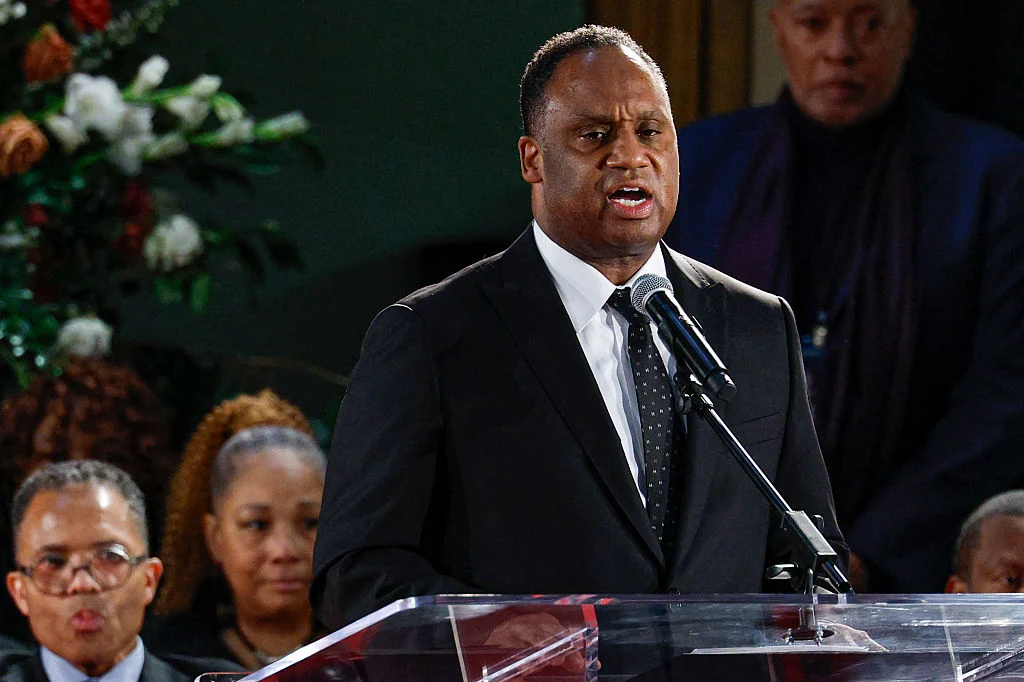
In a political climate already strained by polarization, the Ohio gubernatorial race has descended into a controversy that transcends typical partisan bickering, raising profound questions about the moral boundaries of modern campaigning. At the center of this firestorm is Democratic candidate Dr. Amy Acton—a physician and former state health director—and a campaign advertisement launched by her opponent, Republican Vivek Ramaswamy.
The ad, which features Acton’s estranged mother, Donna Arthur, dismisses the candidate’s documented history of childhood abuse and poverty as a “lie.” The move has sparked a firestorm of condemnation, with Rep. Jonathan Jackson (D-Ill.) leading the charge, lamenting what he describes as the “moral collapse” of American politics. “What does it say about our national conscience,” Jackson asked, “when the suffering of a child becomes a strategy for winning public office?”
The Context: A Life of Overcoming Adversity
Dr. Amy Acton’s path to public service is defined by resilience. Long before she became a household name for her role in guiding Ohio through the initial stages of the COVID-19 pandemic, Acton lived a life marked by instability. Public records and contemporary news accounts from the late 1970s corroborate a childhood of extreme hardship, including periods of homelessness where she and her brother lived in a tent at a campground near Youngstown.
The most harrowing aspect of her history involves the sexual abuse she suffered at the hands of her stepfather. In 1978, at the age of 12, Acton’s life was forever altered when her stepfather was arrested and indicted on charges of rape. While he pleaded not guilty, he fled the jurisdiction before the case could reach a trial, leaving the family in a state of crisis. Following the incident, Acton was removed from her mother’s custody—a decision rooted in the fact that her mother chose to remain with the accused abuser. Acton has been estranged from her mother ever since.
For decades, Acton has been candid about these experiences, citing them as the foundational reasons for her commitment to public health and her empathy for the vulnerable. Her supporters argue that her ability to rise from such trauma to become a leader is a testament to her character. Her detractors, however, have now made that very trauma the focal point of an aggressive political assault.
Chronology of a Campaign Controversy
The escalation of this conflict reached a fever pitch in late October 2026. The timeline of the events surrounding the controversial advertisement highlights a deliberate strategy to dismantle a candidate’s personal narrative.
- October 19, 2026: A 60-second attack ad begins circulating on social media platforms. The video features Donna Arthur, Acton’s estranged mother, explicitly calling her daughter a "liar" and disputing the claims of childhood homelessness and abuse. The ad does not mention the 1978 rape indictment or the context of the estrangement.
- Post-Circulation: Initially, the source of the ad was unclear. However, Vivek Ramaswamy soon claimed responsibility, announcing a $4 million media buy to amplify the message across Ohio.
- Late October 2026: The ad triggers a wave of bipartisan backlash. Even Republican Governor Mike DeWine, who worked closely with Acton during the pandemic, issued a public statement calling for the advertisement to be pulled.
- September 7, 2026 (Preceding Context): Tensions in the race had already turned physical. Two days prior to a campaign event in Canfield, Ohio, a man was arrested while armed with two pistols and a taser, having lunged toward Acton. The climate of the campaign had grown increasingly volatile well before the release of the attack ad.
The Moral Architecture of the Republic
The decision to utilize an estranged parent to attack a candidate’s personal history of abuse has forced a national conversation regarding the "moral architecture" of American democracy. Critics argue that while democracy is inherently a contest of ideas and records, there exists an unspoken, sacred boundary: the dignity of a survivor.
By enlisting a family member to discredit a candidate’s trauma, the campaign has transformed the victim into a defendant. The paradox is stark: a political culture that loudly proclaims its devotion to "family values" is simultaneously weaponizing the disintegration of a family to secure power.
Rep. Jonathan Jackson and other observers suggest that the sophistication of modern political technology—the ability to target specific demographics, manipulate emotional triggers, and distribute content with surgical precision—has outpaced our moral development. We have mastered the science of persuasion but neglected the ethics of restraint.
Implications for Public Discourse
The fallout from this campaign tactic carries significant implications for the future of American elections. If the suffering of a child is deemed fair game for political consultants, the threshold for what constitutes acceptable conduct in the public square may be permanently lowered.
1. The Chilling Effect on Future Candidates
The primary concern is that such tactics will discourage qualified, resilient individuals from seeking public office. If the price of entry into government is the public dissection of one’s childhood trauma, many potential leaders may choose to remain in the private sector. This specifically impacts survivors of abuse, who are effectively warned that their past will be "weaponized" if they attempt to rise to positions of authority.
2. The Erosion of Civility
When a campaign moves from attacking policy to exploiting private, traumatic history, the discourse is stripped of its ability to solve actual problems. Instead of debating the future of Ohio’s economy or healthcare system, the electorate is forced to engage in a voyeuristic, polarized debate over a candidate’s personal history.
3. The Role of the Media and Platforms
The role of social media in disseminating the ad without initial attribution raises questions about accountability in the digital age. When $4 million is spent to amplify a narrative that ignores court-documented evidence of abuse, platforms face the challenge of whether to intervene in the interest of truth or remain neutral in the face of political speech.
A Call for Restraint
The controversy surrounding Dr. Amy Acton’s campaign is not merely a local political dispute; it is a diagnostic indicator of a deeper cultural malaise. As Rep. Jackson aptly noted, the measure of a civilization is not found in how it treats its powerful, but in how it treats its wounded.
When a society encourages survivors to "find their voice" and report abuse, yet simultaneously permits that same trauma to be used as a weapon, it creates a contradictory message that undermines the very foundations of trust and empathy. The normalization of this behavior is the true threat to democratic stability.
As the election approaches, voters are left to consider the ultimate question: What does it profit a candidate to win an office if the cost is the abandonment of basic human decency? The history of moral progress has always been the history of individuals and societies who recognized that what was previously tolerated was, in fact, unacceptable.
The "darkness" that descends when a nation’s conscience goes silent is the greatest danger any democracy can face. In the case of the Ohio gubernatorial race, the ad has become a litmus test for the voters: will they reward the exploitation of trauma, or will they demand a return to a standard of conduct that recognizes the humanity of every individual—regardless of their position on the ballot?
Ultimately, if politics continues to favor the "ancient barbarism" of cruelty masked by modern technology, the republic risks losing more than just an election; it risks losing the moral stature required to lead a free and compassionate society. The question remains whether the American electorate will choose to reject this descent or allow the "silence of the conscience" to become the new status quo.


 Reynand Wu
 Jia Lissa






