


 Sagoh
In an era defined by hyper-consumption and the relentless pursuit of "more," the voices advocating for "less" have transitioned from a niche subculture into a significant global movement. Recently, Joshua Fields Millburn and T.K. Coleman, prominent figures in the minimalist movement, released a comprehensive discourse via their platform, The Minimalists, addressing the profound psychological and ethical complexities of living with intentionality. The latest episode of their podcast serves as a roadmap for those seeking to navigate the modern landscape of over-responsibility, ethical scrutiny, and the financial burden of unnecessary accumulation.
Main Facts: Redefining Responsibility and Consumption
The core of the recent discussion centers on three primary pillars: the liberation from misplaced responsibilities, the deconstruction of "ethical purity tests," and a pragmatic analysis of the "50 things" that are often discarded upon adopting a minimalist lifestyle.
Joshua and T.K. argue that modern individuals carry "ghost responsibilities"—obligations to people, projects, and societal expectations that do not truly belong to them. This emotional clutter is presented as being just as damaging as physical clutter. By identifying which burdens are ours to carry and which belong to others, the duo suggests that individuals can reclaim their mental bandwidth and focus on meaningful contribution.
Furthermore, the episode tackles the "Ethical Purity Test," a phenomenon where individuals are often paralyzed by the need to make perfectly ethical choices in every purchase or action. Millburn and Coleman posit that this quest for perfection often leads to inaction or "decision fatigue." They advocate for a more nuanced approach: making the best possible choice within one’s means without succumbing to the shame of imperfection.
Finally, the discussion highlights a viral list of 50 items that one writer ceased purchasing after adopting minimalism. This list serves as a tangible metric for the economic and environmental impact of the movement, moving the conversation from abstract philosophy to practical financial advice.
Chronology: The Evolution of the Minimalist Philosophy
To understand the context of this latest discourse, one must look at the trajectory of The Minimalists and the broader cultural shift toward essentialism.
2010–2015: The Emergence of the "Less is More" Era
The movement gained significant traction in 2010 when Joshua Fields Millburn and Ryan Nicodemus walked away from high-pressure corporate careers. Their initial focus was primarily physical: the "Packing Party," the "30-Day Minimalism Game," and the radical decluttering of homes. During this period, the message was clear: physical possessions are a barrier to happiness.
2016–2020: Mainstream Penetration and the "Essentialist" Shift
With the release of documentaries like Minimalism: A Documentary About the Important Things (2016) and Less Is Now (2021), the movement moved into the mainstream. The focus began to shift from the quantity of stuff to the quality of life. This era saw the introduction of T.K. Coleman into the fold, bringing a philosophical and pedagogical depth to the conversation. The dialogue moved from "how to declutter your closet" to "how to declutter your mind."
2021–Present: The Ethical and Psychological Frontier
The latest episode represents the current phase of the movement: addressing the "second-order" effects of minimalism. It is no longer enough to just own fewer things; one must also manage the psychological weight of modern life, the digital deluge, and the social pressures of the "purity" culture that has emerged within eco-conscious and minimalist circles.
Supporting Data: The Socio-Economic Impact of Minimalism
The arguments presented by Millburn and Coleman are supported by a growing body of data regarding consumer habits and mental health.
The Financial Burden of "Stuff"
According to data from the Federal Reserve, American household debt reached a record $17.5 trillion in late 2023. A significant portion of this debt is attributed to credit card spending on non-essential consumer goods. The "50 things I stopped buying" list discussed in the podcast directly addresses this economic reality. By eliminating "micro-purchases"—such as daily lattes, fast fashion, redundant kitchen gadgets, and multiple streaming subscriptions—the average individual can save between $5,000 and $15,000 annually.
The Psychological Cost of Clutter
A study published in the journal Current Psychology found a direct correlation between high levels of clutter and procrastination, as well as increased cortisol levels (the stress hormone). The "Responsibilities that aren’t ours" segment of the episode aligns with psychological theories on "Boundaries." Research suggests that individuals who struggle to set boundaries experience higher rates of burnout and lower life satisfaction.
The Myth of Perfection
The critique of "ethical purity tests" is supported by the concept of "Choice Overload" in behavioral economics. When consumers are presented with too many ethical variables (e.g., Is it organic? Is it fair trade? Is it carbon-neutral? Is the packaging plastic-free?), they often experience a "freeze" response, leading them to either make a reckless choice or avoid the decision entirely, which often results in sticking to less-than-ideal status quo habits.
Official Responses: Insights from Joshua and T.K.
In their signature "Minimal Maxims"—pithy, shareable insights—The Minimalists provide what they consider the "official stance" on these complex issues. While these maxims are designed to be under 140 characters, they represent a distilled version of their broader philosophy.
On Responsibility:
"You are not a warehouse for other people’s expectations." This statement serves as a foundational principle for their discussion on emotional boundaries. T.K. Coleman often emphasizes that saying "no" to a responsibility that isn’t yours is actually an act of integrity, as it allows the person who is responsible to grow.
On Ethical Living:
"Love people, use things. The opposite never works." This core maxim informs their take on ethical purity. They argue that the focus should always remain on the human impact rather than the rigid adherence to a "rulebook" of consumption.
On the "16 Rules for Living with Less":
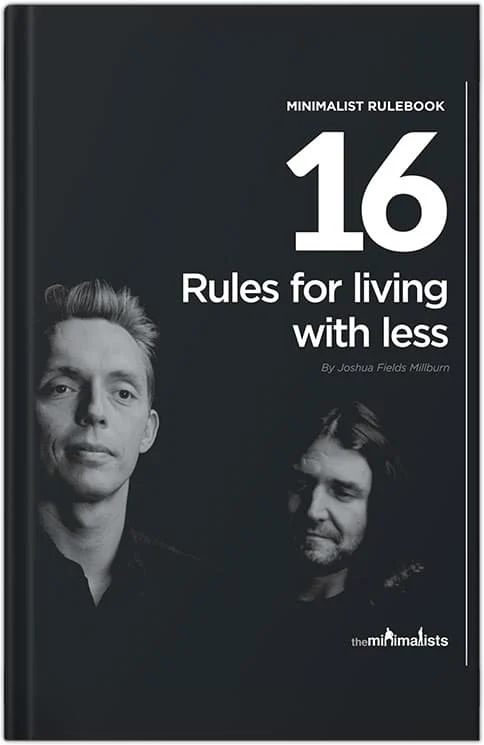
The duo also released a "Minimalist Rulebook," a free resource containing 16 guidelines. These rules, such as the "90/90 Rule" (If you haven’t used it in 90 days and won’t use it in the next 90, let it go) and the "1-in-1-out Rule," are presented not as dogmatic laws but as "training wheels" for those looking to recalibrate their relationship with the material world.
Implications: A New Framework for Living
The implications of the ideas discussed in this episode extend far beyond the individual, suggesting a potential shift in societal structures.
Environmental Sustainability
If the "50 things" list were adopted at scale, the environmental impact would be staggering. The reduction in the production of fast fashion, single-use plastics, and redundant electronics would lead to a significant decrease in carbon emissions and landfill waste. Minimalism, as presented by Millburn and Coleman, is an unintentional but powerful form of environmental activism.
Mental Health Reform
By addressing "responsibilities that aren’t ours," the movement offers a grassroots solution to the modern epidemic of anxiety and burnout. If individuals learn to shed the weight of societal expectations and "performative" productivity, the strain on mental health resources could potentially decrease.
The Future of Retail and Marketing
As more consumers adopt the "Minimalist Rulebook," the retail sector faces a challenge. The shift toward "quality over quantity" forces brands to move away from planned obsolescence and toward durable, ethical, and truly useful products. The "ethical purity test" discussion suggests that brands should focus on transparency rather than unattainable perfection to build trust with this growing demographic of intentional consumers.
Conclusion
The latest insights from Joshua Fields Millburn and T.K. Coleman underscore a critical evolution in the minimalist movement. It is no longer a simple matter of emptying a junk drawer; it is a sophisticated inquiry into how we allocate our most precious resources: our time, our attention, and our integrity. By rejecting the "ethical purity tests" that paralyze us and the "ghost responsibilities" that exhaust us, we find a path toward a life that is not just smaller in terms of possessions, but larger in terms of meaning.
As the "Minimal Maxims" suggest, the goal of minimalism is not to have less for the sake of less, but to make room for more of what truly matters. Whether through the pragmatic "16 Rules" or the philosophical deconstruction of modern guilt, The Minimalists continue to provide a vital counter-narrative to the noise of the 21st century.


 Nana Wu

 Asro






