


 Nana Muazin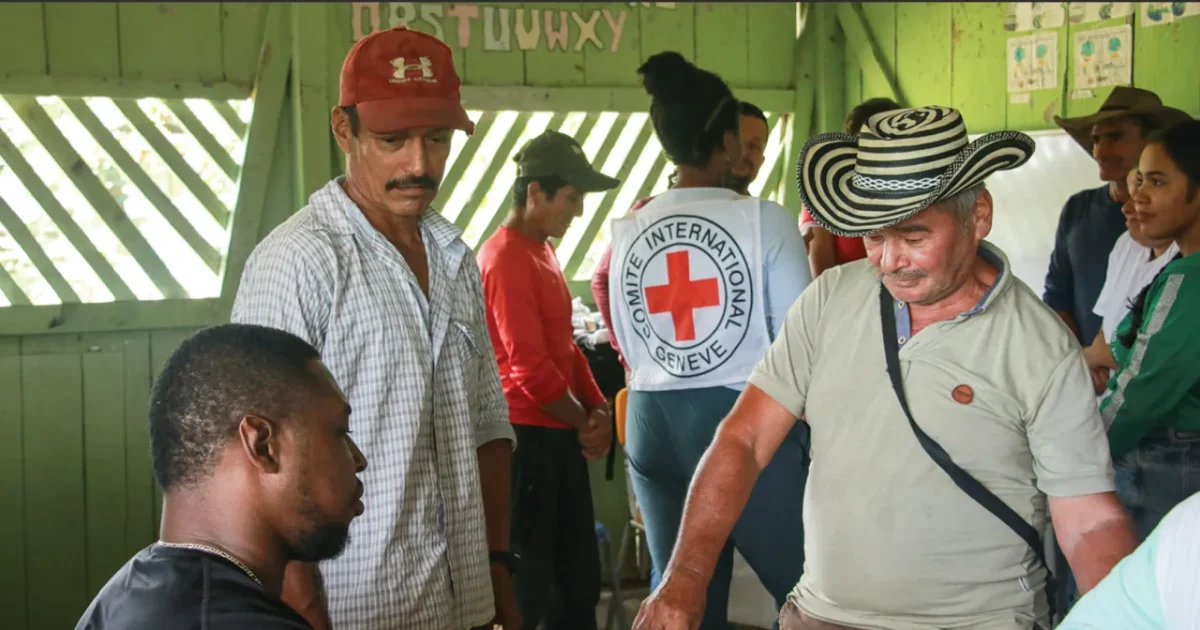
The International Committee of the Red Cross (ICRC) has issued a harrowing assessment of the security landscape in Colombia, painting a picture of a nation where the civilian population is increasingly trapped in the crossfire of relentless armed conflict. According to the organization’s 2025 Annual Report on the Humanitarian Situation in Colombia, the country has witnessed a profound escalation in violence, marked by a surge in explosive device casualties, a doubling of forced disappearances, and a systemic disregard for international humanitarian law (IHL).
For humanitarian observers, the data released this year is not merely a collection of statistics but a testament to a "progressive deterioration" that has been festering since 2018. As armed groups consolidate power and territorial disputes intensify, the most vulnerable members of Colombian society are paying the ultimate price.
Main Facts: A Statistical Surge in Violence
The 2025 report serves as a somber benchmark for the severity of the conflict. The figures indicate that the protection of civilians—a cornerstone of international law—is failing across multiple fronts.
- Explosive Casualties: The ICRC documented 965 people killed or injured by explosive devices in 2025. This represents a staggering 33% increase compared to the previous year. The overwhelming majority of these victims were civilians, reflecting the indiscriminate nature of the weapons being deployed in rural and urban settings alike.
- The Disappearance Crisis: Perhaps the most chilling metric in the report is the number of individual disappearances, which doubled in 2025 to reach 308 cases. This trend underscores a return to some of the darkest chapters of Colombia’s internal conflict, where families are left in a state of permanent uncertainty, unable to bury their dead or find closure.
- Violations of Humanitarian Law: The ICRC recorded 845 instances of alleged violations of international humanitarian law. It is important to note that this figure represents only those cases directly documented by the ICRC, suggesting that the actual number of violations occurring on the ground is likely significantly higher.
Chronology of a Crisis: The Long Road to 2025
To understand the current state of affairs, one must look at the trajectory of the last seven years. Since 2018, the ICRC has consistently warned that the security situation in Colombia was trending toward a breakdown.
The 2018–2021 Transition
Following the 2016 Peace Agreement, there was a brief period of hope; however, the vacuum left by demobilized actors was quickly filled by splinter groups, criminal syndicates, and existing insurgent organizations. By 2019, the ICRC began reporting increased territorial fragmentation, noting that "local conflicts" were becoming more frequent and more complex.
The 2022–2024 Intensification
Between 2022 and 2024, the tactics of these armed groups evolved. The use of drones for reconnaissance and offensive attacks became more prevalent, as did the reliance on improvised explosive devices (IEDs) to control territory and intimidate local populations. Displacement became a weapon of war, used to clear land for illicit economies such as coca cultivation and illegal mining.
The 2025 Threshold
By 2025, the conflict had moved into a new, more lethal phase. The "progressive deterioration" warned of by the ICRC culminated in a year where the distinction between combatant and civilian was almost entirely erased in hot-spot regions. The deployment of modern technology, such as drones, combined with antiquated terror tactics, has created a climate of pervasive fear that has paralyzed communities across the country.
Supporting Data: Regional Concentrations and Impact
The humanitarian crisis is not distributed evenly across the Colombian landscape. The ICRC’s data highlights specific geographic epicenters where the violence has become entrenched.
Cauca: The Epicenter of Explosive Violence
Almost half (46%) of all casualties resulting from explosive devices were concentrated in the department of Cauca. This region has become a flashpoint due to the convergence of multiple armed actors vying for control of strategic corridors. The use of explosive devices in this area is not merely tactical; it is a means of territorial dominance that leaves behind lethal remnants that threaten civilians long after a skirmish has ended.
Norte de Santander: The Displacement Crisis
Mass displacement remains one of the most visible indicators of the conflict’s intensity. Two-thirds of all documented mass displacement cases in 2025 were concentrated in Norte de Santander. The movement of families away from their homes is often a response to direct threats, sexual violence, or the forced recruitment of children and adolescents—a practice that continues to devastate rural communities.
The Nature of Violations
The ICRC’s analysis of the 845 documented violations reveals a grim reality:
- Outside Hostilities: A majority of the violations occurred when no active fighting was taking place. These incidents involved direct threats, killings, and acts of violence against civilians or persons already deprived of liberty.
- During Hostilities: In instances of active combat, the parties frequently failed to take the "necessary precautions" required by international law, such as distinguishing between military targets and civilian infrastructure, resulting in tragic collateral damage.
Official Responses: A Call for Adherence to Law
Olivier Dubois, head of the ICRC regional delegation in Bogotá, has been vocal about the implications of these findings. His message to the parties involved in the conflict is clear: the humanitarian crisis is not an inevitable byproduct of war, but a direct consequence of the decisions made by commanders on the ground.
"In armed conflicts, the impact on civilians depends largely on the decisions made by the parties to the conflict," Dubois stated. "When humanitarian law is not respected, those decisions cause direct harm to people’s lives and dignity."
The ICRC’s official position emphasizes that compliance with IHL is not optional. The organization is calling for:
- Avoidance of Populated Areas: Parties must refrain from conducting military operations in urban or rural areas where civilians reside.
- Precautions in Attack: There is an urgent need to adopt feasible precautions to protect civilian populations from the effects of kinetic and explosive warfare.
- Prohibition of Indiscriminate Weapons: The use of methods of warfare that cause excessive harm or have indiscriminate effects—such as certain types of explosive devices and drone-delivered munitions—must be abandoned.
- Protection of Non-Combatants: Those who are not, or are no longer, taking part in hostilities must be treated with humanity and protected from all forms of violence, including sexual violence and forced recruitment.
Implications: The Long-Term Cost to Society
The humanitarian situation in Colombia in 2025 carries profound implications for the country’s future.
The Erosion of Social Fabric
The forced recruitment of children and adolescents, combined with the culture of disappearances, threatens to hollow out the social fabric of the most affected regions. When a generation grows up in a climate of normalized violence, the cycle of conflict becomes self-perpetuating.
The Challenge of Humanitarian Access
As violence intensifies in rural areas, the ability of aid organizations to provide essential services is increasingly compromised. The ICRC and other humanitarian actors are facing growing difficulties in reaching those who need help the most, as their own staff must navigate a landscape where their safety is not guaranteed.
A Test for the International Community
The 2025 report is a clarion call to the international community. While the responsibility for ending the violence lies primarily with the domestic actors involved in the conflict, the global community has a role in upholding the norms of international humanitarian law. Without sustained pressure and a commitment to the protection of civilians, the "progressive deterioration" identified by the ICRC risks becoming a permanent feature of the Colombian experience.
As the ICRC continues its work—delivering life-saving aid, advocating for the humane treatment of detainees, and attempting to reconnect families separated by conflict—the 2025 report serves as a grim reminder. Peace remains elusive, and until the parties to the conflict prioritize human dignity over tactical advantage, the toll on the civilian population will continue to rise.
For further documentation and to view the full report, please visit the official ICRC website.
About the ICRC: Since 1863, the International Committee of the Red Cross has worked to relieve suffering and preserve human dignity during war. By engaging with all parties to armed conflict, the ICRC promotes the universal application of international humanitarian law to safeguard lives and alleviate the impact of violence.

 Rifan Muazin
 Asep Darmawan