


 Nana Muazin
By Legal Affairs Correspondent
The landscape of reproductive healthcare in the United States faces another seismic shift as the Supreme Court prepares to intervene in a high-stakes legal battle over the regulation of mifepristone. Following a flurry of emergency appeals filed by drug manufacturers Danco and GenBioPro, Justice Samuel Alito issued a one-week administrative stay on May 4, 2026, temporarily halting a Fifth Circuit Court of Appeals decision that would have effectively ended the national availability of mailed medication abortion.
This latest legal maneuver is a focal point in a multi-front war involving state attorneys general, federal regulatory bodies, and healthcare providers. At its core, the case of Louisiana v. FDA challenges whether a state can force a rollback of federal drug protocols based on claims of economic injury and the alleged interference with state-level abortion bans.
The Main Facts: A Regulatory Tug-of-War
Medication abortion, typically involving a two-drug protocol of mifepristone and misoprostol, has become the most common method for pregnancy termination in the United States. While the FDA approved mifepristone over 25 years ago, it originally mandated strict in-person dispensing.
In 2023, after an exhaustive review of safety data—which confirmed that the drug could be safely administered via telehealth—the FDA eliminated the in-person requirement. This policy change permitted the drug to be mailed or dispensed through retail pharmacies, significantly expanding access for patients, including those residing in states where abortion is otherwise prohibited.
The current legal crisis stems from a lawsuit filed by the state of Louisiana in October 2025. Louisiana argues that the FDA’s 2023 Risk Evaluation and Mitigation Strategy (REMS) violates the Administrative Procedure Act (APA) and the 1873 Comstock Act, an archaic anti-obscenity law that plaintiffs argue prohibits the mailing of abortion-inducing drugs. The state asserts that the ease of access provided by mail-order services forces the state to bear the cost of emergency medical care for patients experiencing complications, thereby creating a concrete injury that grants them legal standing to sue.
Chronology of the Legal Conflict
The road to the current Supreme Court intervention is marked by a series of aggressive judicial actions and administrative shifts:
- 2023: The FDA updates the REMS for mifepristone, permanently allowing mail-order and pharmacy dispensing.
- 2024: In Alliance for Hippocratic Medicine v. FDA, the Supreme Court rejects a challenge to the drug’s approval on the grounds that the plaintiffs lacked standing, though the Court avoids ruling on the scientific merits.
- September 2025: Under pressure from anti-abortion coalitions, the FDA (under the Trump administration) announces a "comprehensive review" of the 2023 REMS, signaling a potential policy reversal.
- April 2026: A U.S. District Court in Louisiana pauses litigation for six months to allow the FDA’s internal review to conclude. Louisiana appeals this pause.
- May 1, 2026: The Fifth Circuit Court of Appeals overrides the pause and mandates a nationwide return to in-person dispensing.
- May 4, 2026: Justice Alito grants an emergency administrative stay to Danco and GenBioPro, temporarily preserving current access while the Supreme Court considers the case.
Supporting Data and Evidence
The debate over the safety and usage of mifepristone is backed by vast amounts of data, yet both sides of the litigation utilize different interpretations of this evidence.
The FDA’s 2023 decision was informed by over two decades of clinical experience, including adverse event reports, peer-reviewed literature, and data collected during the COVID-19 pandemic. According to the #WeCount project by the Society of Family Planning, as of June 2025, approximately 55% of all telehealth medication abortions were provided to patients in states with total or near-total abortion bans. This suggests that the current mail-order system serves as a primary lifeline for patients in restrictive states.
Conversely, plaintiffs point to isolated instances of high medical costs. Louisiana specifically cites $92,000 in state Medicaid spending allegedly linked to two patients who required emergency care for complications after using mail-order mifepristone. Legal experts note that this "economic harm" argument is the primary vehicle states are using to circumvent the standing requirements that hampered previous legal challenges.
Official Responses and Administrative Posture
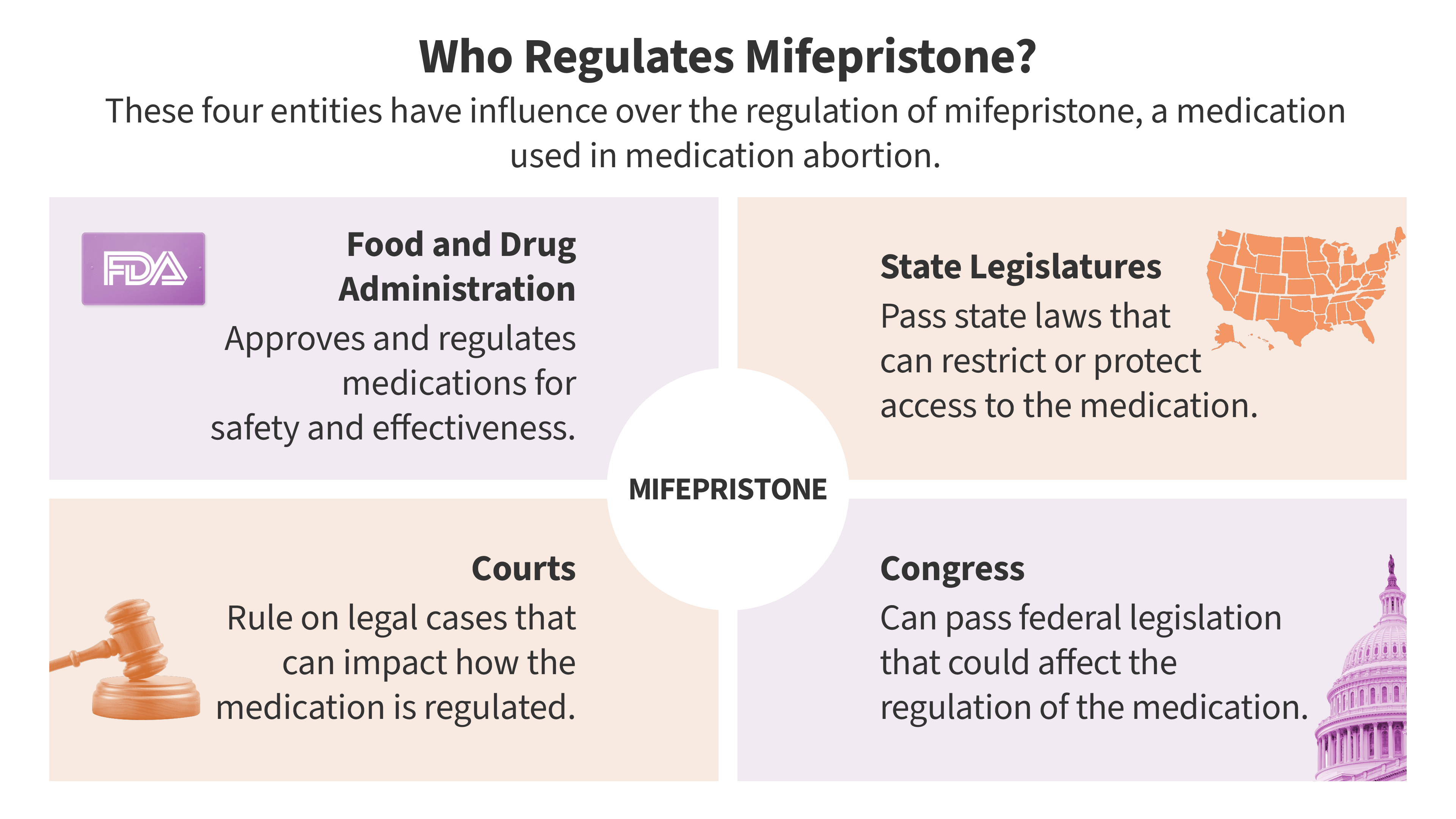
The FDA finds itself in a precarious position. While the agency is technically defending its regulatory authority in court, the current administration has publicly questioned the 2023 REMS. In a September 2025 letter, the Department of Health and Human Services (HHS) stated that the 2023 approval lacked "adequate consideration," a comment that the Fifth Circuit heavily relied upon to justify its decision to reinstate in-person requirements.
This pivot has drawn sharp criticism from public health experts, who argue that the FDA is abandoning its scientific record for political reasons. Meanwhile, legislators like Senator Josh Hawley have introduced bills to fully rescind the drug’s approval, while Senator Jim Banks has urged the Federal Trade Commission to investigate manufacturers for "deceptive trade practices."
Implications for Healthcare and Federalism
The outcome of Louisiana v. FDA carries profound implications that extend far beyond the immediate availability of abortion pills.
The Threat to Federal Supremacy
If the Supreme Court allows a state to successfully challenge an FDA-approved drug protocol based on "downstream costs" (such as Medicaid spending), it could open the floodgates for states to challenge any federal health policy they dislike. If a state can challenge the FDA on mifepristone, they could theoretically challenge EPA environmental standards or federal vaccination mandates by citing similar economic burdens.
The Rise of Shield Laws
As states move to ban or restrict mifepristone, "shield laws" in states like New York, California, and Massachusetts have emerged as a new frontier. These laws protect telehealth providers from extradition or prosecution by states that have banned abortion. This has created a fractured legal environment where providers operate under the protection of their home state while potentially violating the laws of the patient’s home state.
The "Misoprostol-Only" Pivot
Should the Supreme Court uphold the Fifth Circuit’s decision to mandate in-person dispensing, the medical landscape will likely shift toward "misoprostol-only" protocols. While misoprostol alone is a safe and accepted medical protocol used globally, it is generally considered less effective than the combined regimen and is associated with a higher incidence of side effects, including more intense cramping and bleeding. Abortion providers are already preparing for this eventuality as a contingency against a potential loss in the Supreme Court.
Future Outlook
As the administrative stay expires, the Supreme Court is under immense pressure to clarify the scope of its Dobbs ruling. The central question is no longer just about abortion; it is about the extent to which the federal government retains the power to regulate pharmaceuticals in a nation where state laws are increasingly diametrically opposed to federal standards.
The Court’s eventual decision will signal whether it intends to preserve the FDA as the final arbiter of drug safety or whether it will permit individual states to dismantle federal drug approval processes. For now, patients and providers are left in a state of uncertainty, awaiting a ruling that will define the boundaries of reproductive healthcare access for the foreseeable future.
Summary of Ongoing Litigation (Table 1)
| Case Name | Forum | Focus | Status |
|---|---|---|---|
| Louisiana v. FDA | Supreme Court | 2023 REMS/Comstock Act | Stayed |
| Washington v. FDA | Federal Court (WA) | REMS Revisions | Upheld |
| Purcell v. Kennedy | Federal Court (HI) | APA Compliance | Ongoing Review |
| GenBioPro v. Raynes | 4th Circuit | Federal Preemption | Dismissed |
| Whole Woman’s Health | Federal Court | Challenge to all REMS | Active |
This article is intended for informational purposes and reflects the legal landscape as of May 4, 2026.


 Ali Ikhwan
 Asep Darmawan