



 Nila Kartika Wati
One hundred days have passed since the outbreak of the US-Israel war on Iran, a conflict that has fundamentally rewritten the global geopolitical map and triggered a catastrophic ripple effect through the world economy. Beyond the immediate, devastating toll on human life and the systematic destruction of civilian infrastructure, the war has acted as a brutal catalyst for an energy crisis, fueling global inflation and exposing the inherent fragility of a world tethered to fossil fuel supply chains.
Yet, amidst the smoke of this conflict, a counter-narrative has emerged. The very supply shocks that have crippled industrial production and sent cost-of-living indices soaring are acting as a "supercharger" for the global transition to renewable energy. As nations scramble to insulate themselves from the volatility of petrostates and unstable trade routes, a seismic shift toward clean, sovereign energy is accelerating at a pace once thought impossible.
The Chronology of a Geopolitical Pivot
The last decade has been a study in contrast: a period of ambitious international agreements shadowed by the relentless reality of a warming planet.
2015–2025: The Decade of Promise and Peril
The 2015 Paris Agreement stood as a landmark, a diplomatic triumph that promised to bend the curve of greenhouse gas emissions. On its tenth anniversary in 2025, while the world celebrated the acceleration of clean energy, the climate data told a grimmer story. The years 2015 to 2025 were officially recorded as the hottest 11-year span in human history. The 1.5°C threshold, once a distant target, began to look like a receding horizon.
The 2026 Turning Point
The start of 2026 marked a departure from the incrementalism of the previous decade. With the onset of the US-Israel war on Iran, the world experienced an immediate "energy supply shock." As oil and gas prices spiked, governments realized that fossil fuel dependence was no longer just an environmental liability—it was a national security catastrophe.
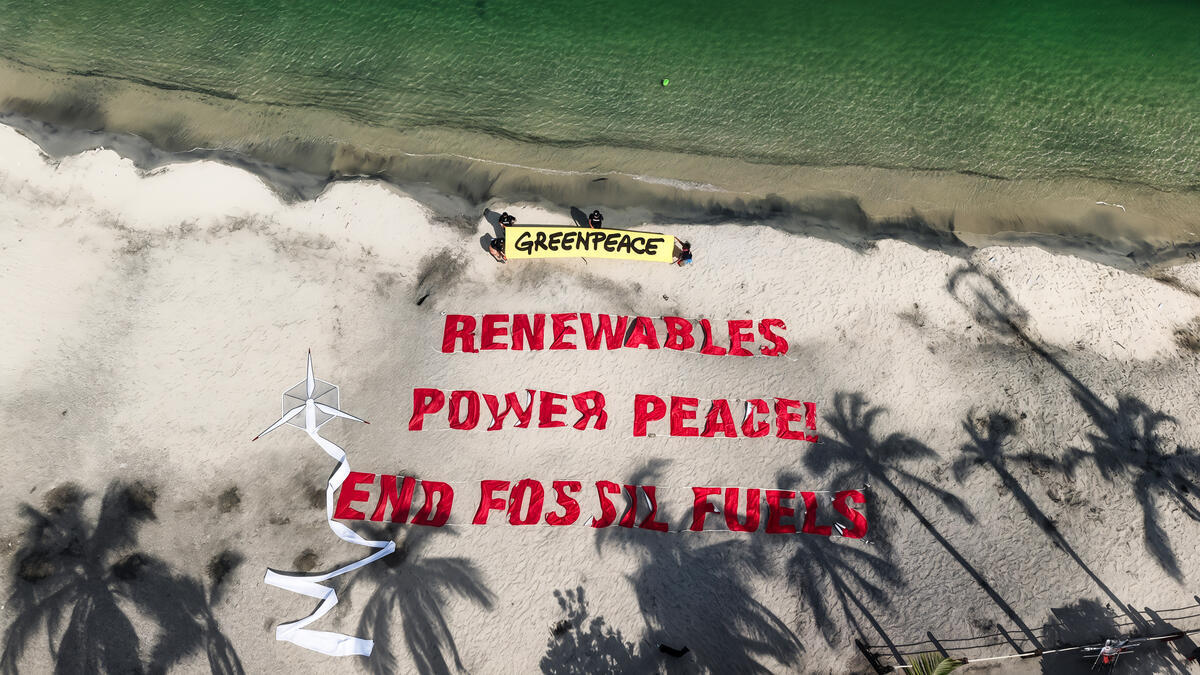
By April 2026, the failure of the COP30 talks to produce a meaningful roadmap away from fossil fuels forced a shift in strategy. In a move that signaled the fracturing of international consensus, 57 nations gathered in Santa Marta, Colombia, to bypass stagnant UN processes and establish a direct pathway for a post-fossil-fuel global economy.
Supporting Data: The Velocity of the Renewable Rollout
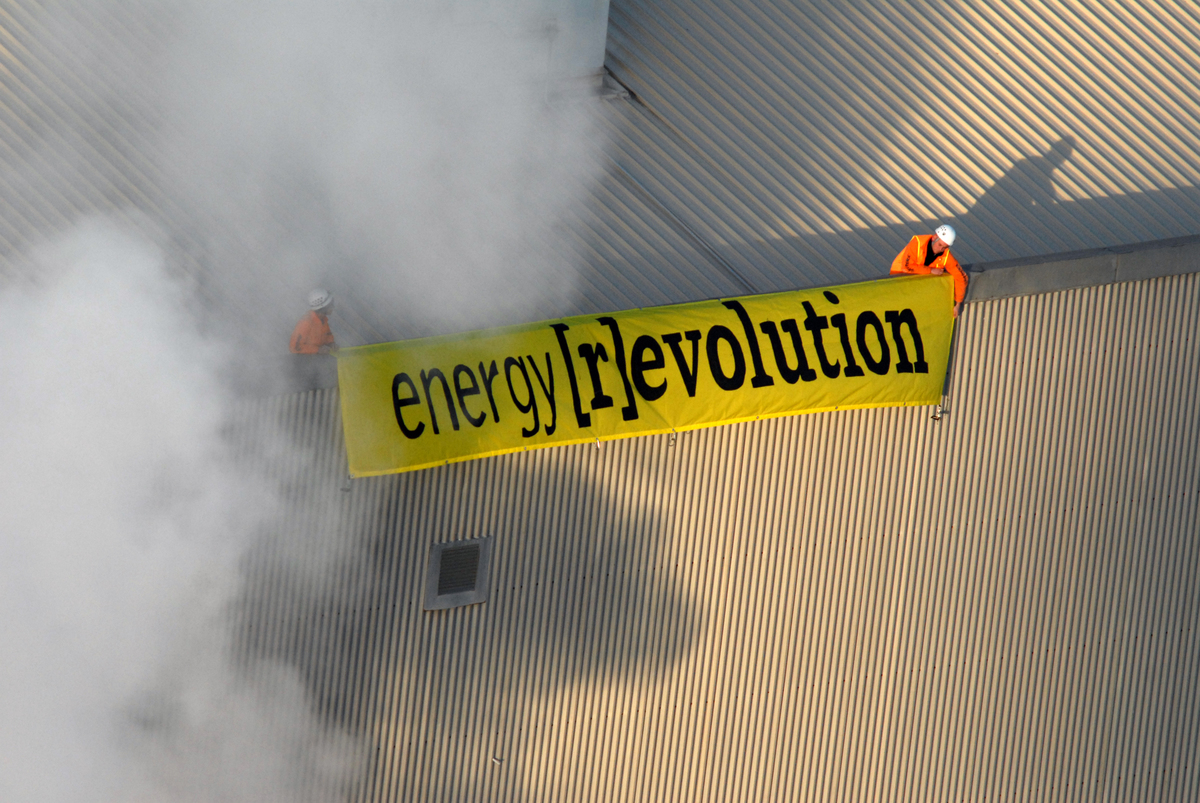
The success of the renewables sector over the past decade provides the only tangible hope for a stable future. Looking back at the "Energy [R]evolution" (E[R]) scenarios—a series of visionary, nuclear-free blueprints championed by Greenpeace—we can now see that these projections, once dismissed as radical, were actually conservative estimates of what was possible.
Solar and Wind: Defying Projections
The growth of solar capacity has been nothing short of explosive. In 2015, global solar capacity stood at a modest 226 Gigawatts (GW). By 2025, that number had surged to 2,392 GW. This growth rate not only outperformed the E[R] projections but completely eclipsed the modest outlooks provided by the International Energy Agency’s (IEA) World Energy Outlook.
Wind power has followed a similar, albeit slightly more moderated, trajectory. Growing from 416 GW in 2015 to 1,291 GW in 2025, wind generation has established itself as a backbone of the global grid. While slightly trailing the E[R] scenario, the rapid advancement of offshore wind technology suggests that the coming years will see reality outpace even the most optimistic forecasts.
The Economics of the Shift
The primary engine of this transformation is the precipitous decline in costs. The E[R] scenario underestimated the market forces at play:
- Solar: Projected costs fell by 70%, far exceeding the forecasted 42% reduction.
- Onshore/Offshore Wind: Costs were halved, significantly outperforming the 6% and 27% projections respectively.
For the first time in history, wind and solar are growing faster than global electricity consumption. They are not merely supplemental; they are actively cannibalizing the market share of coal, oil, and gas.
Official Responses and Political Faultlines
The international community is currently split along a stark geopolitical faultline. On one side stands a coalition of nations—led by the United States—that remains anchored to a "drill, baby, drill" philosophy, viewing energy as a zero-sum game of extraction. On the other side is a growing bloc of nations, including those gathered in Santa Marta, which views the current crisis as a mandate to dismantle fossil fuel infrastructure entirely.
The Institutional Stagnation
The failure of COP30 to address the transition away from fossil fuels remains a point of contention. While international bodies struggle to reach consensus, individual nations are acting unilaterally. The Colombian-led initiative in Santa Marta represents a shift toward "coalitions of the willing," where countries prioritize energy sovereignty through regional renewable grids.
The "Just Transition" Mandate
Critics and activists alike are emphasizing that this transition cannot be purely market-driven. A "fair, fast, and funded" transition is the rallying cry for policymakers. This involves not only the deployment of hardware but the creation of policy frameworks that protect workers in declining industries and ensure that developing nations are not left behind as the global North pivots to green technology.
Implications: Building a Resilient Future
The war has exposed that the greatest threat to a nation’s stability is its reliance on imported, volatile energy sources. As we move forward, the transition to renewables is becoming a matter of resilience rather than just environmental stewardship.

Decentralization as Defense
One of the most critical lessons of the current conflict is the vulnerability of centralized energy grids. Large, fossil-fuel-dependent power plants are targets; they are subject to sabotage, supply chain interruptions, and the whims of global shipping. In contrast, decentralized, community-owned renewable systems—solar microgrids, wind co-ops, and local storage—are inherently more robust. By distributing the power load, nations can ensure that schools, hospitals, and critical infrastructure remain operational even when centralized systems fail.
The Challenge of Consumption
Despite the success in solar and wind, the past decade has seen a failure to reduce global energy demand. Growth in renewables has largely been consumed by an ever-increasing global appetite for electricity. To meet the Paris Agreement’s 1.5°C target, the next decade must focus on efficiency and the electrification of heating, transport, and industrial processes.
Conclusion: The Path Ahead
The future of the energy transition is not merely a technical challenge; it is a political choice. The last ten years have proven that rapid, large-scale change is possible when the political will is aligned with economic reality.
As we look toward the next chapter, the lessons of the Energy [R]evolution are clear: the world is capable of abandoning fossil fuels at a pace that keeps climate goals within reach. The current geopolitical turmoil, as tragic as it is, has cleared away the illusions of a "business as usual" approach. We are entering an era where energy is defined not by what we extract from the ground, but by what we harvest from the elements. The transition is now inevitable; the task remaining is to ensure that it is equitable, secure, and permanent.
For further reading on the technical projections and policy frameworks for this transition, please refer to the following resources:

 Siti Muinah
 Neng Nana