


 Nana Muazin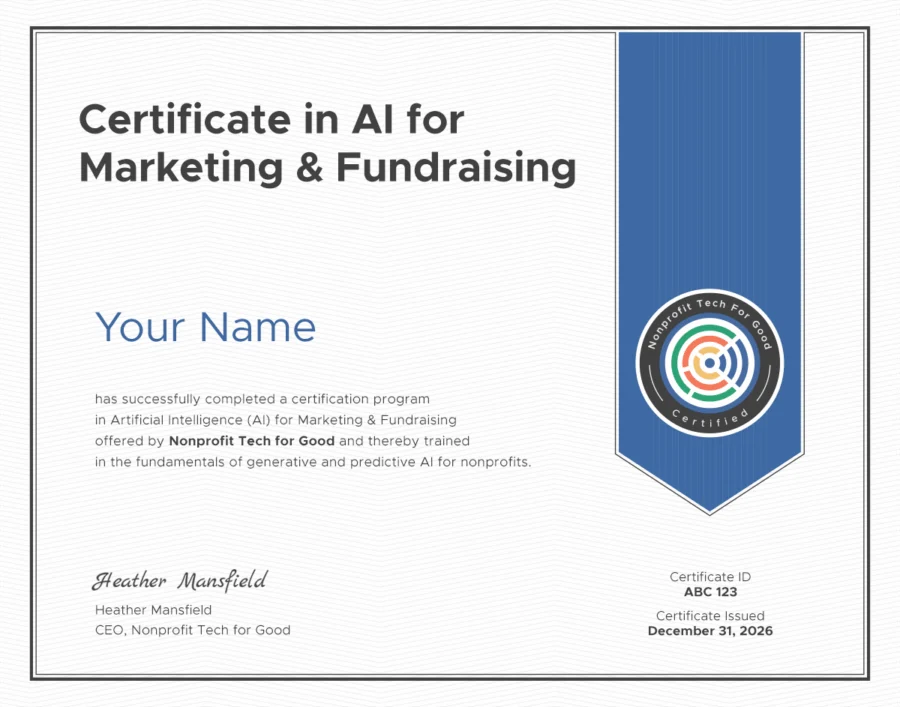
June 9, 2026
In an era defined by rapid technological disruption, the nonprofit sector finds itself at a critical crossroads. As digital landscapes shift and donor expectations evolve, organizations must balance the urgency of mission-driven work with the necessity of technical proficiency. The release of the 2026 Nonprofit Tech for Good Report provides a comprehensive diagnostic of this transition, offering an unprecedented look at how organizations are navigating the integration of digital marketing, online fundraising, and the burgeoning influence of artificial intelligence (AI).
Based on the survey responses of 826 nonprofit professionals—the vast majority of whom operate within the United States and Canada—this report serves as both a benchmark for current practices and a roadmap for the future of social impact.
The Core Data: A Sector in Transition
The 2026 report is not merely a snapshot of current operations; it is a longitudinal study. By synthesizing data from the 2023 Nonprofit Tech Report and the 2019 Global NGO Technology Report, the authors have mapped the trajectory of the nonprofit digital ecosystem over the last seven years.
Key Areas of Focus
The survey methodology was designed to extract actionable insights across four primary pillars:
- Website Optimization: Analyzing how organizations leverage their digital "front doors" to facilitate engagement.
- Email Marketing: Evaluating the efficacy of direct outreach in an age of inbox saturation.
- Online Fundraising: Examining the tools and strategies that drive donor conversion.
- Social Media Engagement: Measuring the ability of nonprofits to build communities rather than just broadcast messages.
Perhaps most significantly, this year’s edition introduces a dedicated deep dive into the integration of Artificial Intelligence. As the sector grapples with the ethical, operational, and financial implications of generative AI, the report provides much-needed clarity on the current adoption rates and the widening "AI literacy gap."
Chronology: Seven Years of Technological Evolution
To understand the current state of nonprofit technology, one must look back at the evolution of the last seven years.
2019: The Pre-Pandemic Baseline
The 2019 Global NGO Technology Report was published during a period of relative stability. Technology was primarily viewed as a support function. Many nonprofits were still struggling with mobile-responsive websites and the transition from traditional, direct-mail-heavy fundraising to basic digital donation platforms.
2023: The Great Acceleration
By 2023, the landscape had been irrevocably altered by the COVID-19 pandemic. Remote work, digital-first communication, and the explosion of peer-to-peer online fundraising became the standard. The 2023 Nonprofit Tech Report highlighted an industry that had been forced into rapid digital adoption, often without the necessary infrastructure or training to support long-term sustainability.
2026: The AI Integration Phase
The current report finds the sector in a state of intentional integration. Organizations are moving beyond "emergency" tech adoption toward strategic investment. The focus has shifted from merely having digital tools to optimizing them through data analytics and, increasingly, AI-driven workflows.
Supporting Data: What the Professionals Say
The 826 professionals surveyed represent a diverse cross-section of the nonprofit world, from small, community-based grassroots organizations to large-scale international NGOs.
Website and Email Marketing
The data indicates that while website traffic remains high, conversion rates have plateaued. The report suggests that nonprofits are failing to personalize the user journey. Email marketing, while still the primary driver of donor retention, is suffering from declining open rates, pointing to a need for more sophisticated segmentation and automated communication strategies.
The Fundraising Landscape
Online fundraising is no longer just about a "Donate" button. The 2026 findings reveal that the most successful organizations are those utilizing multi-channel, integrated campaigns. Recurring donation programs—powered by seamless, low-friction payment gateways—have become the lifeblood of sustainable growth for the organizations surveyed.
The AI Adoption Gap
The most startling statistic from the 2026 report is the disparity in AI adoption. While 68% of respondents believe AI is "essential" for the future of their organization, only 22% report having a formal strategy or policy in place to manage its use. This "intent-action gap" is the primary barrier to digital transformation in the current fiscal year.

Official Perspectives: The Need for AI Literacy
In conjunction with the report, the 2026 Certificate in Artificial Intelligence (AI) for Marketing & Fundraising program has been launched to address the specific skill deficits identified by the survey.
According to leadership at Nonprofit Tech for Good, the goal of this initiative is to move beyond the "hype cycle" of AI. The program is designed to provide a balanced, ethical framework for using AI in areas such as grant writing, donor persona development, and content creation.
"AI is not a replacement for human empathy or the mission-driven heart of a nonprofit," the report notes. "However, it is a powerful force multiplier. The organizations that fail to adopt AI literacy will find themselves outpaced by those that can automate administrative burdens, allowing their staff to focus on high-impact donor relations and program delivery."
The curriculum focuses on:
- Prompt Engineering for Nonprofits: Learning to communicate effectively with large language models to produce high-quality fundraising copy.
- Ethical AI Use: Navigating bias, data privacy, and the importance of human oversight.
- Operational Efficiency: Using AI tools to streamline donor databases and optimize email send times.
Implications: The Future of the Nonprofit Sector
The 2026 Nonprofit Tech for Good Report makes one conclusion abundantly clear: the digital divide within the nonprofit sector is widening.
The Risk of Stagnation
Organizations that continue to view technology as a back-office expense rather than a core mission driver are at risk of obsolescence. As donor demographics shift toward younger, digitally native generations, the inability to provide a seamless, AI-enhanced, and highly personalized experience will lead to donor attrition.
The Opportunity for Impact
Conversely, for the organizations that embrace this technological shift, the opportunities are vast. AI-driven data analysis can identify potential major donors months before a traditional manual review would. Automated marketing workflows can nurture long-term relationships with small-dollar donors who were previously "lost in the shuffle."
A Call to Action
The 2026 report serves as a call to action for board members and executive directors. It is no longer acceptable to delegate technology solely to the IT department. Digital strategy must be integrated into the boardroom, with clear budgetary allocations for professional development and software infrastructure.
The findings suggest that the next few years will define which organizations can scale their impact in an increasingly crowded and noisy digital marketplace. By investing in the right tools and, more importantly, in the literacy of their staff, nonprofits can ensure that their message doesn’t just reach the screen—it resonates with the donor.
Conclusion: Preparing for the Decade Ahead
As we look toward the remainder of 2026 and beyond, the message from the survey participants is unanimous: the pace of technological change will not slow down. The 2026 Nonprofit Tech for Good Report acts as a diagnostic tool for leaders who are ready to face this challenge head-on.
By understanding the historical context of the last seven years, acknowledging the current data gaps, and committing to the professional development of their teams, nonprofit leaders can navigate the age of AI with confidence. The transition is not merely about surviving the next technological wave; it is about harnessing it to further the social causes that define our communities.
For organizations looking to bridge the gap between their current capabilities and their future aspirations, the report and the accompanying AI certificate program offer a necessary, evidence-based starting point. The future of social impact is digital, and for the prepared organization, it is bright.
To review the full data set, download the 2026 Nonprofit Tech for Good Report, and explore the Certificate in AI for Marketing & Fundraising, visit the official Nonprofit Tech for Good website.


 Reynand Wu
 Nana
Nana