


 Muslim
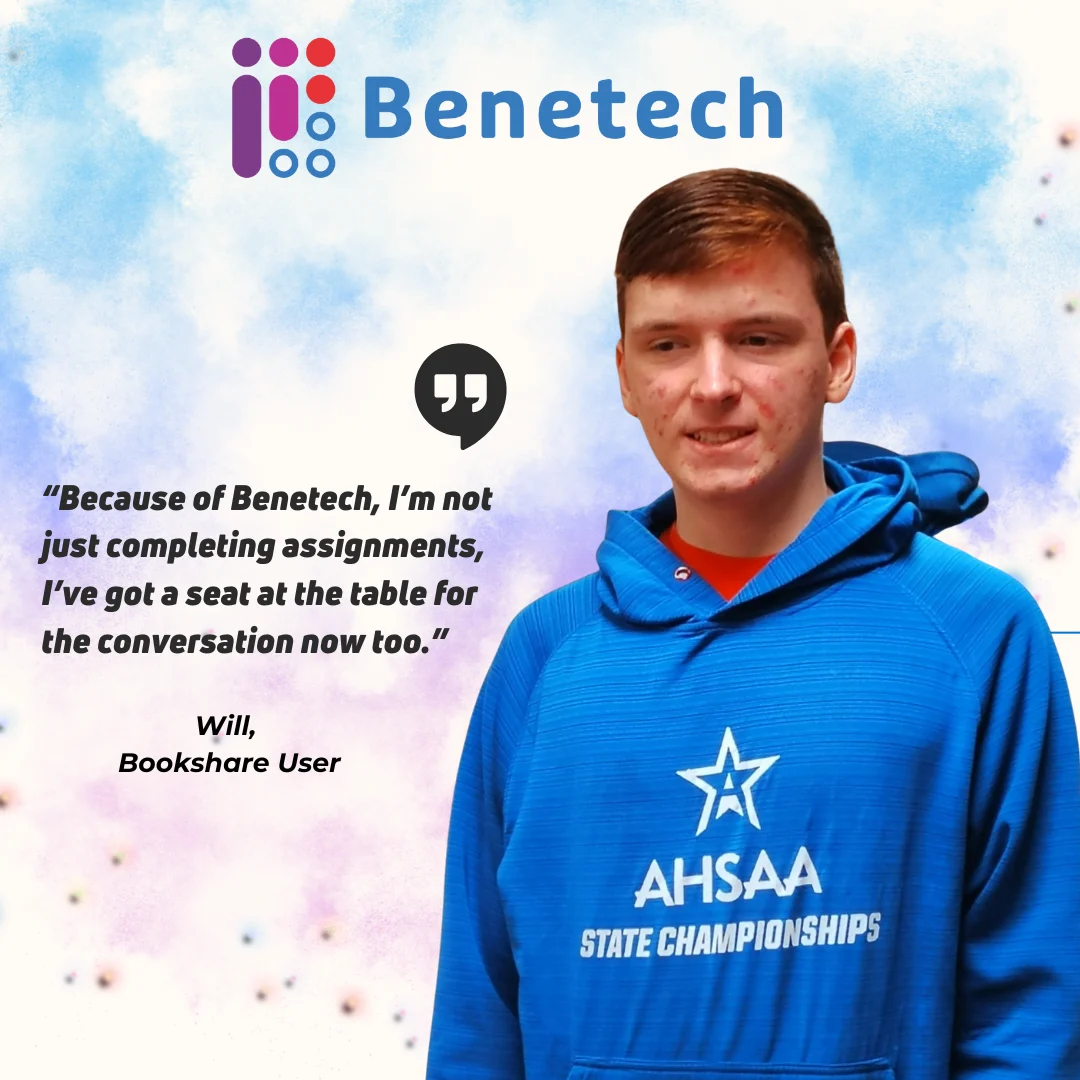
For Will, a dedicated junior at the Alabama School for the Blind, the world was once defined by the limitations of his environment. Growing up in rural Alabama after losing his sight following brain tumor surgery at age four, Will faced a landscape where educational resources for the visually impaired were not merely difficult to find—they were virtually non-existent. Today, however, that narrative has been rewritten. Through the transformative power of Bookshare, an initiative of the nonprofit technology company Benetech, Will has transitioned from a student struggling to access basic materials to an avid reader and active academic participant. His journey serves as a powerful case study for the intersection of assistive technology, educational equity, and the pursuit of independence.
The Foundation of a New Chapter: Main Facts
At the heart of Will’s academic resurgence is Bookshare, the world’s largest accessible library for people with reading barriers. By providing digital books in formats that can be read with refreshable Braille displays, screen readers, or enlarged text, Bookshare bypasses the traditional bottlenecks of Braille production—which can often take months to transcribe and weigh several pounds per volume.
For Will, the impact was immediate. No longer confined to the sparse offerings of a rural school library, he gained instantaneous access to a vast repository of literature. From the rugged narratives of Alabama Moon to the personal history of Johnny Cash’s autobiography, the platform provided the tools necessary to bridge the gap between his cognitive potential and his physical limitations. As Will himself aptly put it, the introduction of the service meant he was finally “off to the races.”
A Chronological Journey: From Isolation to Integration
To understand the gravity of Will’s current success, one must look back at the years following his surgery.
The Early Years (Age 4–10): Following his medical emergency, Will’s primary challenge was sensory adaptation. In the rural setting of his youth, the infrastructure for Braille literacy was underdeveloped. Educational materials were often outdated or unavailable, leading to a sense of academic stagnation. For a bright, curious child, the inability to consume literature was a profound barrier to both development and socialization.
The Turning Point (The Introduction of Bookshare): When Will was introduced to the platform, the shift was tectonic. The barrier to entry for reading was lowered. Digital files could be downloaded and read on his refreshable Braille display in real-time. The logistical nightmare of finding physical Braille books vanished, replaced by a digital catalog that put thousands of titles at his fingertips.
The Middle School Transition: As he progressed through his middle school years, the frequency of his reading increased. He wasn’t just reading for school; he was reading for pleasure. The integration of technology into his daily life—using his device while performing household chores like washing dishes—marked a shift from "reading as a task" to "reading as a lifestyle."
The Current Status (The Junior Year): Today, Will is a standout student at the Alabama School for the Blind. Having read over 300 books through the service, he has developed a sophisticated vocabulary and a deep understanding of complex subjects. His academic performance has reached new heights, and he is now preparing for higher education with a level of independence that was, just a few years ago, purely theoretical.
Supporting Data: The Digital Literacy Gap
Will’s story is not an outlier; it is a testament to a broader systemic crisis. According to the National Federation of the Blind, the unemployment rate among working-age adults who are blind remains significantly higher than that of their sighted peers, often due to a "literacy gap" created in childhood.
Data regarding Bookshare’s impact highlights why tools like theirs are essential:
- Access Equity: Traditional Braille books can cost hundreds of dollars to produce and transport. Digital files, by contrast, are essentially cost-neutral to distribute once digitized.
- Volume of Consumption: Studies show that students with access to accessible digital formats read, on average, 40% more than those who rely solely on static, physical Braille collections.
- Academic Correlation: There is a direct correlation between early access to digital assistive technology and higher rates of graduation and post-secondary enrollment among blind students.
Will’s own trajectory—moving from struggling reader to a student with 300 books under his belt—mirrors the broader statistical trends observed by Benetech: that when the barrier to access is removed, the desire to learn flourishes.
Official Responses and Organizational Vision
The philosophy driving this change comes from Benetech, the nonprofit entity behind Bookshare. Benetech has long maintained that literacy is a fundamental human right, not a privilege reserved for those with the means to access specialized physical resources.
“Because of Benetech, I’m not just completing assignments; I’ve got a seat at the table for the conversation now too,” Will remarked. This statement captures the organization’s core mission: empowerment through inclusion. By focusing on the "conversation," Will highlights that his success isn’t just about grades—it’s about social and intellectual integration. He is no longer on the periphery of the classroom; he is a contributor.
Representatives from the Alabama School for the Blind have noted that the presence of such technology changes the "classroom culture." Teachers are no longer tasked with the impossible job of manually transcribing every handout; instead, they can focus on pedagogy, knowing that their students have the tools to keep pace with their peers.
Implications for the Future of Education
The success story of Will serves as a compelling argument for the mandatory integration of accessible digital technology in all public schools.
The Shift from Accommodation to Universal Design
The current educational model often views accessibility as an "accommodation"—something added after the fact for a specific student. The future, as demonstrated by the success of Bookshare, lies in "Universal Design for Learning" (UDL). This approach argues that digital-first, accessible materials should be the default for all students. When a book is accessible to a blind student, it is often more accessible to students with dyslexia, visual fatigue, or other learning differences.
The Rise of "Productive Leisure"
One of the most significant takeaways from Will’s experience is the concept of "productive leisure time." By making reading as accessible as listening to music, Bookshare has allowed Will to reclaim time that might have been "lost" to inactivity. Washing dishes or traveling to school are now opportunities for intellectual expansion. This habit of continuous, self-directed learning is perhaps the greatest predictor of success in the modern workforce.
Empowering the Rural Student
Will’s story also highlights the democratization of knowledge. Geographic location—often a limiting factor for specialized resources—is rendered irrelevant by the internet. A student in a rural Alabama town now has the same access to the Library of Congress and contemporary literature as a student in a major metropolitan hub. This leveling of the playing field is the most profound implication of the digital literacy revolution.
Conclusion: A New Horizon
Will’s life, once constrained by the physical reality of his blindness and the isolation of his rural home, has been opened up in ways that extend far beyond the classroom. He has discovered that independence is not the absence of assistance, but the presence of the right tools.
As he looks toward graduation and his future beyond the Alabama School for the Blind, Will carries with him more than just an education. He carries the confidence of a reader, the perspective of an intellectual, and the hope of someone who knows that his potential is no longer limited by the format of the page. Bookshare has provided the key, but it is Will’s own drive—fueled by 300 books and counting—that has opened the door to a world of possibility. His journey reminds us that when we prioritize accessibility, we are not just helping individuals; we are unlocking the potential of the next generation of thinkers, writers, and leaders.

 Suro Senen

 Reynand Wu






