




 Laily UPN
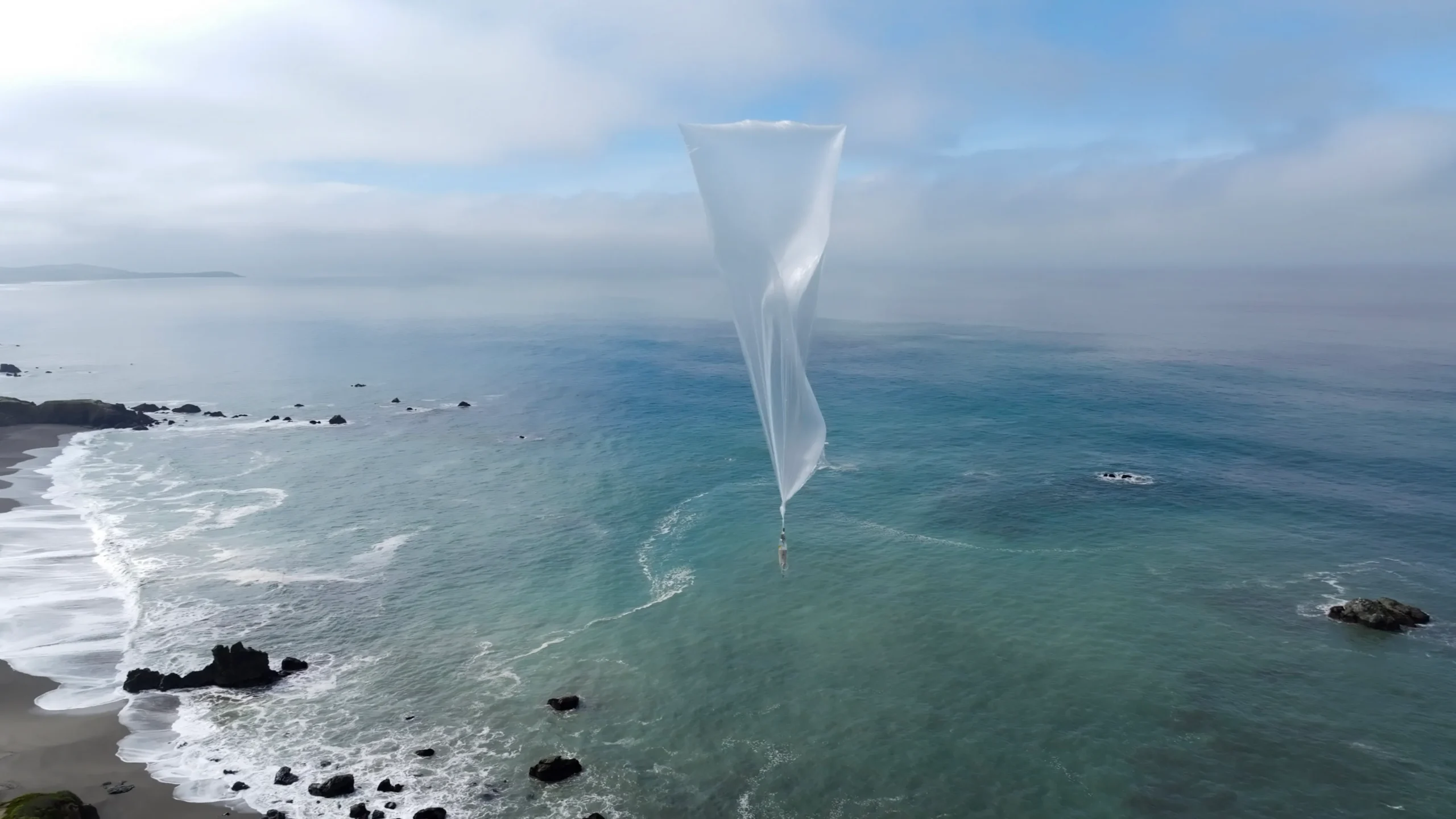
In a landmark development for meteorological science and national security, the U.S. Air Force has finalized a significant contract with Redwood City-based startup WindBorne Systems. The agreement, potentially valued at up to $49 million, solidifies the role of autonomous, high-altitude weather balloons as a critical pillar of modern defense and climate forecasting. By integrating a sprawling constellation of nearly 700 unpowered, AI-navigated balloons, the Air Force is signaling a decisive pivot away from traditional, cost-intensive weather tracking toward a more agile, data-dense future.
This partnership is not merely a service procurement; it represents the convergence of deep-learning innovation and real-time empirical data collection. As the global climate grows increasingly volatile, the ability to generate hyper-localized, high-frequency atmospheric data has become a strategic necessity for military operations, disaster response, and global commerce.
The Core Partnership: A New Frontier in Data Acquisition
The contract structure is designed for maximum operational flexibility. While the ceiling for the agreement is set at $49 million, the Air Force operates on a "pay-as-you-go" model, allowing the military to trigger specific data collection missions for designated regions and timeframes. To date, the Air Force has already placed orders totaling $1.7 million, a figure that industry analysts expect to swell rapidly as the utility of WindBorne’s proprietary dataset is proven in active theater environments.
For WindBorne, this deal serves as both a validation of its technology and a financial catalyst. The startup, which recently secured $37 million in a Series B funding round, plans to utilize the government funds to accelerate the expansion of its balloon constellation and further refine the hardware and autonomous navigation systems that define its competitive edge.
"This is largely a vehicle through which continued growth of the constellation can be supported, as well as some work on research and development to continue to improve the hardware and performance of the balloons," said Andrey Sushko, co-founder and CTO of WindBorne.
Significantly, the contract was awarded without a competitive bidding process. The U.S. government justified this by determining that WindBorne’s unique capability to collect global, high-fidelity atmospheric data in such an efficient, scalable manner currently has no equivalent in the marketplace.
Chronology: From Concept to Command of the Skies
Founded in 2015, WindBorne Systems began with a mission to solve the "data desert" problem. Historically, meteorology has relied on a sparse network of ground stations, satellite imagery, and expensive, infrequent weather balloon launches. These methods often fail to capture the granular, real-time atmospheric shifts that lead to extreme weather events.
2015–2022: The Incubation Phase
WindBorne spent its formative years perfecting its "balloon-as-a-sensor" architecture. Unlike traditional weather balloons that drift aimlessly with the wind, WindBorne developed autonomous navigation software. By adjusting altitude and utilizing internal ballast systems, the balloons can "steer" themselves into specific wind currents, effectively navigating the globe without the need for fuel-heavy propulsion.
2023–2025: The Rise of WeatherMesh
As the company scaled its fleet, it turned its focus toward artificial intelligence. In early 2026, the company unveiled "WeatherMesh 6," its latest deep-learning forecasting model. By feeding its own empirical data directly into the model, WindBorne claimed to outperform the European Centre for Medium-Range Weather Forecasts (ECMWF)—the gold standard in physics-based modeling—by providing faster, more accurate predictions.
August 2026: The Typhoon Milestone
The company solidified its reputation in August 2026, when it became the first organization to successfully navigate an unpowered vehicle into the eye of a typhoon (Typhoon Dolphin). This mission was not just a technical triumph; it was a proof-of-concept for the use of deep-learning for autonomous operational decision-making in high-risk environments.
The AI Revolution in Meteorology
The shift toward AI-driven weather forecasting is a tectonic change in atmospheric science. For decades, meteorologists were tethered to massive supercomputers running complex, physics-based simulations. While accurate, these models are computationally expensive and slow.
The new paradigm, driven by transformer-based architectures, allows for end-to-end learning. These models ingest decades of historical weather patterns, combined with real-time telemetry from sources like WindBorne’s constellation, to "learn" the behavior of the atmosphere.
Why Physics-Based Models Are Feeling the Pressure
While traditional physics-based models (like the ECMWF) remain essential for understanding the underlying laws of the climate, they are increasingly being supplemented—or in some cases, outpaced—by AI. The primary advantages of AI models include:
- Latency: Predictions can be generated in seconds rather than hours.
- Granularity: AI can account for micro-climates that are often smoothed over by large-scale numerical models.
- Cost-Efficiency: Once trained, AI models require significantly less compute power to run inferences compared to massive climate simulations.
Google DeepMind and other industry titans are also entering this space, but WindBorne occupies a unique niche: they are a "full-stack" weather company. They do not just process data; they capture the raw, empirical measurements that make the AI models effective in the first place.
Official Responses and Strategic Implications
The decision to partner with a private, venture-backed startup is a departure from the traditional procurement habits of the U.S. military, which has historically relied on established defense contractors or government labs.
The Government Perspective
For the Air Force and the Navy, the value proposition is clear: information dominance. In a theater of war, weather is the ultimate wildcard. Predicting the precise movement of a storm or the density of atmospheric interference can dictate the success of flight operations or naval deployments. By purchasing direct access to WindBorne’s data, the military gains a private, reliable, and "always-on" weather monitoring system that does not depend on the availability of public satellite feeds.
The WindBorne Perspective
Andrey Sushko emphasized that the government’s reliance on their system is a testament to the effectiveness of their autonomous navigation. "It’s one of the first times that a deep-learning model was used for actual operational decisions," Sushko noted. By navigating the balloons into the center of dangerous storms, WindBorne is collecting data that is physically impossible to gather through any other means, providing the military with a tactical edge.
Looking Forward: The Future of Atmospheric Intelligence
The implications of this contract extend far beyond the current conflict zones. As global weather patterns become more extreme due to climate change, the demand for high-resolution, real-time atmospheric data will grow exponentially. Industries ranging from agriculture and logistics to insurance and energy infrastructure are all looking for ways to mitigate "weather risk."
Challenges Ahead
Despite the success of the WeatherMesh model, the field of AI-driven meteorology remains a "jagged frontier." Relying exclusively on data-driven models poses risks, particularly in "black swan" weather events where historical data might not provide a sufficient baseline for prediction. Most experts agree that the future lies in a hybrid approach: using physics-based models for fundamental stability and AI for high-speed, localized, and actionable forecasting.
Furthermore, scaling a constellation to thousands of balloons introduces logistical and regulatory hurdles. Managing air traffic, ensuring battery longevity, and maintaining data security across a global fleet are challenges that WindBorne will need to solve as it continues to grow.
A New Standard
The WindBorne-Air Force deal serves as a bellwether for the "New Space" and "New Skies" era. We are witnessing the democratization of high-level atmospheric intelligence. As startups like WindBorne continue to push the boundaries of what is possible with autonomous systems and machine learning, the gap between traditional government science and private-sector agility will continue to widen.
For now, the balloons continue their silent, high-altitude watch. With the backing of the U.S. military and the power of deep learning, WindBorne Systems has effectively turned the atmosphere itself into a data-rich landscape, ensuring that for the first time in history, we may finally have the ability to see the storm before it arrives.


 Suro Senen

 Reynand Wu






