

 Iffa Jayyana
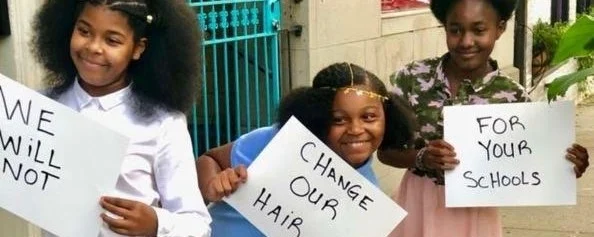
In the hallways of American schools, a quiet, pervasive crisis is unfolding. It is not found in textbooks or standardized tests, but in the enforcement of dress codes that disproportionately target Black girls. For many, the school day is frequently interrupted by administrators who view their bodies not as students to be educated, but as distractions to be managed. This practice, often labeled as "dress coding," has become a flashpoint in the broader national conversation regarding racial bias, bodily autonomy, and the educational "pushout" of students of color.
The issue reached a national breaking point when the U.S. Department of Education, under the leadership of then-Secretary Betsy DeVos, moved to revoke the Obama-era Rethink Discipline guidance. This policy shift effectively dismantled federal efforts to address the racial disparities in school disciplinary actions, leaving vulnerable students without a shield against discriminatory enforcement.
The Anatomy of an Incident: A Student’s Perspective
For Fatimah Fair, a student activist and co-author of the landmark report Dress Coded: Black Girls, Bodies, and Bias in D.C. Schools, the conflict is deeply personal. "Walking down the hallway at school, an administrator stopped me in my tracks," Fair recalls. "I felt her eyes glare from the top of my head, past my torso and down my legs. She told me that my shorts were too short and that she didn’t want to see me wearing them ever again."
The experience left Fair feeling not only humiliated but fundamentally altered in the eyes of her peers and educators. "I felt embarrassed and shaken, and for the rest of the day, I wondered if her impression of me had changed simply because of the shorts I was wearing," she says. This is not an isolated anecdote; it is a recurring narrative for thousands of Black girls across the United States who are pulled from class for "violations" that range from tank tops to hairstyles, effectively criminalizing their presence in the classroom.
Chronology of a Policy Shift: From Progress to Rollback
The struggle to reform school discipline has a complex history. In December 2016, the Obama administration issued the Rethink Discipline guidance, a comprehensive framework designed to help school districts move away from exclusionary discipline practices—such as suspensions and expulsions—that disproportionately harmed students of color and students with disabilities. The guidance emphasized restorative justice and kept students in the classroom where they belong.
However, the political landscape shifted rapidly. In a move that signaled a stark departure from these equity-focused goals, the Trump-era Department of Education under Betsy DeVos rescinded this guidance in 2018.
The revocation did not change the letter of the law, but it fundamentally altered the culture of American education. It sent a message to school administrators that the federal government was no longer interested in monitoring or mitigating racial disparities in disciplinary practices. For activists like Fair, who had previously met with Department of Education officials to present the Dress Coded report and advocate for the preservation of the guidelines, the reversal was a profound betrayal. "They agreed that disproportionally disciplining students of color is a problem and expressed concern about students losing classroom time," Fair notes. "I believed they would make things right. Clearly, I was wrong."
Supporting Data: The Statistics of Exclusion
The necessity for strict oversight in school discipline is underscored by staggering statistical disparities. Nationwide, Black girls are six times more likely to be suspended than their white peers. In certain jurisdictions, such as the District of Columbia, that disparity is even more extreme, with Black girls being 20 times more likely to face suspension than their white counterparts.
These numbers cannot be explained away by differences in behavior or disruptions in the classroom. Instead, researchers and civil rights advocates point to the role of implicit bias. Black girls are frequently disciplined for subjective, minor infractions—"talking back," "being loud," or "wearing inappropriate clothing"—that are often interpreted through the lens of racial stereotypes.
The "angry Black girl" trope is frequently weaponized by educators to justify punitive measures. Furthermore, the hyper-sexualization of Black girls’ bodies leads to a culture where teachers feel compelled to "save" or "protect" the school environment from the perceived threat of a student’s physical appearance. This creates a cycle where girls are denied their right to an education under the guise of maintaining a "professional" or "modest" learning environment.
Official Responses and the Failure of Oversight
When the Rethink Discipline guidance was revoked, the official justification from the Department of Education was a push toward "local control." By empowering school districts to set their own disciplinary policies without federal interference, the Department argued that it was reducing the regulatory burden on local schools.
However, critics argue that this "local control" has historically served as a mechanism for institutionalized discrimination. By removing the federal pressure to monitor disciplinary data, the Department of Education effectively gave school administrators a "green light" to continue practices that push Black girls out of the classroom.
The implications of this are severe. When a student is removed from the classroom for a dress code violation, they lose more than just a few minutes of instruction; they lose the continuity of their education, their standing in the social hierarchy of the school, and, eventually, their trust in the institution itself.
Implications: The Path Toward Student-Led Reform
Despite the federal rollback, the movement for reform has not been silenced. As Fatimah Fair emphasizes, the existence of the original guidance—even without federal backing—still provides a blueprint for what equitable schools should look like.
The most promising developments in this fight have come from students themselves. At Fair’s high school, students organized to draft an alternative dress code, successfully negotiating with administrators to implement a policy that does not target Black students. When their initial efforts were ignored, they protested, forcing the administration to confront the negative experiences of the student body.
"We also laid out ways to change enforcement, so it doesn’t target Black girls," Fair explains. "And we won."
This grassroots success serves as a model for other schools across the country. Students are increasingly forming coalitions, connecting across state lines to share strategies and demand accountability. The long list of student signatories—representing states from New York to California, and Florida to Minnesota—demonstrates that this is a nationwide movement. These students, parents, and teachers are united by a fundamental belief: that every student deserves to learn in an environment free from the weight of racial stereotypes and discriminatory policing.
Conclusion: A Call for Accountability
The battle over school dress codes is a microcosm of the larger struggle for racial justice in America. It highlights the ways in which institutions often fail to see Black girls as children, instead viewing them as targets for discipline.
As the federal government continues to oscillate in its commitment to equity, the burden of change has shifted to the local level. School boards, administrators, and teachers must now take the initiative to audit their own disciplinary data and identify the biases influencing their policies.
The path forward requires more than just changing the wording of a dress code; it requires a fundamental shift in how educators perceive the students they serve. Until schools recognize that the policing of a student’s body is a form of educational violence, the cycle of pushout will continue. But as the activism of Fatimah Fair and her peers proves, the students are ready to lead the way. If those in power will not champion the cause of equality, the students—as they have demonstrated time and again—will do it themselves.

 Muslim

 Reynand Wu