



 Nana Wu
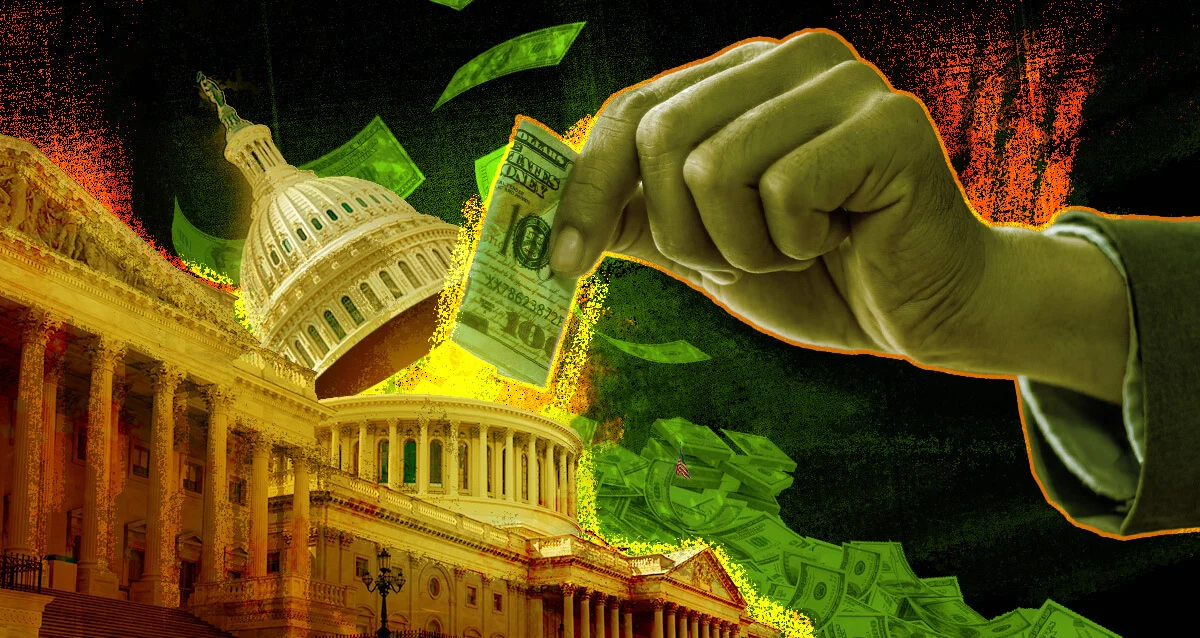
In the hallowed halls of the United States Capitol, the line between governance and personal financial gain has become increasingly blurred. For decades, the American public has watched with mounting frustration as the machinery of government appears to serve the portfolios of its architects rather than the interests of its constituents. The latest manifestation of this systemic erosion of trust involves the burgeoning world of "prediction markets"—platforms where individuals wager on the outcomes of geopolitical crises, economic shifts, and legislative deadlocks.
As high-profile instances of lawmakers trading on information—or, more alarmingly, trading on outcomes they have the power to influence—have come to light, a bipartisan coalition in Congress has introduced the PREDICT Act. This legislation seeks to codify a simple, yet radical, principle: public service should be a calling, not a venture capital opportunity.
The Convergence of Governance and Speculation
At the core of the debate is the emergence of prediction markets, platforms that allow users to place financial bets on future events. While these markets are often framed by proponents as "wisdom of the crowd" tools for forecasting, they have become magnets for political insiders. When a member of Congress holds a financial stake in the outcome of a government shutdown or a military conflict, the inherent conflict of interest is profound.
The ethical dilemma is twofold. First, there is the issue of "insider information." Lawmakers are privy to classified briefings, sensitive economic data, and legislative schedules long before the general public. When they use this non-public information to inform their wagers, they are engaging in a form of insider trading that would be illegal in almost any other sector of the economy. Second, and perhaps more dangerous, is the "moral hazard" created by influence. If a representative stands to profit from a specific legislative outcome—such as the failure to pass a budget or the escalation of a regional conflict—their objective decision-making is compromised.
Chronology of a Growing Scandal
The trajectory leading to the PREDICT Act was not sudden; it was the result of a slow, steady accumulation of public outrage.
- 2020: The Pandemic Pivot: The onset of the COVID-19 pandemic brought the issue of congressional stock trading to the national stage. Reports emerged that several senators had dumped millions of dollars in stocks following closed-door briefings on the severity of the virus, while publicly downplaying the threat to their constituents.
- 2022–2024: The Rise of Prediction Markets: As platforms like Polymarket and Kalshi gained mainstream traction, the volume of political betting exploded. By 2025, observers noted a sharp increase in activity on these platforms coinciding with major congressional legislative deadlines.
- March 2026: The Legislative Turning Point: Following a series of investigative reports in Politico and other outlets detailing the extent of insider betting, bipartisan pressure reached a fever pitch. On March 25, 2026, a group of lawmakers introduced the "Preventing Real-time Outcomes from Directly Influencing Congressional Trading" (PREDICT) Act.
- Present Day: The bill remains the focal point of a fierce debate regarding ethics, transparency, and the fundamental duties of elected officials.
Supporting Data: Why Trust is at an All-Time Low
The skepticism surrounding Congress is supported by cold, hard data. According to recent polling from the Pew Research Center and Gallup, public trust in the federal government remains near historic lows, hovering consistently below 20%.
Research from non-partisan ethics watchdogs, such as RepresentUs, highlights that the "incumbency advantage" in financial markets is not merely anecdotal. Studies examining the portfolio performance of members of Congress have historically shown that lawmakers frequently outperform the S&P 500, a feat that is statistically improbable for the average retail investor. When this performance is coupled with the ability to influence markets through legislative action, the system begins to look less like a democracy and more like a casino where the house always wins.
Furthermore, economic analysis of prediction markets shows that these platforms are highly sensitive to "leaks." In several instances, betting odds shifted dramatically hours before official announcements, suggesting that individuals with access to the inner workings of the Capitol were leveraging their positions for personal gain.
Official Responses and Political Maneuvering
The PREDICT Act has garnered support from an unlikely coalition of progressive Democrats and populist Republicans. The bill, as introduced, proposes a blanket prohibition on members of Congress, the President, and the Vice President from participating in prediction markets.
The Proponents’ Stance
Supporters of the bill argue that the status quo is indefensible. Representative [Name], a co-sponsor, noted during a press conference: "The American people are tired of watching their representatives treat the halls of power like a day-trading floor. We are here to serve the public, not to turn our legislative duties into a side hustle." The bipartisan nature of the bill is seen as its greatest strength, signaling that the desire for reform crosses ideological lines.
The Critics’ Counter-Arguments
Opposition to the bill—or at least to its more stringent components—is largely rooted in concerns over legislative overreach. Some critics argue that banning members from participating in prediction markets is an infringement on their personal financial autonomy. Others contend that prediction markets serve a vital role in providing data that policymakers need, and that the "chilling effect" of such a ban might stifle innovation in financial technology.
However, many legal scholars point out that the Supreme Court has long recognized that public office is a "public trust," and that the government has the right to impose significant ethical restrictions on its officers to prevent corruption.
Implications for the Future of Democracy
The passage—or failure—of the PREDICT Act will serve as a bellwether for the future of American democracy. If the bill passes, it would represent a significant victory for anti-corruption advocates and a necessary step toward restoring faith in the legislative process. It would set a precedent that ethics laws must evolve at the same speed as the technologies that facilitate financial malfeasance.
However, the implications go beyond mere regulation. There is a deeper, structural issue at play: the normalization of profit-seeking within the political class. If public service continues to be viewed as a pathway to personal wealth, the quality of individuals willing to enter government service will inevitably decline. We risk creating a legislative body comprised solely of the independently wealthy, or worse, those who seek office to enrich themselves.
Strengthening Ethical Boundaries
The PREDICT Act should not be the end of the conversation; it should be the beginning. To truly restore integrity, several follow-up measures must be considered:
- Blind Trust Requirements: Moving beyond prediction markets to require that all personal stock holdings be placed in truly blind trusts for the duration of a member’s term.
- Increased Transparency: Real-time disclosure of all financial transactions made by lawmakers and their immediate families, searchable in an easy-to-use public database.
- Enhanced Enforcement: Strengthening the powers of the Office of Congressional Ethics (OCE) to ensure that violations are met with swift and meaningful consequences, including the forfeiture of profits and potential loss of office.
Conclusion: A Demand for Accountability
The debate over the PREDICT Act is, at its heart, a debate about the nature of our social contract. When voters elect a representative, they are entering into an agreement: the citizen grants the official the power to govern, and in return, the official promises to act solely in the best interest of the nation. When that official uses their office to bet against the country’s success or to profit from its struggles, that contract is broken.
We deserve a government that works for the people—not one where insiders can "cash in" on the very events they are tasked with managing. As the PREDICT Act moves through the committee process, the eyes of the public are fixed on the Capitol. This is an opportunity for Congress to prove that it still listens to its constituents rather than the siren call of the market. It is time to draw a firm line: public service must never again be a pathway to private profit.
The movement for transparency is growing, and the message to Congress is clear: pass real, enforceable rules that end this culture of speculation for good. Our democracy depends on it.

 Lina Irawan
 Lina Hope






