


 Neng Nana
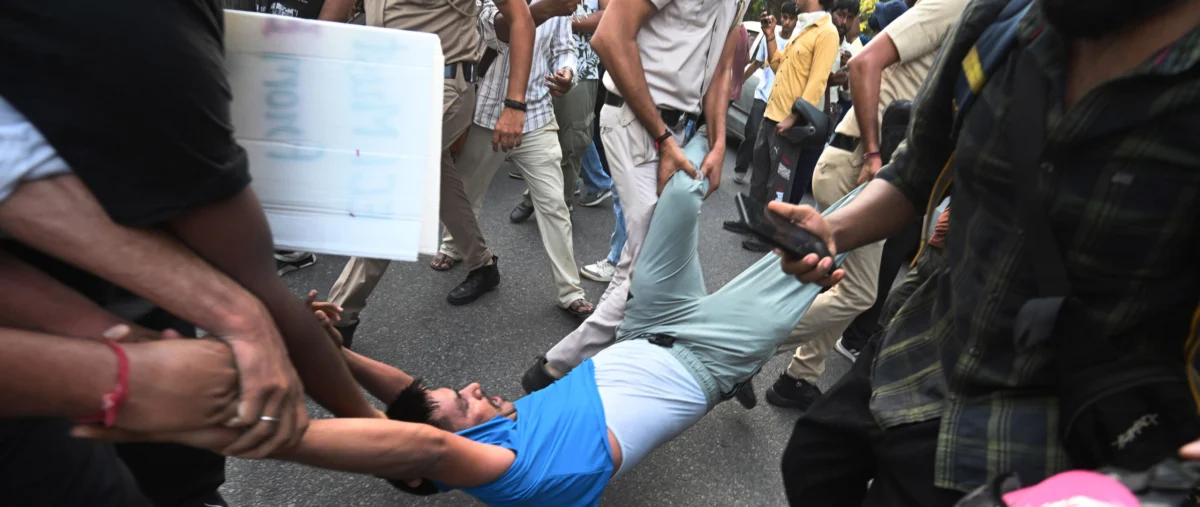
NEW DELHI – The national capital is currently witnessing a massive security mobilization that has effectively turned the city into a fortress. Ahead of a planned protest scheduled for Saturday, October 10, the Delhi Police and the Union Government have implemented a series of sweeping restrictions, effectively paralyzing the movement of citizens and drawing sharp rebukes from human rights organizations.
The protests, organized by a coalition comprising the Cockroach Janta Party (CJP), various student unions, and opposition factions, were sparked by mounting public anger over the Election Commission’s "Special Intensive Revision" (SIR) of electoral rolls. Demonstrators are calling for the resignation of Chief Election Commissioner (CEC) Gyanesh Kumar, citing the alarming removal of more than 130 million names from electoral registers since 2025.
The Anatomy of the Lockdown
The scale of the state’s response is historic. Reports indicate that over 32,000 security personnel—a combination of local Delhi Police and paramilitary forces brought in from across the country—have been deployed to blanket the city.
The measures taken to prevent the march from reaching its destination are comprehensive:
- Border Controls: The city’s borders have been sealed to buses, trucks, tractors, and large transport vehicles, preventing protesters from rural regions from entering the capital.
- Digital Blackout: A 24-hour mobile internet suspension was ordered in a four-kilometer radius around identified protest sites, effectively cutting off communication for those attempting to organize or document the proceedings.
- Pre-emptive Detentions: In the lead-up to the event, authorities have systematically arrested prominent activists and student leaders. Many others have been placed under house arrest in states outside the capital to prevent them from embarking on the journey to Delhi.
- Logistical Paralysis: The government initially planned to halt all Delhi-bound trains and close Metro stations across the city, though this was later challenged in the courts.
Aakar Patel: "Authorities Must Cease Punishing the Public"
Amnesty International India has emerged as a vocal critic of the state’s tactics. Aakar Patel, Chair of the Board, issued a scathing statement condemning the measures as a direct violation of both the Indian Constitution and international human rights obligations.
"Peaceful protesters must be able to demand accountability from those in power without facing intimidation, arbitrary detention, or sweeping restrictions on their freedoms," Patel remarked. He highlighted that the right to protest is a fundamental pillar of Indian democracy, asserting that demonstrations should not be subject to the whims of police permission.
"From denying permission for a peaceful demonstration to halting public transport and sealing borders, India’s authorities are leaving no stone unturned in their bid to suppress dissent," Patel added. "With more than 30,000 security personnel deployed, it is critical that the police protect the public, not punish people for exercising their fundamental rights. Security measures exist to ensure safety, not to silence those seeking accountability."
Chronology of the Crisis
The current standoff is the culmination of weeks of simmering tension that began in early October.
- October 2: The protest movement, spearheaded by the CJP and student unions, officially commences. The primary demand is the resignation of CEC Gyanesh Kumar over alleged mass disenfranchisement through the SIR process.
- October 8-9: Delhi Police officially denies permission for the protest to be held at Jantar Mantar, the city’s traditional protest hub.
- October 9 (Night): The government begins the implementation of a total transit lockdown. Internet suspension orders are issued for central Delhi, and police begin intercepting buses and trains carrying protesters.
- October 10 (Morning): Delhi enters a state of near-total lockdown. Heavy barricading is observed across all major arterial roads leading to the city center.
- October 10 (Judicial Intervention): The Supreme Court of India hears an urgent petition regarding the suspension of public services.
Judicial Intervention: The Supreme Court’s Role
On Friday, October 9, the Supreme Court of India provided a sliver of relief to the public, though it stopped short of striking down the government’s security strategy. In a partial relief order, the bench directed the Government of India not to enforce a complete suspension of train services or a total closure of the Delhi Metro.
The Court emphasized the principle of "proportionality," reminding the government that security measures should not lead to the total disruption of public life or the unreasonable inconvenience of the average commuter. Furthermore, the Court urged the Centre to consider designating an alternative, fully equipped venue for the protesters, acknowledging that the right to assemble in a democratic society necessitates a space where such activities can occur with adequate facilities.
Supporting Data: The Electoral Roll Controversy
The scale of the protests is rooted in a significant demographic and political concern: the integrity of India’s electoral rolls. Data suggests that since 2025, approximately 130 million people have been removed from the electoral rolls. The Cockroach Janta Party and civil society organizations argue that this mass deletion—executed under the guise of the "Special Intensive Revision"—disproportionately affects marginalized communities and opposition-leaning constituencies.
The protesters claim that the SIR process lacked transparency and was conducted without adequate verification, potentially disenfranchising millions of eligible voters ahead of future electoral cycles. The demand for the CEC’s resignation is framed by these groups as a necessary step to restore trust in the electoral process, which they argue is currently being manipulated from within.
Implications for Democracy and Civil Liberties
The situation in Delhi raises profound questions about the shrinking space for civil society in India. International observers have noted a recurring pattern where mass protests are met with high-tech surveillance, internet shutdowns, and the use of draconian security laws.
- The Precedent of "Permission": By insisting that protesters obtain prior permission, the state has effectively transformed a constitutional right into a government-granted privilege. Amnesty International and other legal experts argue that the requirement of "prior permission" is often used as a tool to stifle dissent before it gains momentum.
- Normalization of Digital Blackouts: India has gained a reputation for being the world leader in internet shutdowns. The use of these suspensions in the capital, specifically targeting the vicinity of a protest, suggests an attempt to prevent the "viral" nature of modern activism, where real-time updates and live-streaming have become essential to the success of demonstrations.
- The Militarization of Public Order: The deployment of 32,000 armed personnel for a political demonstration suggests a shift in how the state perceives domestic dissent. Rather than treating protesters as citizens exercising their rights, the state’s response—characterized by border closures and the sealing of the city—treats the gathering as a security threat on par with external aggression.
Conclusion
As the sun sets on October 10, the atmosphere in Delhi remains tense. The clash between the state’s drive for total order and the public’s drive for electoral accountability remains unresolved. While the Supreme Court has attempted to mitigate the impact on public infrastructure, the core issue—the disenfranchisement of millions and the state’s refusal to engage with the protesters—remains a deep-seated grievance.
The events in Delhi serve as a litmus test for the resilience of Indian democracy. As the country balances its status as the world’s largest democracy with a growing inclination toward state-led control of the public square, the outcome of this protest will likely resonate long after the barricades are dismantled. For now, the protesters continue to demand a voice, and the state continues to define the limits of what that voice can say.


 Iffa Jayyana

 Ammar Sabilarrohman




