
 Reynand Wu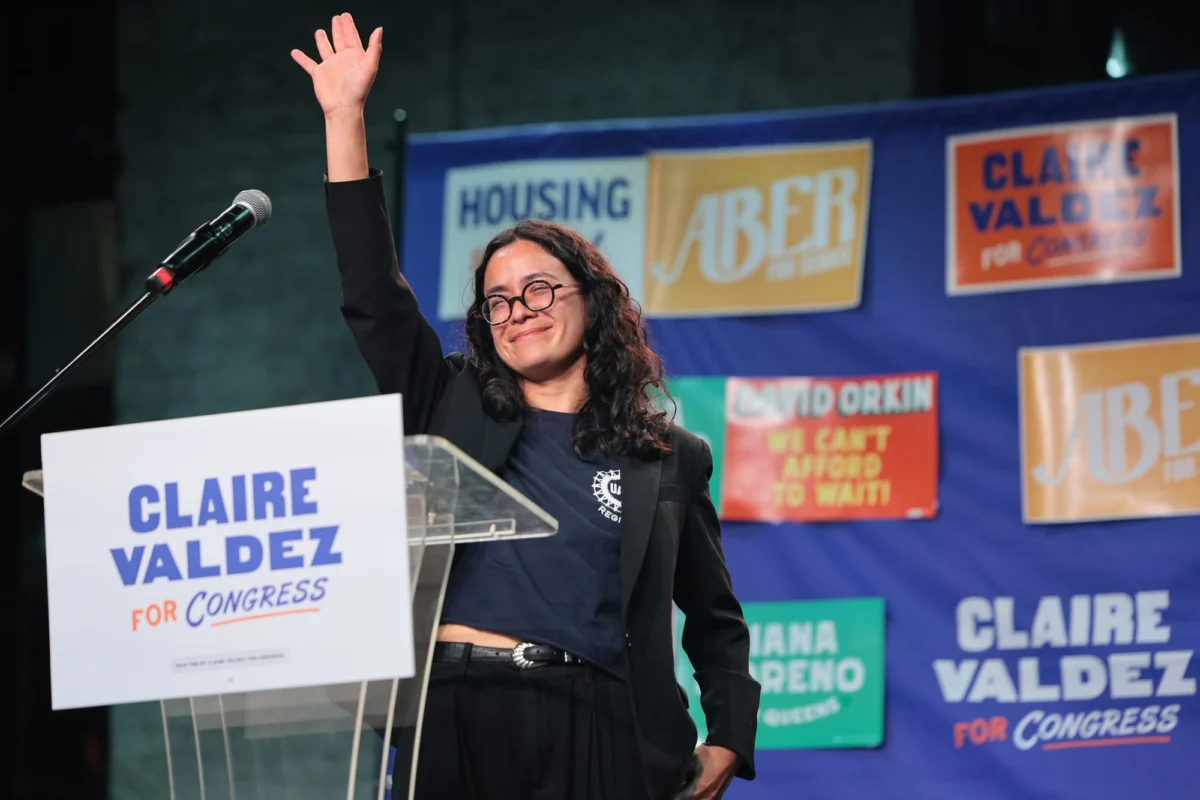
By Isa Farfan
June 25, 2026
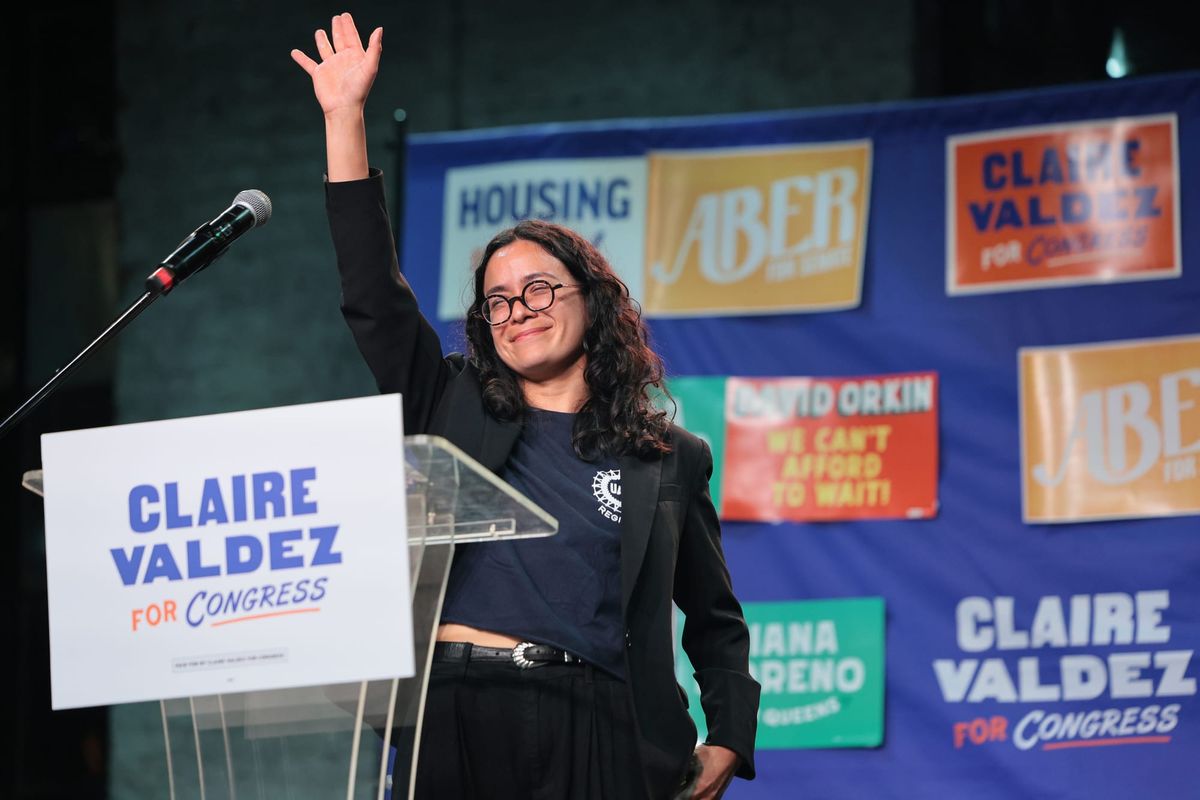
In a political earthquake that has reverberated from the corridors of City Hall to the halls of the U.S. Capitol, New York’s Democratic primary elections have signaled a profound shift in the city’s ideological landscape. Claire Valdez, a Texas-born painter and current New York State Assemblywoman, secured a landslide victory in the race for the 7th Congressional District, effectively positioning herself as the voice of a new, militant wing of the Democratic Party.
Valdez, a Democratic Socialist, defeated her primary challenger, Brooklyn Borough President Antonio Reynoso, by a staggering 20-point margin as of Wednesday morning. Her win represents more than a mere electoral change; it marks the ascension of a grassroots movement that seeks to fundamentally reorganize the relationship between the state, the workforce, and the creative class.
The Main Facts: A Decisive Mandate
The 7th District, often affectionately—and sometimes pejoratively—dubbed "Commie Corner," encompasses the culturally vibrant and historically working-class neighborhoods of Ridgewood, Williamsburg, and Bushwick. For years, the seat has been held by establishment figures like the retiring Representative Nydia Velázquez. When Velázquez threw her support behind Reynoso, a prominent member of the Working Families Party, it was widely viewed as an attempt to preserve the status quo against a surging socialist tide.
The voters, however, had other ideas. Valdez’s platform, which centered on aggressive housing reform, universal healthcare, and an unapologetic pro-labor agenda, resonated deeply with a constituency grappling with the dual pressures of skyrocketing rents and stagnant wages. By capturing the district, Valdez is now the prohibitive favorite to win the general election in November, a move that would see her transition from the New York State Assembly to the United States House of Representatives.
Chronology of a Campaign: From Arts Administrator to Congresswoman
The trajectory of Claire Valdez’s career is one defined by the intersection of labor organizing and creative expression. A painter by trade, Valdez moved to New York City to pursue a life in the arts, only to find the economic reality of the city increasingly hostile to those without independent wealth.
Her transition into politics was not born of political ambition, but of necessity. While working as a program assistant in the visual arts department at Columbia University, Valdez became deeply involved with UAW Local 2110. It was there that she cut her teeth in labor advocacy, learning the mechanics of collective bargaining and the power of unified worker action.
- 2023–2024: Valdez deepens her engagement with the Democratic Socialists of America (DSA), becoming a central figure in local organizing efforts.
- 2024: She secures a decisive victory in the race for Assembly District 37, running on a platform that rejected corporate PAC money and prioritized union growth.
- Early 2026: Valdez announces her candidacy for the 7th Congressional District, positioning herself as a champion for the "gig economy" worker and the struggling artist.
- June 23, 2026: Election night. Valdez clinches a 20-point lead over Antonio Reynoso, signaling a historic shift in local political power.
Supporting Data: The Mamdani Effect
The success of Valdez was not an isolated incident. Her victory was part of a larger, coordinated surge of socialist candidates backed by Assemblyman Zohran Mamdani. The "Mamdani-backed" slate swept the primary season, sending shockwaves through the New York political establishment.
Alongside Valdez, activist Darializa Avila Chevalier successfully unseated five-term Congressman Adriano Espaillat in the 13th District, while former city comptroller Brad Lander toppled two-time Congressman Dan Goldman in the 10th District.
The data from these races suggests a clear trend: New York voters are abandoning traditional institutional candidates in favor of those who advocate for systemic reform. These victories were characterized by high turnout in younger, renter-heavy precincts and a rejection of the "moderate-progressive" hybrid model that has dominated the city for the last decade.
Official Responses and Political Rhetoric
The atmosphere at Valdez’s primary-night watch party was electric, characterized by a mix of grassroots fervor and disciplined policy talk. In an interview with Hyperallergic, Valdez articulated a vision that moves beyond traditional partisan divides.
"We’re at this terrible crisis moment where bosses and billionaires are crushing working people," Valdez stated. "They’re making our rents too expensive; they’re cutting our wages; they’re stealing our time. As somebody who once aspired to be an artist and came to New York to pursue that dream, the purpose of our movement is to make sure that anyone can be an artist—that everyone has the time off, the living wages, the healthcare, and the space to pursue passions."
Conversely, the establishment has been forced to grapple with the reality of their waning influence. While the Reynoso campaign initially focused on his record as Borough President and his experience in local government, they struggled to counter the moral clarity of the Valdez message. The endorsement of Reynoso by outgoing leaders like Velázquez highlighted a generational divide that the establishment appears ill-equipped to bridge.
The Implications: A New Era for Labor and Art
The implications of the 2026 primary cycle are profound. With the election of candidates like Valdez, Chevalier, and Lander, the congressional delegation from New York is moving rapidly to the left. Their collective platform focuses on three pillars:
- Housing Justice: Implementing national rent control measures and expanding social housing to combat the displacement of low-income workers and artists.
- Labor Dignity: A radical strengthening of the National Labor Relations Act to facilitate easier unionization for gig workers, freelancers, and creative professionals.
- Foreign Policy Reform: A vocal and uncompromising stance on human rights, specifically the condemnation of the ongoing crisis in Gaza, which has become a litmus test for the new generation of Democratic Socialists.
Valdez, in particular, has become a standard-bearer for the idea that "art is not a luxury good." By framing her political platform around the rights of the artist as a worker, she has successfully expanded the definition of labor politics.
"Art is often treated as a luxury good and as an investment, not as something that is the representation of our collective humanity," Valdez noted during her interview. "The people who make art are workers who deserve remuneration, protection, and dignity."
Looking Ahead: The November General Election
As the dust settles on the primary, the focus shifts to the general election in November. While the 7th District is a heavily Democratic stronghold, the results of this primary will be studied by political strategists nationwide.
The victory of the Mamdani-backed candidates suggests that the "socialist label" is no longer the political liability it was once considered in American politics. Instead, it has become a rallying cry for a coalition of the disaffected—young people, immigrants, and members of the working class who feel the current economic system has failed them.
Whether this momentum can be sustained at the federal level remains to be seen. The incoming class of representatives will face the daunting task of navigating a polarized Congress while attempting to implement a radical, reformist agenda. However, if the energy of the primary is any indication, the "Commie Corner" caucus is ready for the fight.
Claire Valdez has proven that a candidate can rise from the ranks of the labor movement and the arts community to challenge the most entrenched political interests in New York City. As she prepares to head to Washington, the message from the 7th District is clear: the status quo is no longer enough. The people are demanding a seat at the table—and they are bringing their art, their unions, and their demand for a dignified life with them.

 Asro
Asro
 Neng Nana