


 Muslim
For the approximately 157 million Americans under age 65 who rely on employer-sponsored health insurance, the cost of securing that safety net has reached a sobering new milestone. According to the 28th annual Employer Health Benefits Survey released by KFF, the financial burden placed on families for medical coverage is outpacing both general inflation and wage growth, creating a deepening crisis of affordability for households across the United States.
The Financial Burden: A Snapshot of 2026 Costs
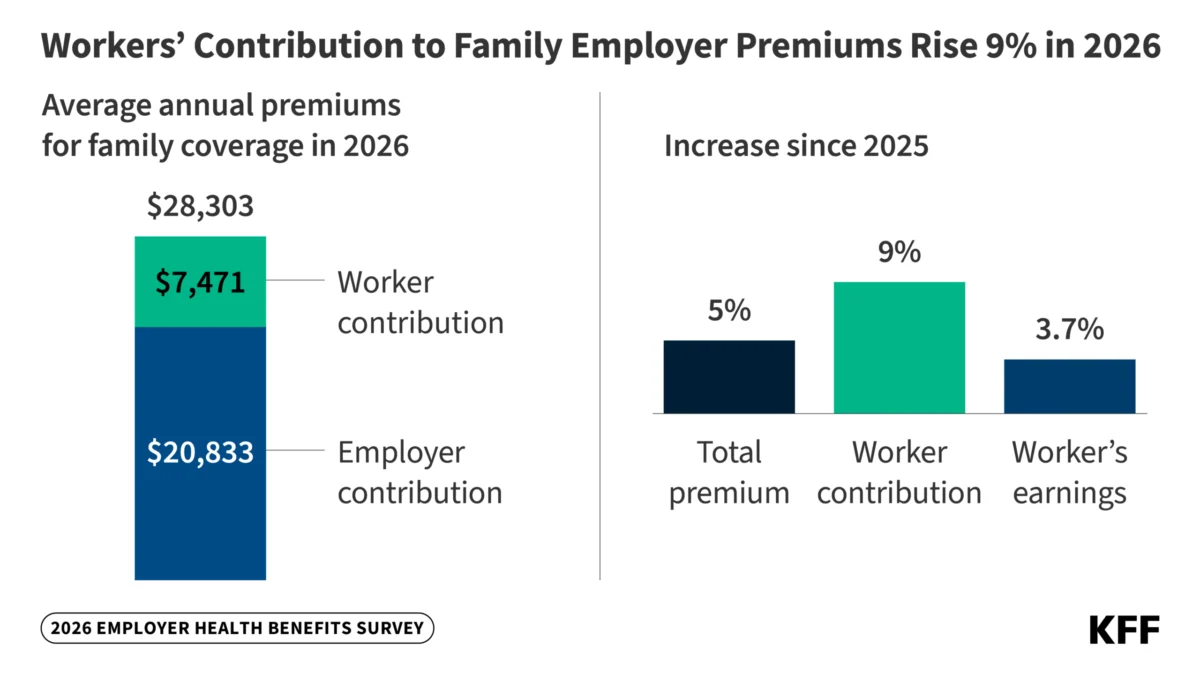
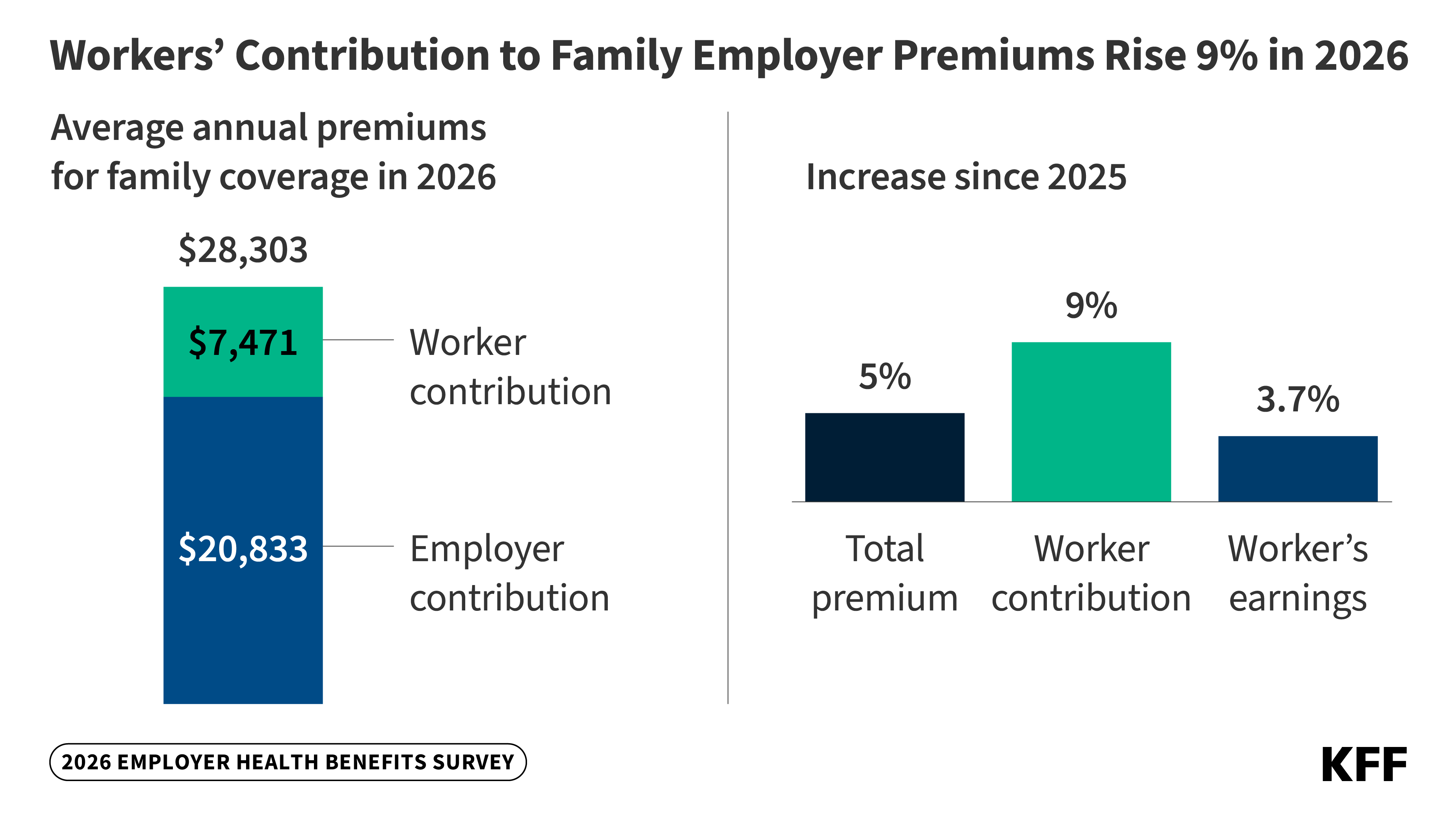
The headline figure from this year’s comprehensive survey of over 1,900 employers is stark: the average annual contribution for workers enrolled in family health coverage has climbed to $7,471. This represents a 9% increase—or $621—over 2025 levels. While employers continue to subsidize the majority of total premiums, the shifting of costs onto the shoulders of employees has become a persistent trend, threatening to erode the take-home pay of millions of working families.
When factoring in the employer’s share, the total annual premium for a family plan now averages $28,303. This is an increase of 5%, or $1,310, compared to the previous year. To put this in perspective, the cost of a single year of family health coverage now approaches the annual salary of a full-time worker earning minimum wage in many states, illustrating the sheer scale of the financial commitment required to maintain basic health security.
The Small Firm Disparity
The data reveals a widening chasm between employees at large corporations and those working for smaller enterprises. Workers at small firms (defined as having fewer than 200 employees) are bearing a disproportionate weight. On average, these employees contribute $9,687 annually toward family coverage—a staggering $2,847 more than their counterparts at larger firms. This disparity suggests that smaller businesses, which often lack the negotiating power and capital reserves of large conglomerates, are passing a greater percentage of health cost volatility directly onto their staff.
A Chronological View of Health Care Inflation
To understand how we reached this point, one must look at the trajectory of health costs over the last half-decade. Since 2021, the landscape of employer-sponsored insurance has been characterized by consistent, upward pressure.
- 2021–2023: The Recovery Phase: As the economy emerged from the acute phases of the pandemic, health care utilization surged, leading to moderate, steady increases in premium costs.
- 2024: The Acceleration: Costs began to outpace general economic indicators, fueled by rising provider costs and the incorporation of new, high-cost medical technologies and pharmaceuticals into benefit packages.
- 2025–2026: The Current Surge: This year marks a significant departure from earlier years. While wages have risen by 3.7% and general inflation has hovered around 2.7% (with higher spikes in recent months), the 9% jump in worker contributions indicates that health care is rapidly becoming a "luxury" expense that consumes an increasing share of the family budget.
Since 2021, the cumulative data paints a clear picture: family premiums have risen by 28%, and worker contributions have climbed by 26%. While this tracks relatively closely with the 27% increase in wages over the same period, the rate of change in 2026 suggests that the ceiling for affordability is being tested, if not breached.
Supporting Data: Why Costs Are Climbing
The KFF survey highlights several structural factors driving these increases. The primary culprit, according to the employers surveyed, is the sustained rise in projected health care utilization and the increased cost of providing care.
How Employers Are Responding
Among large firms with 200 or more employees, the strategy for managing these costs is twofold:
- Direct Premium Hikes: Approximately 44% of large firms have responded to rising costs by increasing the share of the premium that the employee is responsible for paying.
- Increased Cost-Sharing: About 21% of firms have opted to increase deductibles, co-payments, or other cost-sharing mechanisms for specific services. This effectively lowers the employer’s immediate outlay while increasing the "point-of-service" cost for the patient.
This trend is a significant shift in the "social contract" of employment. Historically, employer-sponsored insurance was viewed as a stable benefit. Today, it is increasingly treated as a variable cost that fluctuates based on the health system’s pricing, with the worker serving as the shock absorber for those fluctuations.
Official Responses and Political Implications
The release of the 2026 survey results has sent shockwaves through policy circles, framing the health care debate for the upcoming election cycle.
KFF President and CEO Drew Altman did not mince words regarding the impact of these findings. "We have been hearing a lot about Affordable Care Act and Medicaid cuts," Altman stated. "Now add a 9% increase in what workers with employer coverage paid toward family premiums in 2026 to the reasons voters are so concerned about their health care costs."
Altman’s assessment suggests that the "health care cost crisis" is no longer confined to the uninsured or those on public exchanges. It has moved into the boardroom and the living room of the middle class. When workers see a 9% year-over-year increase in their payroll deductions for health insurance, it creates a visceral sense of financial insecurity that directly impacts voter sentiment.
Implications: The Long-Term Outlook
The 2026 KFF survey findings carry profound implications for the American workforce and the economy at large.
1. The Erosion of Disposable Income
As health premiums rise faster than wages, the "real" purchasing power of the average American household declines. Money that might have gone toward retirement savings, housing upgrades, or education is instead being diverted to cover the rising cost of premiums and deductibles. This, in turn, creates a drag on broader consumer spending, which accounts for the majority of U.S. economic activity.
2. The "Lock-in" Effect
High premiums may lead to a phenomenon known as "job lock," where employees stay in jobs they might otherwise leave—or positions that are less productive—simply because they cannot afford to lose their specific health benefits. This reduces labor market mobility, a key driver of economic innovation.
3. Healthcare Avoidance
With the rise of high-deductible plans and increased cost-sharing, many families are delaying or forgoing necessary medical care. When individuals avoid routine screenings or delay treatment for chronic conditions due to cost, it often leads to more severe health issues down the line—resulting in higher, more expensive emergency interventions that ultimately drive up the cost of the entire system.
4. A Shift in Benefit Design
We are likely to see more employers experimenting with "value-based" insurance design or shifting toward narrow-network plans, which restrict the choice of doctors and hospitals in exchange for lower premiums. While these might keep costs down in the short term, they may also limit the quality and convenience of care available to workers.
Conclusion
The 2026 Employer Health Benefits Survey serves as a diagnostic tool for the American health care system. It reveals a system under strain, where the costs of innovation, aging populations, and rising medical prices are being pushed downstream to the employee.
As premiums continue to climb, the question for policymakers, employers, and the public is no longer just about access to insurance, but about the sustainability of the current model. Without significant structural reform or a shift in how medical services are priced and delivered, the dream of affordable, high-quality employer-sponsored care may become increasingly out of reach for the average American family.
For those looking to dive deeper into the data, the complete 2026 Employer Health Benefits Survey, including interactive tools and state-level breakdowns, is available through the KFF online portal. As we move forward, the conversation will likely pivot toward how to decouple these rising costs from the worker’s paycheck—a debate that will undoubtedly shape the future of the American labor market for years to come.

 Neng Nana
 Ammar Sabilarrohman