




 Raul Delapena Setiawan
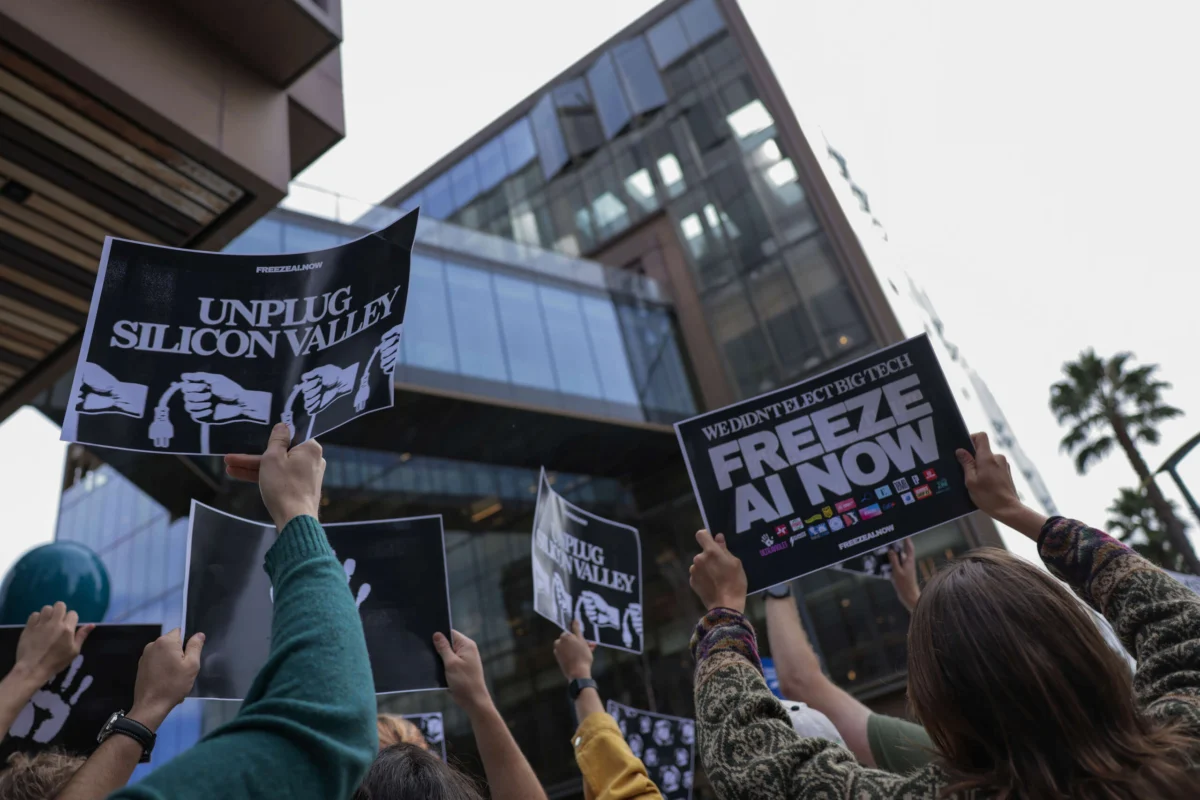
In what legal experts are calling a pivotal moment for the future of intellectual property and the survival of the Fourth Estate, a coalition of 60 news publishers, led by the Boston Institute for Nonprofit Journalism (BINJ), has filed a massive federal lawsuit against OpenAI and Microsoft. The litigation alleges that the tech conglomerates have systematically "harvested" copyrighted journalistic content to train their generative artificial intelligence models without compensation or consent, effectively cannibalizing the very industry that provides their systems with factual data.
The lawsuit, which represents more than 500 news outlets across the United States, signals a significant escalation in the conflict between traditional media and the burgeoning AI industry. For the plaintiffs, the struggle is not merely about copyright; it is an existential fight against what they describe as the "terminal collapse" of American journalism—a collapse they argue is being accelerated by AI-driven search summaries and the unauthorized use of their creative labor.
Main Facts: A Mass-Action Strike Against "Data Theft"
The core of the legal complaint, filed by the mission-driven law firm Platkin LLP, centers on the unauthorized use of hundreds of thousands of articles. The plaintiffs, which include diverse outlets such as The Shoestring, ecoRI News, and the Austin Chronicle, argue that OpenAI and Microsoft’s large-language models (LLMs) are built upon the backbone of professional reporting that was never paid for.
The Allegations
The publishers contend that the defendants violated well-established copyright laws by scraping news archives to "teach" AI models how to communicate and provide information. According to the filing, this practice does more than just use the data; it creates a derivative product that directly competes with the original sources.
"OpenAI and Microsoft took our articles without asking our permission and definitely without providing us payment of any kind," stated a representative from BINJ. "This is a violation of the foundational principles that allow the news industry to function."
The "Zero-Click" Search Crisis
Beyond the training of models, the lawsuit highlights a secondary, equally devastating harm: the implementation of AI-generated search summaries, such as Google’s "AI Overviews." These features provide users with condensed versions of news stories directly on the search results page, removing the incentive for users to click through to the original news website. This "zero-click" environment starves publishers of the traffic necessary to generate advertising revenue or solicit reader donations.
Chronology: The Road to the Legal Breaking Point
The current mass-action lawsuit does not exist in a vacuum. It is the latest chapter in a multi-year struggle between tech innovators and content creators.
- 2022–2023: The Generative AI Explosion: With the public release of ChatGPT, the scale of data scraping became apparent. News organizations began noticing their content being reproduced almost verbatim by chatbots.
- December 2023: The New York Times v. Microsoft and OpenAI: In a landmark move, The New York Times filed its own lawsuit, alleging billions of dollars in statutory and actual damages. This case has spent three years wending its way through the legal system, setting the stage for smaller publishers to organize.
- 2024: The Traffic Plunge: As Google and other search engines integrated AI summaries, news outlets reported immediate and drastic drops in organic search traffic.
- Late 2025: The Medill Report: A report from Northwestern University’s Medill School of Journalism confirmed the dire state of the industry, revealing that 170 newspapers closed or merged in just one year, a rate of nearly three per week.
- Present Day: The BINJ-led coalition files its mass-action suit, representing the "long tail" of journalism—the small and nonprofit outlets that are often the only source of original reporting in their communities.
Supporting Data: Quantifying the Destruction
The publishers’ claims are backed by a growing body of empirical evidence suggesting that the "AI boom" is a "journalism bust."
The Traffic Cliff
According to a January 2026 report by the University of Oxford’s Reuters Institute for the Study of Journalism, the impact of AI on web traffic is staggering. The report, which analyzed data from 2,500 sites globally via Chartbeat, found:
- Global Impact: Google traffic from organic search dropped by 33% between late 2024 and late 2025.
- U.S. Impact: In the United States, the drop was even more pronounced at 38%.
- Future Projections: Surveyed digital executives forecast an additional 43% drop in organic search traffic by the end of 2026.
The Pew Research Findings
A March 2025 study by the Pew Research Center provided a granular look at user behavior. By tracking nearly 69,000 real Google searches, researchers found:
- Click-Through Rates: When an AI summary box appeared, the percentage of users clicking a link to a non-Google website dropped from 15% to just 8%—a near-50% reduction in traffic for external sites.
- Source Neglect: Only 1% of users clicked on the source links provided within the AI Overview boxes.
- Session Termination: Users who saw an AI summary were significantly more likely to end their search session entirely (26%) compared to those who didn’t (16%), suggesting that the AI provides "just enough" information to satisfy the user while depriving the publisher of a visit.
The Human Cost: Jobs and Closures
The 2026 State of Local News report from Northwestern University paints a grim picture of the industry’s workforce:
- Job Losses: 7,500 newspaper jobs were lost nationwide between 2024 and 2025.
- Historical Decline: Since 2005, the U.S. has seen a net loss of 3,400 local newspapers, and total newspaper employment has plummeted by 75%.
- News Deserts: Many of the 170 newspapers that closed in the last year were the "last remaining source of original news" in their specific geographic communities.
Official Responses and Legal Defenses
While OpenAI and Microsoft have not commented specifically on every detail of the BINJ-led lawsuit, their historical defenses in similar cases provide a roadmap for their legal strategy.
The "Fair Use" Argument
The tech giants generally argue that training AI models constitutes "fair use" under U.S. copyright law. They contend that the models do not "copy" the text in a traditional sense but rather "learn" patterns of language, much like a human student reading a library’s worth of books to learn how to write. They argue that this process is "transformative"—a key requirement for a fair use defense—because it creates a new tool for synthesis and creativity rather than a simple mirror of the original content.
Tech Executive Perspectives
In various public forums and court filings, executives have suggested that the AI industry cannot exist without access to massive datasets. Some have argued that "it would be impossible to train today’s leading AI models without using copyrighted materials," suggesting that the social benefit of AI outweighs the narrow interests of copyright holders.
The Plaintiffs’ Rebuttal
The publishers counter that this is a false dichotomy. They argue that if the tech industry requires their data to exist, it must pay for it. "Billionaires in the tech industry are amassing wealth at historic levels," the BINJ statement noted. "They are using our labor to build that wealth while our industry is forced into a rolling collapse."
Implications: Democracy in the Balance
The outcome of this lawsuit—and others like it—will likely determine the information landscape of the next century. The implications extend far beyond the balance sheets of newsrooms.
The Erosion of Local Accountability
As small news outlets like The Shoestring and InDepth NH face financial ruin, the "light of day" they shine on local government and corporate activities begins to dim. Without local reporters, corruption often goes unchecked, and community engagement declines. The plaintiffs argue that the crushing of these outlets is not a "bug" of the tech economy but a "feature" that benefits the powerful by eliminating oversight.
The Speculative AI Bubble
There is also the growing concern of an "AI bubble." Some economists, including those at the IMF, have warned that the massive investments in AI have yet to yield products that most people are willing to pay for. If the AI industry collapses under the weight of its own speculation—or if legal judgments force it to pay for the data it uses—the collateral damage to the news industry, which has already been "gutted" to feed the models, may be irreversible.
A Call for Legal Redress
The mass-action lawsuit represents a hope that the legal system can provide a check on the "oligarchs" of the tech world. By joining forces, small nonprofit publishers are attempting to level a playing field that has been tilted against them for two decades.
"If enough people demand redress through the legal and political system," the BINJ leadership concluded, "perhaps the oligarchs will see their industries challenged before they succeed in wiping ours out. We are defending our democratic rights against a tech-driven economy that values profit over the truth."
As the case moves forward, it will serve as a litmus test for whether copyright law can evolve to protect creators in the age of automation, or whether the "terminal collapse" of journalism is an inevitable consequence of the digital revolution.


 Nana

 Ammar Sabilarrohman






