


 Ammar Sabilarrohman
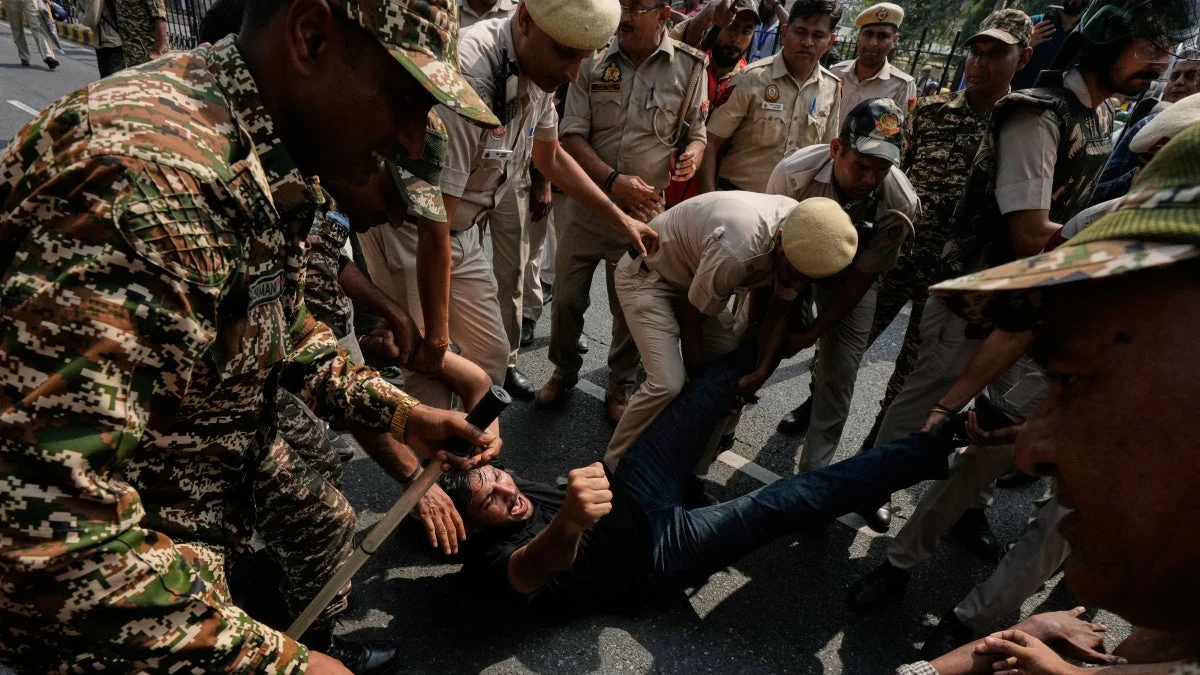
NEW DELHI — The streets of India’s capital have been transformed into a theater of confrontation as a massive, youth-led movement against the Election Commission of India (ECI) faces an unprecedented security clampdown. What began as a series of peaceful demonstrations against a controversial voter list revision process has spiraled into a nationwide crisis of civil liberties, characterized by mass arrests, the suspension of digital infrastructure, and allegations of state-sponsored intimidation.
Human Rights Watch (HRW) has issued a scathing indictment of the Indian government’s response, describing the tactics used against protesters—including members of the Gen Z Cockroach Janta Party, student organizations, and civil society groups—as "abusive" and "unnecessarily excessive." As the standoff enters its third week, the fundamental question of electoral integrity in the world’s largest democracy hangs in the balance.
The Catalyst: A Crisis of Electoral Integrity
The current unrest is rooted in the "Special Intensive Revision" (SIR) of voter rolls, an operation launched by the Election Commission of India in June 2025. While the ECI officially describes the program as a routine initiative to purge dead, duplicate, or ineligible voters, the scale of the removals has triggered alarm. To date, over 130 million names have been struck from the rolls.
Independent investigations, most notably by The Indian Express, have cast a long shadow over the legitimacy of this process. The newspaper’s reporting revealed deep-seated internal discord within the ECI, noting that two election commissioners had lodged formal objections against the decisions of Chief Election Commissioner (CEC) Gyanesh Kumar.
Critics argue the process is opaque and weaponized. Data suggests that the deletions have disproportionately impacted marginalized demographics, including Muslims, women, and the impoverished. Opposition parties allege that the revision is a systematic effort to engineer the electorate to favor Prime Minister Narendra Modi’s Bharatiya Janata Party (BJP). The mounting evidence of administrative bias has led to a flurry of petitions before the Supreme Court, seeking the removal of CEC Kumar and a total suspension of the SIR process.
Chronology of the Crackdown
The descent into authoritarian containment began in late September 2025 and reached a boiling point in early October.
- September 25, 2025: The first wave of protests erupts following the publication of the Indian Express investigation.
- October 9, 2025: In a move that drew widespread condemnation, police entered a Delhi mosque during Friday prayers, warning congregants against participating in "unnecessary protests."
- October 10, 2025: A massive "fortress" strategy is deployed at Jantar Mantar. Authorities mobilize 40,000 security personnel, cancel train services, and shutter 43 metro stations. Internet services are blacked out across the city.
- October 11, 2025: The Supreme Court issues a directive mandating that lawyers and journalists be allowed to perform their duties without obstruction. Despite this, at least 30 journalists are detained, and multiple reports of physical assault and sexual harassment emerge.
The scale of the suppression was absolute. In one particularly egregious incident, three leaders of the Cockroach Janta Party were taken into custody directly from an airplane after it landed in New Delhi. Meanwhile, activists were dragged from public transit, and high-profile opposition figures, including former chief ministers and Rahul Gandhi, were rounded up in mass sweeps.
The Assault on the Press
The freedom of the press has become a primary casualty in this conflict. The Delhi Police issued restrictive "guidelines" for journalists, essentially framing the presence of the media as a potential obstruction to "police operations." These guidelines were quickly ignored in practice, as journalists were not merely kept at a distance but actively targeted.
The experience of a 31-year-old reporter, who spoke to HRW on the condition of anonymity, captures the brutality of the situation. "My press card was hanging by my neck, but they still dragged me into the bus, ripping my shirt buttons," he recounted. He spent hours in a police bus that eventually overheated and caught fire, forcing detainees to fight for their lives to escape the suffocating fumes.
Journalist organizations have condemned the use of prisoner transport vehicles to hold members of the press. Furthermore, the Caravan magazine reported that one of its journalists was struck on the head, slapped, and assaulted with a rifle butt while documenting the detention of a protester. Perhaps most disturbing are the testimonies from three female journalists who alleged sexual harassment at the hands of law enforcement officers during the chaos.
Collaborative Violence: Police and Political Proxies
A recurring theme in the testimonies of observers is the alleged collusion between security forces and pro-government elements. A 26-year-old journalist described a chilling scene on October 10: "It is collaborative. The police looked on and did not stop the violence."
Other witnesses reported seeing men wearing saffron scarves—a color frequently associated with the ruling party’s ideological base—beating protesters while police stood by, sometimes laughing. These allegations suggest that the state is not merely using police force to maintain order, but is actively providing space for political proxies to suppress dissent through physical intimidation.
Official Responses and International Repercussions
The Indian government has maintained a posture of rigid defiance. When the Office of the United Nations High Commissioner for Human Rights (OHCHR) expressed concern over the mass detentions and called for meaningful dialogue, the Indian Ministry of External Affairs reacted with hostility. It dismissed the UN’s statement as "unwarranted" and an "unacceptable interference in the internal affairs of India."
Domestically, the government has largely ignored the Supreme Court’s October 11 order. While the court directed that peaceful protesters should not be illegally detained and that communication services should be restored, the reality on the ground has remained largely unchanged. Barricades remain, the internet is restricted in key areas, and the practice of detaining citizens at undisclosed locations continues.
Implications for Indian Democracy
The current crisis represents a critical juncture for India. The combination of a potentially manipulated voter base and the violent suppression of those protesting that manipulation strikes at the heart of the democratic social contract.
Elaine Pearson, Asia director at Human Rights Watch, emphasized the urgency of the situation: "The Modi government should stop throwing young protesters in jail and instead engage with them to address concerns over the right to vote and fairness of elections."
The implications are far-reaching:
- Erosion of Institutional Trust: The ECI’s perceived lack of impartiality threatens to permanently damage public faith in the electoral process.
- Normalization of State Violence: The use of 40,000 security personnel to silence peaceful dissent sets a dangerous precedent for future civic engagement.
- Digital Authoritarianism: The preemptive shutdown of internet services and metro infrastructure during political demonstrations signals a shift toward a "siege" model of governance.
As the Supreme Court continues to deliberate on the petitions, the protesters remain in the streets, undeterred by the risks of detention or physical harm. For the Gen Z Cockroach Janta Party and their allies, the fight is no longer just about the voter list—it is about the preservation of the right to dissent itself. Whether the Indian state chooses to pivot toward democratic dialogue or deeper repression will define the trajectory of the nation for years to come.

 Asro
 Lina Hope






