



 Layla Zulfa
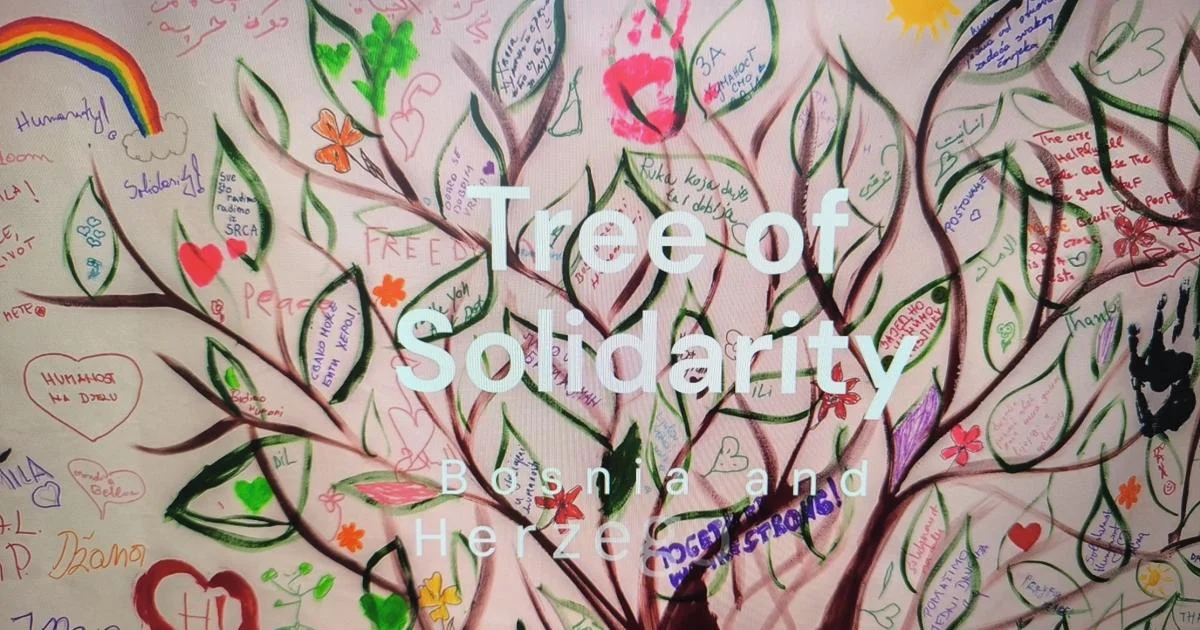
SARAJEVO – In the heart of Bosnia and Herzegovina, a nation that knows the visceral cost of conflict and the profound necessity of relief, a vibrant, evolving canvas has emerged as a testament to the human spirit. The "Tree of Solidarity," a collaborative mural initiative launched to commemorate World Humanitarian Day, has transformed from a blank wall into a mosaic of empathy, serving as a stark reminder of both the beauty of altruism and the precariousness of those who dedicate their lives to it.
The initiative, spearheaded by the International Committee of the Red Cross (ICRC) Delegation in Sarajevo in partnership with the Red Cross Society of Bosnia and Herzegovina, serves as more than just a commemorative art project. It is a rallying cry for the protection of humanitarian workers—a demographic increasingly targeted in the modern theater of global conflict.
The Genesis of a Collective Tribute
The project began with a simple, evocative premise: humanity grows when we come together. As participants from diverse backgrounds gathered, one handprint joined another, and then another, eventually blooming into the branches of the Tree of Solidarity. This visual representation honors the unsung heroes who navigate the world’s most dangerous regions to provide succor to the suffering.
For many, the act of participating was cathartic. One participant, sketching a shield onto the canvas, articulated the sentiment shared by many: "I have drawn a shield to represent our wish to protect humanitarian workers and show appreciation for their dedication and efforts." Another contributor simply described these workers as "kind people because they have good hearts—the most beautiful people in the world."
The Tree is not merely a celebration of the living; it is a solemn monument to those who never returned home. It stands as a public acknowledgment that the pursuit of humanity often carries the highest possible price.
A Chronology of Commitment: The ICRC in Bosnia
To understand the weight of this tribute, one must look at the history of the region. The ICRC’s presence in Bosnia and Herzegovina is not a recent development; it is a multi-generational commitment.
- 1992: As conflict erupted, the ICRC and the Red Cross Society of Bosnia and Herzegovina forged an operational partnership to mitigate the humanitarian fallout of the war.
- 1995–2000: The focus shifted from emergency trauma care to long-term reconstruction, the search for missing persons, and the restoration of community infrastructure.
- 2000–2020: The partnership evolved to address the lingering socioeconomic consequences of conflict, including landmine awareness and psychosocial support for trauma survivors.
- 2024: Over three decades later, the collaboration remains active, proving that while the guns may have fallen silent years ago, the humanitarian needs in post-conflict societies remain a long-term endeavor.
This enduring presence lends the Tree of Solidarity a unique gravitas. The participants are not just painting; they are reflecting on a thirty-year history of cooperation that has saved countless lives.
Supporting Data: The Rising Toll on Humanitarians
The rhetoric surrounding the Tree of Solidarity is underscored by alarming statistics that reveal the escalating dangers facing aid workers globally. While the mural is a symbol of gratitude, the data provided by the ICRC paints a harrowing picture of a profession under siege.
In 2023, the International Red Cross and Red Crescent Movement mourned the loss of 24 colleagues killed in violence-related incidents while performing their duties. As of mid-2024, that number has already reached 12. These are not merely statistics; they represent individuals who entered conflict zones with the sole intention of preserving human dignity.
The trend of targeting humanitarian personnel—once considered "off-limits" under the Geneva Conventions—is a disturbing evolution in modern warfare. Whether through direct attack, collateral damage, or kidnapping, the space for neutral, impartial humanitarian action is shrinking. The Tree of Solidarity serves as a public rebuke to this normalization of violence.
Official Perspectives: The Voice of the ICRC
Jamila Milović-Halilović, Head of the ICRC Delegation in Sarajevo, has been a vocal champion of the initiative. Her words bridge the gap between the artistic expression of the mural and the hard reality of field operations.
"Humanity has names—the names of those who went to help and never returned," Milović-Halilović stated during the unveiling. "We owe it to them to carry on and to keep acting in the name of humanity."
For the ICRC, the mural is a vehicle for unity. In a country often characterized by its complex political and ethnic divisions, the Tree of Solidarity provides a neutral ground where shared values—empathy, the desire to alleviate suffering, and the belief in human dignity—take precedence.
"What brings us together in all our diversity through this mural and this Tree of Solidarity is our belief in humanity," she added. "It is our wish to say thank you to all humanitarian workers around the world who may be risking their lives today to protect human dignity and provide assistance where it is needed most."
Implications: Why Protection Matters
The Tree of Solidarity carries a message that is both simple and urgent: Solidarity is important, but it is not enough.
The implications of this initiative are threefold:
1. The Erosion of Neutrality
The global humanitarian community is facing an existential crisis. The erosion of respect for the "emblem"—the Red Cross or Red Crescent—means that humanitarian workers are no longer shielded by their neutrality. The Sarajevo initiative calls for a renewed global commitment to the rules of war. If aid workers are not safe, the millions who rely on them for food, water, and medical care are effectively sentenced to death.
2. The Power of Public Narrative
By involving the public in the creation of the mural, the ICRC is shifting the narrative from a distant, institutional effort to a local, personal responsibility. When citizens draw shields and write messages of support, they are internalizing the necessity of humanitarian access. This grassroots advocacy is essential for pressuring policymakers to ensure that the protection of civilians and aid workers remains a diplomatic priority.
3. A Legacy of Resilience
The Tree of Solidarity acknowledges that trauma is not just a personal experience but a collective one. By memorializing the fallen, the initiative ensures that their sacrifice is not forgotten. In a world that is quick to move on from the latest tragedy, the mural acts as a static, persistent reminder that the work of humanity is continuous and requires constant vigilance.
Conclusion: A Call to Action
As the Tree of Solidarity continues to grow in Sarajevo, it stands as a sentinel of hope. It is a physical manifestation of the belief that, despite the horrors of war and the fragility of peace, humanity is capable of extraordinary empathy.
However, the initiative’s true success will not be measured by the beauty of the mural, but by the safety of those it honors. The call to action is clear: humanitarian workers must be protected. Always. Everywhere.
In the quiet, brush-stroked leaves of the Tree of Solidarity, there is an unspoken demand for a world where aid workers no longer need to be martyrs, and where the act of helping one’s neighbor is recognized as the most sacred of all human endeavors. As the ICRC continues its mission, the people of Bosnia and Herzegovina have reminded the world that while we may be separated by borders and ideologies, we are united by our shared obligation to protect those who risk everything to help others.

 Asro
 Lina Hope






