

 Nana
Nana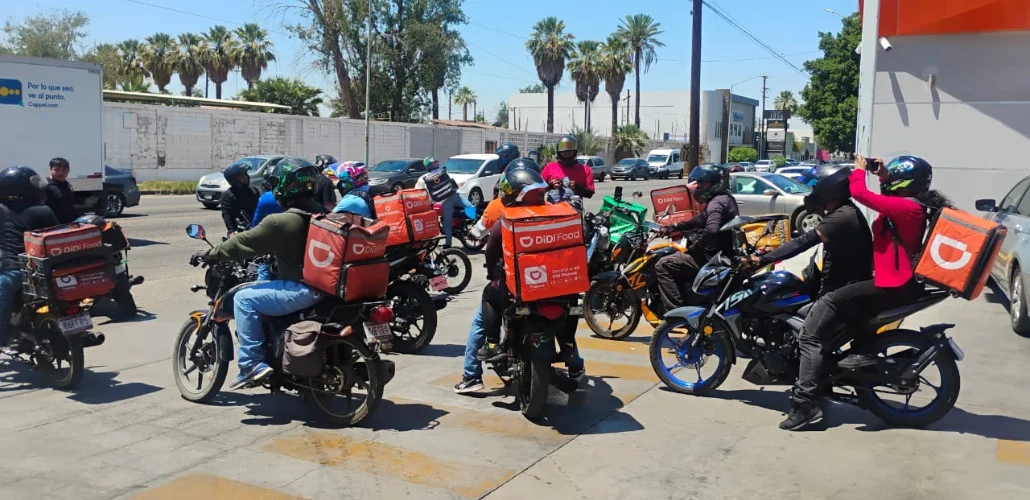
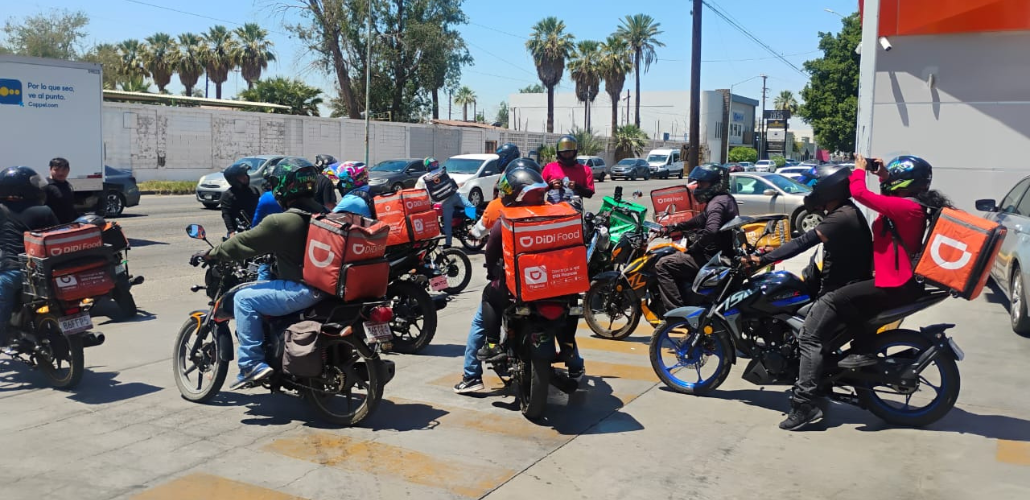
On May 15, the streets of Mexico City and five other states were marked by a rare and synchronized silence from the delivery sector. Thousands of workers—couriers for global giants like Uber, Didi, and Rappi—staged a two-hour work stoppage. The sound of engines cutting out was a deliberate signal, a unified cry of: "We are not partners; we are workers."
This mobilization, spearheaded by the National Union of Application and Delivery Workers (UNTA), was not an isolated incident. It was part of a burgeoning global movement, with workers in at least 15 countries simultaneously logging off during peak demand hours to demand a fundamental restructuring of their relationship with the digital platforms that define their livelihoods.
The Myth of the "Independent Partner"
For years, the business model of app-based delivery has been predicated on a carefully constructed narrative: the worker as an "independent entrepreneur," a "partner" who enjoys the freedom of being their own boss. However, for Luis Fernando Mora Reyes, a seven-year veteran of the industry, this rhetoric is a thin veil for a system of total surveillance and precariousness.
"I have three bosses," Mora Reyes explains. "The government, the app, and the customer. If I do something the app doesn’t like, I’m disconnected. If the customer is unhappy, I’m disconnected. If I run afoul of the government, I’m penalized. We are everything except our own bosses."
The May 15 stoppage was a direct challenge to this power dynamic. The union’s demands are concrete: fair wages, an end to arbitrary deactivations—the "digital firing" process that leaves workers without recourse—and, ultimately, the establishment of a collective bargaining agreement that forces these multi-billion dollar companies to the negotiating table.
A Chronology of Conflict: From Flint to the Streets of Mexico
The inspiration for this wave of labor unrest transcends borders and eras. Mora Reyes draws a direct parallel to the 1936-37 Flint Sit-Down Strike, a pivotal moment in U.S. labor history that secured the rights of automotive workers.
"Stepping off the bike or the car, sitting on the curb with your colleagues, discussing politics and union strategy—it reminded me so much of those historic images of the strikers inside the plants in Flint," he says.
The UNTA has been systematically organizing since its inception in November 2020. Their strategy is rooted in "solidarity hubs" and grassroots education. In a country where the labor movement has long been hampered by sindicatos charros—protective, employer-friendly unions that account for an estimated 90% of collective bargaining agreements—the UNTA is attempting to forge a new path. They aren’t promising government positions or quick cash; they are building a movement based on mutual aid.
This includes "orange points"—safe spaces where couriers can find toilets, safety, or camaraderie—and WhatsApp networks used to de-escalate security threats. When a driver reports harassment or an unsafe situation, nearby colleagues mobilize to provide support, a necessary defense in a profession where the threat of assault or accident is a daily reality.
The Legislative Paradox: A "Historic" Reform That Falls Short
In 2024, the administration of President Claudia Sheinbaum pushed through a landmark labor reform. The legislation officially recognized the existence of an employment relationship between the 1.2 million app-based workers in Mexico and the platforms. On paper, it was a victory: it granted workers access to social security, profit-sharing, and housing credits.
However, the reality for the average worker is far bleaker. The reform established a high threshold for accessing these benefits, effectively locking out the vast majority of the workforce. Current data suggests that only 10% of app-based workers earn enough to qualify for these protections.
The Math of Exclusion
The exclusionary criteria are mathematically punishing. For car-based delivery drivers, one must earn approximately 19,000 pesos per month—double the Mexican minimum wage—to qualify for benefits. Crucially, the platform-mandated calculation excludes 48% of gross earnings to account for "maintenance and fuel."
"This exclusion percentage mutilates our rights," says Shaira Tovar Garduño, the union’s Secretary of Gender. For motorcycle couriers like her, the struggle is even more acute. To qualify for benefits, she would need to clear 14,000 pesos monthly. Currently, she averages between 7,000 and 8,000 pesos.
"I would have to work from 8 a.m. to 8 p.m. every single day," Tovar Garduño explains. "Imagine spending 12 hours on a motorcycle. The physical toll, the chronic illnesses that come with that—it’s unsustainable."
The UNTA alleges that these percentages were not arbitrary but were the result of intense lobbying by the corporations themselves, aiming to minimize their contributions to the Mexican Social Security Institute (IMSS). Sergio Guerrero, Secretary General of the UNTA, noted in 2025 that the companies’ narrow interests were prioritized over the welfare of the workers.
The Physical and Economic Cost of the Gig
The human cost of this system is evident in the stories of the riders. For those on bicycles, like Mora Reyes, the work is limited by the body’s physical capacity. "It depends on my knees," he says. He worries for his older colleagues who rely on these apps for full-time survival but lack the capital to invest in the motorcycles or cars that might make the work slightly more efficient.
For those on two wheels, the road is a gauntlet. "If a car driver has an accident, the vehicle offers some protection," Tovar Garduño observes. "On a motorcycle, the first thing that flies is your body."
Environmental conditions further exacerbate these risks. A spilled bit of oil or a patch of sand can be fatal. "Imagine that during the rain," Tovar Garduño adds. Many workers, despite the financial desperation, choose to stay home during storms because "it’s not worth risking your life for a 30-peso delivery."
Building Power Through Education
A critical component of the UNTA’s long-term strategy is the decentralization of power through education. The union hosts digital courses on labor law, economics, and argumentative writing. These aren’t just for couriers; they have welcomed workers from other sectors, including electricity and water utility employees.
Pedro Guerra, the union’s Secretary of the Interior, leads the writing workshops. The curriculum starts with sentence structure and ends with the dismantling of logical fallacies. "One of the goals is to decentralize capabilities to decentralize power," Guerra explains. "The more competent our affiliates are, the better prepared they will be to step into leadership roles."
By providing "solidarity stops" where workers can get a taco, a slice of pizza, or a chain lubrication, the union is building the infrastructure of a community that the apps seek to atomize. They are turning isolated, competing "contractors" into a cohesive labor force.
Implications: The Long Road Ahead
The struggle of Mexican delivery workers is a microcosm of a global labor crisis. The platforms argue that their flexibility is a feature, not a bug, and that strict regulation will stifle innovation and increase costs for consumers. However, the workers argue that this "innovation" is built on the systematic transfer of risk from the corporation to the individual.
The path forward is likely to be long. The platforms have proven themselves adept at political maneuvering and legal delay. Yet, the resolve of organizers like Tovar Garduño is unshakable.
"I was always sure there would be a reform," she says, reflecting on the 13-year history of platforms in Mexico. "It took almost 10 years to get the first one. Maybe it will take another 10 years, but we are going to eliminate that percentage of exclusion. We are not just workers; we are the ones who make the system move. And eventually, the system will have to recognize us."
As the May 15 stoppage demonstrated, the power to "disconnect" is becoming the most potent weapon in the digital age. By turning off the algorithms, the workers are forcing the world to look at the human beings—the riders, the cyclists, and the drivers—who carry the weight of the modern economy on their backs.

 Dwi Wanna