




 Azzam Bilal Chamdy
In an era defined by the relentless pursuit of "more"—more followers, more income, more responsibilities, and more possessions—a counter-cultural movement is gaining significant traction. Led by figures such as Joshua Fields Millburn, T.K. Coleman, and systems-expert Ben Meer, this movement suggests that the secret to a fulfilling life is not found in acceleration, but in a deliberate deceleration.
A recent collaborative dialogue between The Minimalists and author Ben Meer has sparked a renewed national conversation regarding the hidden costs of professional advancement and the psychological necessity of decluttering our physical and mental environments. This report explores the core tenets of their discussion, the data surrounding modern burnout, and the systemic shifts required to transition from a life of "busy-ness" to a life of intentionality.
Main Facts: The Intersection of Systems and Simplicity
The latest episode of The Minimalists podcast features Ben Meer, an influential voice in the "systems-building" and productivity space, known for his ability to distill complex life-management strategies into actionable frameworks. The discussion centered on three primary pillars: the "Slow Living" philosophy, the "Promotion Paradox," and the radical restructuring of domestic environments.
The conversation highlighted a growing trend: individuals are increasingly realizing that the traditional markers of success often come at the expense of personal well-being. Meer and the hosts argued that without a conscious effort to create distance from one’s current routine, the "default" state of modern life—constant connectivity and consumption—will inevitably lead to burnout.
Key takeaways from the discussion included:
- The Slower Life Strategy: Choosing a pace that allows for reflection rather than mere reaction.
- The Promotion Paradox: Analyzing why a step up the corporate ladder often results in a step down in quality of life at home.
- Routine Disruption: The necessity of physically and mentally distancing oneself from daily habits to gain a fresh perspective.
- Systemic Decluttering: Moving beyond the aesthetic of minimalism to the functional utility of living with less.
Chronology: The Evolution of the Minimalism Movement
To understand the current discourse, it is essential to trace the evolution of minimalism from a niche aesthetic to a comprehensive lifestyle philosophy.
The 2010s: The Rise of Aesthetic Minimalism
In the early 2010s, minimalism was largely viewed through the lens of physical possessions. Joshua Fields Millburn and Ryan Nicodemus (The Minimalists) began documenting their journey of shedding 90% of their belongings. During this period, the focus was on the "what"—what items do I own, and how do they serve me?
2018–2021: The Mental Health Pivot
As the movement matured, the focus shifted from the external to the internal. The conversation expanded to include "digital minimalism" and "mental decluttering." The global pandemic of 2020 acted as a massive catalyst, forcing millions to confront their domestic environments and their relationship with work. It was during this time that the concept of "Slow Living" moved from the fringes into the mainstream.
2023–Present: Systems and Intentionality
The current phase of the movement, exemplified by the collaboration with Ben Meer, focuses on the "how." It is no longer just about owning fewer things; it is about building systems that protect one’s time and energy. The recent podcast episode represents a synthesis of these eras: combining the physical decluttering of the 2010s with the sophisticated life-design systems of the 2020s.
Supporting Data: The Hidden Cost of the "Fast Life"
The arguments presented by Meer and The Minimalists are supported by a growing body of data regarding workplace stress and the psychological impact of clutter.
The Burnout Epidemic
According to a 2023 Gallup report on the global workplace, approximately 44% of employees experience "a lot" of daily stress. The "hustle culture" that Meer critiques has been linked to a rise in cortisol levels and a decrease in long-term cognitive function. The "Promotion Paradox" discussed in the episode is backed by findings that middle and upper management roles report higher levels of work-life conflict than entry-level positions, despite the higher pay.
The Psychological Weight of Clutter
A study by the University of California, Los Angeles (UCLA) found that a high density of household objects was directly correlated with increased levels of cortisol (the stress hormone) in mothers. This supports the "Apartment Therapy" hot takes mentioned in the episode, which suggest that physical clutter is not just a matter of organization, but a significant contributor to mental health decline.
The Economics of Less
Data from the Bureau of Labor Statistics suggests that the average American household spends a significant portion of their income on non-essential goods. The Minimalists argue that by reducing these expenditures, individuals can regain "time-wealth"—the ability to choose how to spend their hours rather than being forced to work to maintain a lifestyle they don’t have time to enjoy.
Official Responses: Expert Perspectives on "The Rulebook"
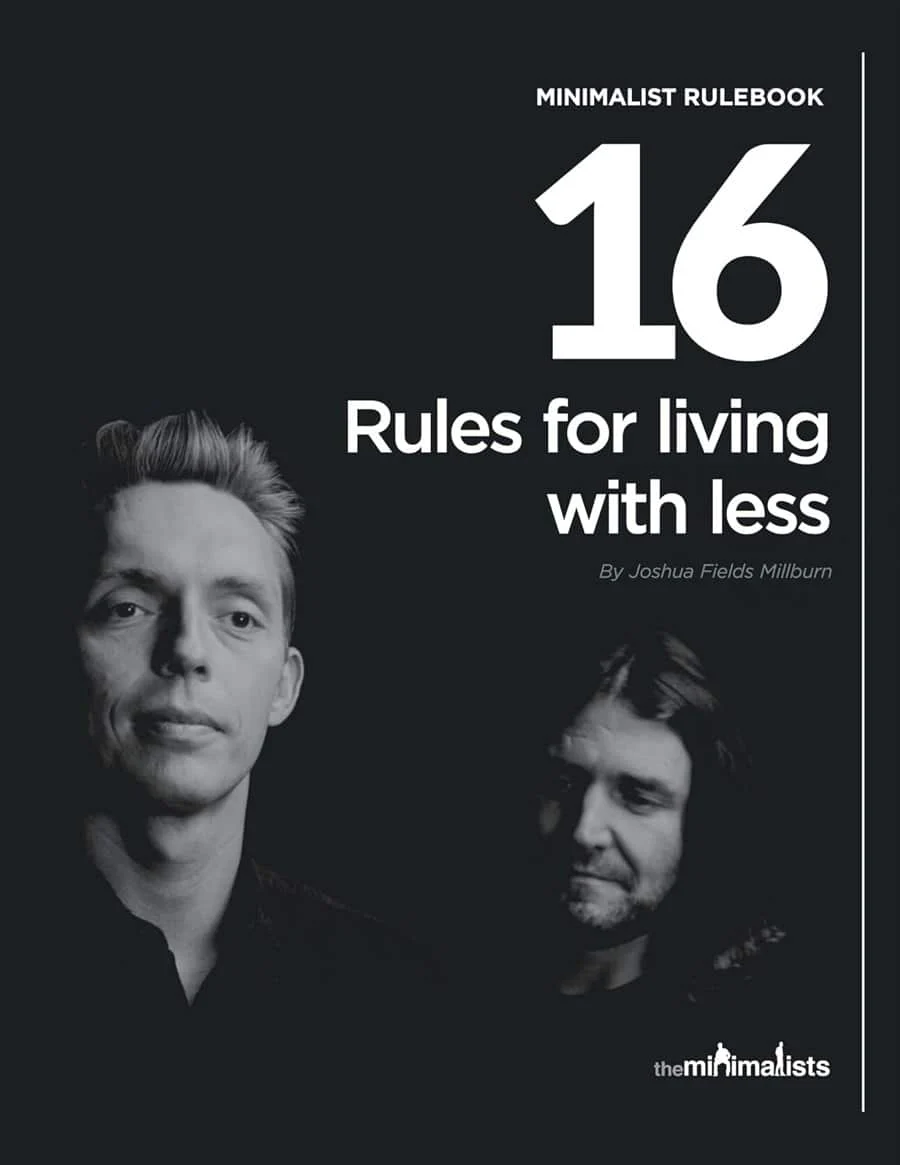
In response to the growing demand for structured guidance, The Minimalists have released the Minimalist Rulebook, a collection of 16 rules for living with less. This document serves as a framework for those looking to implement the theories discussed in the podcast.
Ben Meer on "Systems Over Willpower"
Meer argues that relying on willpower to live a slower life is a losing battle. "You do not rise to the level of your goals; you fall to the level of your systems," Meer noted (echoing James Clear). His contribution to the dialogue emphasizes that "Slow Living" requires a structural redesign of one’s calendar and notification settings.
T.K. Coleman on the Philosophy of Value
T.K. Coleman, a co-host of the show, often provides the philosophical backbone to these discussions. He posits that minimalism is not about deprivation, but about optimization. "The goal is not to have nothing, but to make room for everything that matters," Coleman stated. His perspective reframes the "Promotion Paradox" not as an anti-work sentiment, but as a pro-life-quality stance.
Apartment Therapy’s Radical Decluttering
The episode also touched upon "hot takes" from Apartment Therapy, a leading interior design and lifestyle resource. These takes often challenge conventional wisdom, such as the idea that "sentimental items" should be kept regardless of their utility. The expert consensus in the episode was that if an item does not serve a purpose or bring genuine joy in the present, its presence is a tax on the future.
Implications: The Future of Work and Domestic Life
The dialogue between Ben Meer and The Minimalists suggests a looming shift in societal values. As more people realize that professional promotions can lead to domestic "downgrades," we may see a significant change in how career paths are structured.
1. The Rise of "Downshifting"
The "Promotion Paradox" is likely to lead to an increase in "downshifting"—where high-earning professionals voluntarily take lower-stress, lower-pay roles to reclaim their time. This has profound implications for corporate talent retention and the way companies must incentivize employees beyond just monetary bonuses.
2. The Redefinition of the Modern Home
If the "hot takes" on decluttering become the norm, the architectural and interior design industries will need to pivot. We are already seeing a move away from "maximalist" storage solutions toward smaller, more intentional living spaces that prioritize light, air, and movement over shelf space.
3. The Digital Sabbath
As Meer’s systems-based approach gains popularity, the "Digital Sabbath" or the practice of creating distance from routines through technology-free periods will likely become a standard wellness practice, similar to exercise or nutrition.
4. Educational Shifts
There is an increasing call for "Life Design" to be taught as a skill. The Minimalist Rulebook is an early example of the type of curriculum that future generations may use to navigate a world that is increasingly designed to capture their attention and their capital.
Conclusion: A Call to Intentionality
The insights shared by Joshua, T.K., and Ben Meer serve as a vital reminder that in a world designed for speed, the most radical act one can perform is to slow down. The "Minimalist Rulebook" and the strategies discussed in this episode are not merely tips for tidying a room; they are blueprints for reclaiming a life.
As the "Promotion Paradox" continues to manifest in the lives of overworked professionals, the move toward minimalism offers a viable exit ramp. By creating distance from routines, challenging the necessity of our possessions, and questioning the true cost of our "promotions," we can begin to build a world where success is measured not by what we accumulate, but by the peace and time we possess.
Contact Information:
Have a question for the show? Call 406-219-7839 or email a voice memo to [email protected]. To download the "Minimalist Rulebook" and explore further resources, visit TheMinimalists.com.


 Nana Wu

 Asro






