


 Raul Delapena Setiawan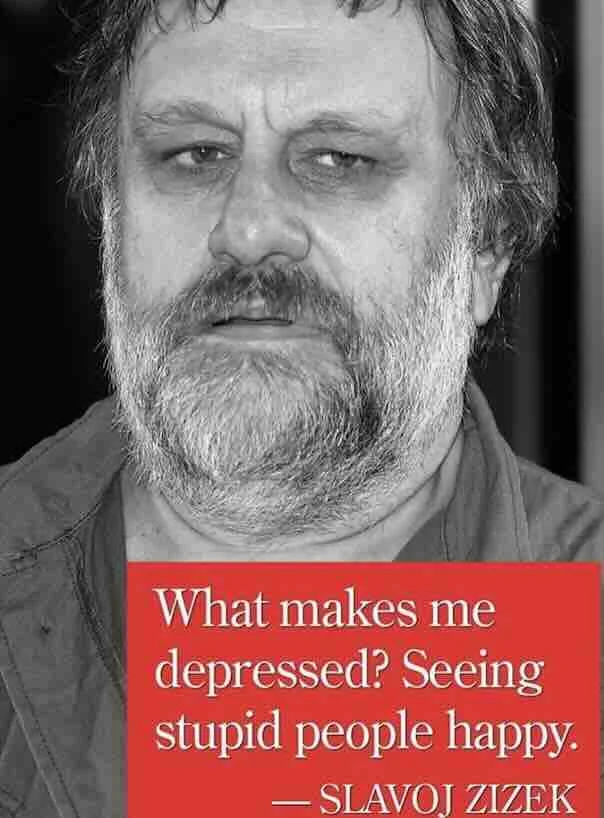
In the quiet hours of the night, when the glow of a smartphone screen illuminates a face tired from hours of mindless scrolling, a familiar, gnawing question emerges: Why do I keep doing this? We set goals, we craft resolutions, and we build mental frameworks for success, yet we remain inexplicably anchored to our own dysfunction. We are, by all accounts, expert architects of our own obstacles.
The conventional wisdom—the self-help canon of affirmations and vision boards—often misses the mark. It assumes we are rational, unified actors who simply lack the "right" motivation. But Slavoj Žižek, the provocative Slovenian philosopher, suggests a much darker, more inconvenient truth: we aren’t just failing to reach our goals; we are often deeply invested in failing.
The Philosophical Anatomy of Failure
If you were to encounter Slavoj Žižek at an airport—shuffling through the terminal, clutching a plastic bag, muttering about hegemony and wiping his nose—you would likely assume he is the last person on earth capable of offering life advice. He is the antithesis of the polished, serene guru. Yet, his work has become a critical lens through which we can observe the "machinery of madness" in our daily lives.
Žižek’s philosophy does not start with the premise that you are a wise, good person whose potential is being stifled by external circumstances. Instead, he posits that we are fundamentally fractured. We are not transparent to ourselves. We say one thing, desire another, and then construct elaborate rationalizations to bridge the gap. We don’t just fail to know ourselves; we actively collaborate in maintaining our own ignorance.
The Paradox of Bad Habits: The "Jouissance" of Suffering
Why do we cling to habits that we intellectually recognize as destructive? The standard answer is "lack of willpower," but Žižek offers a more piercing explanation: jouissance.
Derived from Lacanian psychoanalysis, jouissance refers to the "ugly thrill" we derive from the very things that make us miserable. It is the perverse satisfaction embedded in our own martyrdom, our chronic stress, or our self-imposed crises. While we tell ourselves we are innocent victims of circumstance, there is often a greasy emotional kickback to our misery.
Consider the person who thrives on being "overworked." They complain incessantly, yet the status of being essential—of being the martyr who carries the weight of the office—provides a sense of identity that is hard to abandon. To stop being "busy" is to lose the protective armor of their own self-importance. To address this, one must ask the most uncomfortable question possible: What am I getting out of this pain? Once the emotional reward—be it drama, a feeling of necessity, or the relief of being a victim—is unmasked, the cycle can finally be broken.
Pseudoactivity: The Glamorous Avoidance
In the professional sphere, self-sabotage often manifests as pseudoactivity. This is the state of being perpetually exhausted by work while achieving nothing of substance.
Pseudoactivity is the act of remaining in constant motion to avoid the one task that carries the weight of true consequence. It is the clearing of inboxes, the color-coding of calendars, and the downloading of productivity apps that promise to "fix" our focus. We treat these tasks as legitimate work, but they are, in fact, defensive barriers against the scary, high-stakes actions that would actually move the needle.
Real productivity is not the absence of downtime; it is the presence of courage. It is the willingness to make the difficult phone call or finalize the project that you have been avoiding. When we mistake motion for progress, we are participating in a sophisticated form of self-sabotage designed to keep us safe from the possibility of genuine failure—or genuine success.
The Myth of the "True Self"
Modern society is obsessed with the concept of finding one’s "true self." It is a commercially successful fairy tale that suggests if we peel back the layers of compromise and social expectation, we will find a core essence waiting to be unleashed.
Žižek dismantles this entirely. There is no "core" you. There is only a messy, contradictory collection of roles, drives, and fantasies. The "you" that wants to work hard and the "you" that wants to rot in bed watching videos are both equally real. By treating the search for an authentic self as a holy grail, we paralyze ourselves. Every decision becomes an existential referendum: Is this really me?
If you abandon the quest for an immutable essence, you gain a sudden, radical freedom. You don’t need to discover yourself; you need to build yourself. You become who you are through action, commitment, and the inevitable failure that accompanies growth.
The Superego of Enjoyment
In the past, the moral order was simple: Deny yourself. Today, the command has inverted: Enjoy yourself. We are pressured to maximize our leisure time, to ensure our hobbies are "fulfilling," and to curate our weekends as evidence of a life well-lived.
This is what Žižek calls "the superego of enjoyment." It turns pleasure into homework. We are no longer living; we are grading our own experiences. Was that dinner meaningful? Was that vacation sufficiently restorative? When leisure becomes an audition for a life worth living, we lose the ability to simply exist. We sabotage our own relaxation by turning it into a performance review.
The Trap of False Hope and Resilience
We often cling to hope as a shield against the reality of a bad situation. We tell ourselves we are in "a rough patch" and that positive thinking will eventually turn the tide. But sometimes, hope is the very thing that keeps us trapped in intolerable conditions.
Žižek challenges the modern fetishization of "resilience." We celebrate people for their ability to withstand toxic environments, but this is a double-edged sword. Resilience, in practice, often functions as a mechanism that allows us to tolerate conditions that should have been rejected outright. Sometimes, the house is on fire. Attempting to "grow" from a fire is a delusion; the only rational response is to acknowledge the danger and leave. True change begins only when we stop lying to ourselves about the severity of our circumstances.
Fantasy vs. Reality
Fantasy is not merely a mental escape; it is a distorting lens. We create narratives about what our lives should look like—the ideal relationship, the perfect career, the seamless routine. When reality—with its grocery-store banality and inconvenient human quirks—fails to match the movie trailer in our heads, we feel a sense of profound disappointment.
This dissonance is where much of our suffering resides. By holding reality to the standard of a fantasy, we sabotage our ability to appreciate what is actually happening. We must learn to stop blaming our lives for not behaving like a script.
Interpassivity: The Final Modern Trap
Perhaps the most pervasive form of self-sabotage today is interpassivity. We have become experts at outsourcing our lives to technology and consumption. We bookmark articles we never read, buy books we never crack, and subscribe to newsletters we never open. We curate an aesthetic of a "productive life" without ever doing the work.
This is the simulation of participation. By collecting the "receipts" of a life—the gym membership, the library of unread books, the digital watchlist—we trick our brains into feeling as though we have already achieved our goals.
To overcome this, we must stop confusing the accessories of life with life itself. We must descend from the digital clouds and engage in the messy, inconvenient, and physical business of reality: reading one page, cooking one meal, and connecting with one friend in three-dimensional space.
Conclusion: The Path Forward
Slavoj Žižek functions less as a traditional philosopher and more as an impolite relative who points out the elephant in the room that everyone else is pretending not to see. To stop self-sabotaging, we must be willing to accept the following:
- Acknowledge the Reward: Admit that your bad habits are providing you with a specific, albeit unhealthy, emotional payout.
- Ditch the Pseudoactivity: Stop busy-working to avoid the one scary task that actually matters.
- Abandon the "True Self": Stop searching for who you are and start deciding who you will be through action.
- De-optimize Leisure: Let fun be boring. Stop grading your downtime.
- Accept the Fire: Stop using optimism as anesthesia. If a situation is bad, call it bad.
- Stop Outsourcing: Stop collecting the signs of a life and start the embarrassing, unphotogenic work of actually living it.
If a rumpled, messy man at the airport tells you where the real madness lives, do not turn away. He is likely the only person around who isn’t lying to be polite. The machinery of your life is yours to operate; it is time to stop sabotaging the controls and start driving.


 Neng Nana
 Laily UPN