


 Nila Kartika Wati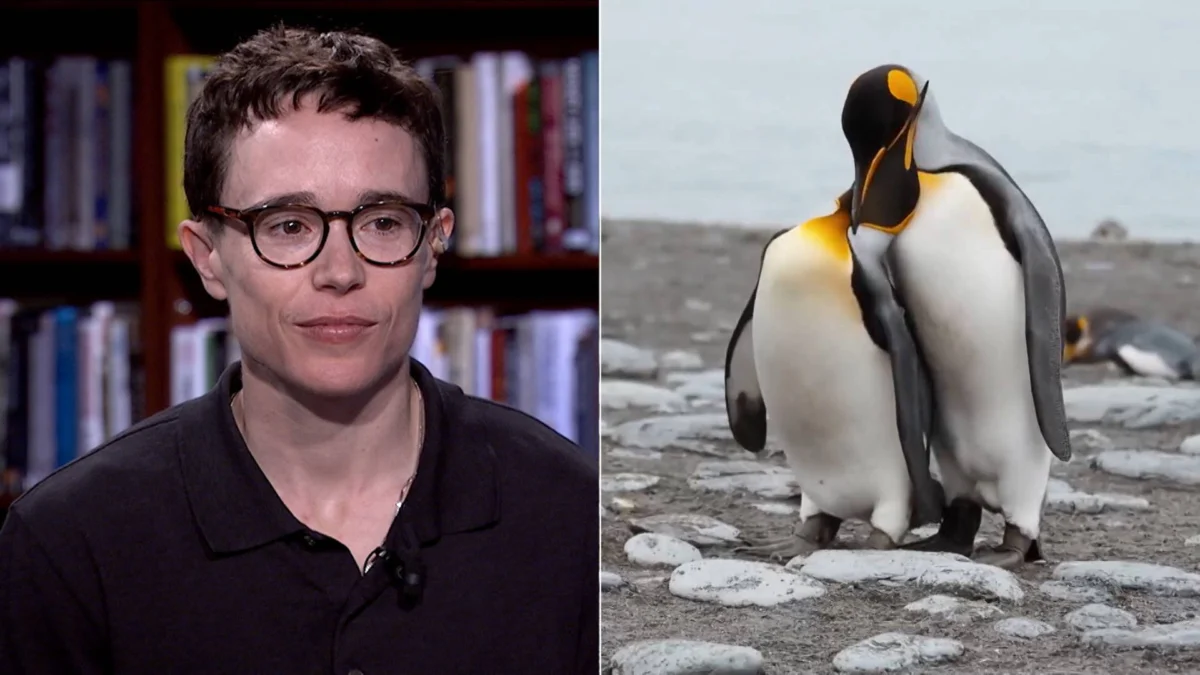
For centuries, the human understanding of sex and gender has been tethered to a rigid, binary framework. We were taught that nature is a predictable, linear system: males are aggressive and dominant, females are nurturing and submissive, and heterosexuality is the universal engine of reproduction. These “rules” have long been used to justify social hierarchies and marginalize those who exist outside of them. However, a groundbreaking new documentary, Second Nature, is dismantling these long-held assumptions by looking at what the natural world actually does, rather than what human tradition claims it should do.
Directed by queer filmmaker Drew Denny and narrated by Oscar-nominated actor and author Elliot Page, Second Nature is an exploration of the vast, complex, and often radical spectrum of gender and sexual diversity found in the animal kingdom. From the thousands of baby seahorses birthed by their fathers to matriarchal monkey troops that defy the patriarchal order, the film presents scientific evidence that the “binary” is not a biological truth—it is a human-made myth.
The Scientific Foundation: Challenging the "Quaint Little Myth"
The documentary draws heavily from the work of pioneering evolutionary biologists, most notably Dr. Joan Roughgarden. Her seminal book, Evolution’s Rainbow: Diversity, Gender, and Sexuality in Nature and People, serves as a foundational text for the film’s narrative. Roughgarden, a trans woman and a titan in the field of biology, has spent her career pointing out that nature is far more “queer” than our textbooks ever admitted.
“Not only do many species illustrate homosexuality and gender multiplicity, they also illustrate sex transition,” Roughgarden explains in the film. The documentary invites viewers to look at the natural world through a new lens, stripping away the anthropocentric bias that has colored biological research for generations.
The film highlights several species that act as “biological rebels”:
- The Bluehead Wrasse: A coral reef fish that can transition from female to male within a single day. When the dominant male dies, the largest female undergoes a hormonal shift, ceasing estrogen production and developing testes to assume the role of the primary mate.
- Seahorse Fathers: In a complete reversal of human-centric expectations, male seahorses carry eggs in a specialized pouch, fertilizing them and bearing the full “burden” of gestation for up to 30 days before giving birth to hundreds of offspring.
- Bonobos: Our closest genetic relatives, who exist in a matriarchal society. Unlike their chimpanzee cousins, bonobos engage in frequent, same-sex sexual activity as a form of social bonding and conflict resolution, maintaining a social structure where females hold the power.
- Golden Lion Tamarins: A species that practices polyandry, where one female maintains a harem of multiple unrelated males, all of whom share the labor of raising their offspring.
Chronology of Discovery and Resistance
The journey to Second Nature began when director Drew Denny, raised in Texas, began to question the binary narratives taught in her public school biology classes. Denny describes a childhood marked by the discomfort of being told that queerness was "unnatural" and that gender roles were fixed by evolutionary law.
"I grew up in Texas being told that females are naturally inferior to males and that queerness is simply unnatural," Denny stated during a recent interview with Democracy Now!. "It wasn’t until I grew up and read Dr. Joan Roughgarden’s book… that I finally felt in my body, for the first time, that I belong here on Earth."
The documentary chronicles the path taken by researchers like Dr. Amy Parish, an anthropologist who faced significant backlash for her work on bonobos. When Parish reported that bonobos were matriarchal—a reality evidenced by the females’ collective social power—the scientific community resisted. Critics accused her of having a "feminist agenda," suggesting that the behaviors she observed were merely "strategic male deference."
This pattern of resistance is a recurring theme in the film. Scientists who challenge the status quo often face professional and social consequences. Dr. Joseph Graves, an evolutionary biologist featured in the film, notes that there have always been scientists willing to stand in opposition to the existing, patriarchal worldview, but the pressure to conform remains intense. As Dr. Parish observes, "We learned what we learned in school, and we want to believe that it’s true. And it’s messy to now say, ‘Oh, it wasn’t really that way?’"
The Case Study of the "Gentle" Baboons
Perhaps the most compelling evidence presented in Second Nature is the case of the Kenyan baboons studied by Dr. Robert Sapolsky. In a dramatic turn of events, a troop of baboons was exposed to tuberculosis after consuming tainted human garbage. The disease disproportionately killed the most aggressive, high-ranking alpha males.
The aftermath of this biological culling was revolutionary. The surviving group consisted primarily of lower-ranking, less aggressive males and the females. Without the reign of the aggressive alphas, the troop developed a new, more egalitarian social structure. The males began to interact more peacefully with females, stress levels dropped, and the group demonstrated that social behavior is not a fixed genetic trait, but one that can adapt to changing conditions. Years later, that troop’s culture remains peaceful, proving that even in highly social species, "alpha" dominance is not an evolutionary necessity.
Implications for Human Society
While Second Nature focuses on the animal kingdom, its implications for human society are profound. The film arrives at a time when transgender rights are being debated in legislatures across the United States, and when access to information regarding gender identity is being increasingly restricted in schools and public libraries.
For narrator Elliot Page, the project was deeply personal. "I got involved because I was so moved by it and found it so affirming as a trans and queer person," Page said. "Quite frankly, I felt very silly for not assuming this all to be true already."
The documentary serves as a rebuttal to the "natural law" arguments often used to oppose LGBTQ+ equality. If nature itself is diverse, fluid, and non-binary, then the argument that such identities are "unnatural" collapses. The film suggests that the "binary" is a tool for control, not a reflection of reality.
Why This Matters Now
The film’s release during a period of intense cultural and political polarization highlights the importance of evidence-based discourse. By presenting the “rumpus, raucous world” of animal behavior, Second Nature invites audiences to step back from the ideological battles and look at the broader, more inclusive picture of life on Earth.
The documentary does not attempt to map animal behavior directly onto human morality, but rather to show that the “rules” we were taught are merely a subset of a much larger, more diverse set of possibilities. As the film concludes, it offers a message of hope: the diversity we see in ourselves has a long and storied history in the natural world.
Conclusion: A Second Look
Second Nature is more than just a nature documentary; it is an act of reclaiming science. By highlighting the research of queer and trans scientists who have been marginalized for their work, the film empowers a new generation to question the foundations of their own education.
As the documentary notes, for those who have been told they do not belong, the truth is written into the very biology of the planet. From the sex-changing fish of the coral reefs to the collaborative parenting of the tamarins, the message is clear: diversity is not an aberration—it is the bedrock of life itself. The old stories we have been taught deserve a second look, and in doing so, we might find that the natural world is much more welcoming than we ever dared to imagine.
Second Nature is currently showing in major cities across the United States. For more information, viewers are encouraged to check local listings and explore the work of the scientists featured in the film.

 Nana
Nana
 Dwi Wanna