

 Muslim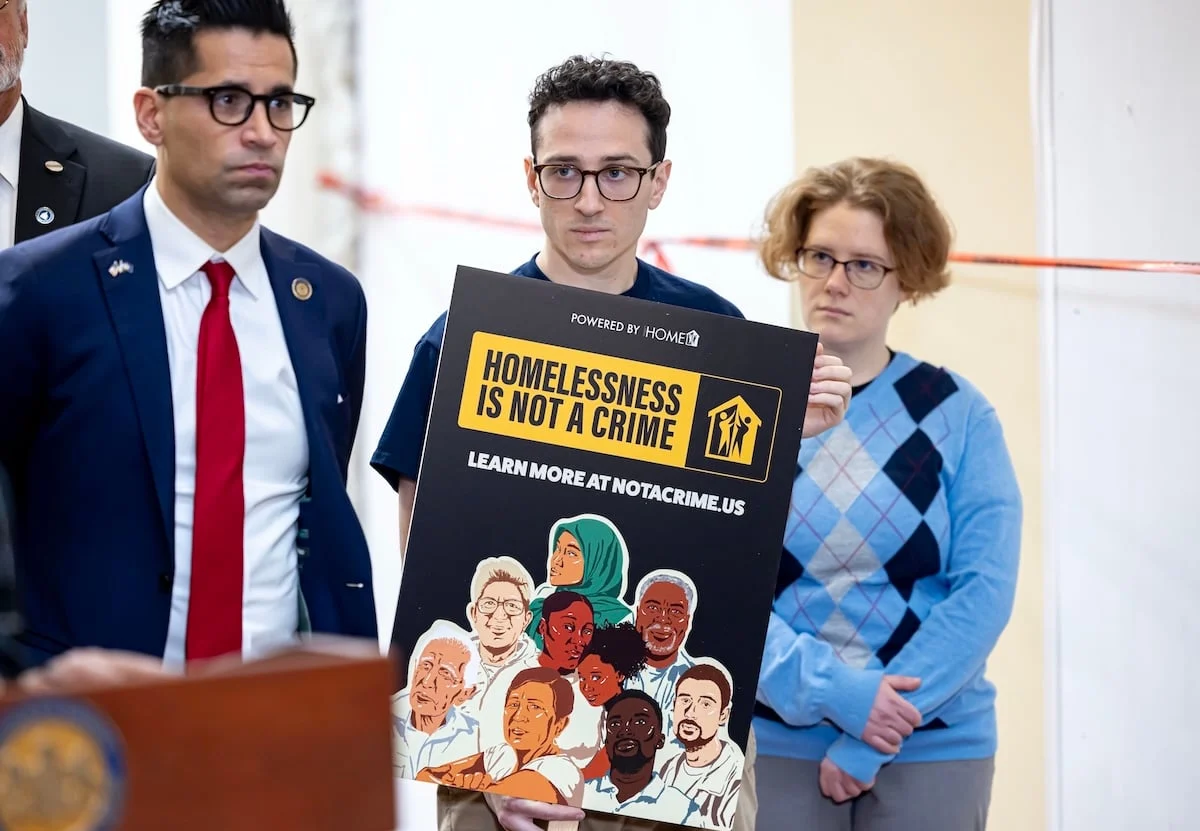
Nearly two years after the Supreme Court’s landmark ruling in City of Grants Pass v. Johnson, the legal and humanitarian landscape for unhoused populations in the United States has undergone a seismic shift. The June 2024 decision, which effectively granted jurisdictions the authority to criminalize sleeping in public spaces—even when no alternative shelter is available—has served as a catalyst for a nationwide surge in aggressive encampment sweeps and the systematic destruction of personal property.
However, as local governments lean into punitive measures, a counter-movement of activists, housing advocates, and progressive lawmakers is emerging. From federal legislative pushes to state-level protections against hostile architecture, a new front has opened in the struggle to define the rights of those with nowhere else to go.
The Grants Pass Aftermath: A National Climate of Aggression
The Grants Pass ruling removed a key constitutional hurdle that had previously protected unhoused individuals from being penalized for the involuntary act of existing in public. In the months following the decision, the "ripple effects" have been stark. Reports from across the country indicate a marked rise in municipal "zero-tolerance" policies, where the clearing of encampments is prioritized over the provision of permanent supportive housing.
While some Democratic officials attempted to distance themselves from the ruling, others adopted it as a central tenet of their public safety strategy. California Governor Gavin Newsom became a prominent face of this shift; in a highly publicized move, he personally oversaw the clearing of a homeless encampment in Los Angeles County. In his recent memoir, Newsom frames this approach as a "carrot and the stick" strategy, arguing that the urgency of the homelessness crisis necessitates a blend of enforcement and support.
Yet, housing advocates warn that the "stick" is far more visible than the "carrot." By focusing on the removal of individuals from public view, cities are often displacing the problem rather than solving it, scattering communities and destroying the few belongings—identification documents, medications, and survival gear—that residents possess.
Chronology of a Crisis: From Pre-Ruling Protections to Legislative Pushback
The legislative trajectory regarding public homelessness has been volatile:

- Pre-2024: The 9th Circuit Court of Appeals’ precedent (established in Martin v. Boise) generally prohibited the criminalization of public camping in the absence of adequate shelter.
- June 2024: The Supreme Court issues the Grants Pass ruling, effectively overturning these protections.
- July 2024: The Los Angeles County Board of Supervisors pushes back, reaffirming a "care-first" policy to avoid utilizing jails for enforcement of anti-camping ordinances.
- February 2025: Rep. Jayapal and Rep. Frost introduce the Housing Not Handcuffs Act at the federal level, attempting to codify protections for life-sustaining activities.
- November 2025: Connecticut passes the nation’s first state-level ban on "hostile architecture," signaling a shift in how public space is designed and managed.
Federal Stagnation and the Housing Not Handcuffs Act
At the federal level, the National Homelessness Law Center (NHLC) has spearheaded the Housing Not Handcuffs Act. Introduced in June 2025, the bill aims to restore the rights lost in Grants Pass. It proposes that "life-sustaining activities"—such as sitting, sleeping, and protecting personal property—cannot be penalized on public land.
Crucially, the bill offers a balanced definition of "adequate alternative indoor space." It argues that a shelter is only "adequate" if it is free of charge, respects an individual’s autonomy, and allows them to remain with their pets, partners, and family members.
Despite securing over two dozen cosponsors, the bill remains stalled in the House. Jesse Rabinowitz, campaign and communications director at the NHLC, notes the difficulty of moving the needle in a Republican-controlled Congress. "While I think it’s a long shot, I don’t think it’s impossible," Rabinowitz says. "People recognize that the solution to homelessness is housing, not jails."
State-Level Interventions: A Patchwork of Reform
While federal progress is limited, states like Illinois and Pennsylvania have become testing grounds for the "Gloria Johnson Act"—a model legislative framework created by the NHLC. This model seeks to enshrine the protections that existed under the 9th Circuit prior to the Grants Pass ruling, explicitly stating that criminalization is illegal in the absence of suitable housing.
The Illinois Approach
In Illinois, House Bill 1429 has seen significant momentum. As of May, it boasted 31 cosponsors. The bill seeks to protect those engaged in life-sustaining activities on public property. While the bill has been amended to remove a "necessity defense" provision, it continues to gain traction, having passed the state House of Representatives in April.
Rep. Kevin Olickal, the bill’s sponsor, characterizes the legislation as a direct response to the surge in local ordinances targeting the homeless. "People experiencing homelessness deserve to be treated with dignity and respect, not penalized for simply trying to survive," Olickal stated.

The Pennsylvania "Shelter First" Plan
Pennsylvania lawmakers introduced Senate Bill 1089 and House Bill 2028, proposing a "Shelter First" approach. These bills mandate that local authorities cannot enforce camping bans unless they can prove they have provided an adequate, non-restrictive alternative. While the Senate version faces a difficult path through the judiciary committee, advocates remain hopeful that the House version will reach a floor vote, providing a blueprint for other states to follow.
The Fight Against "Hostile Architecture"
Beyond criminalization, advocates are increasingly targeting the physical environment. "Hostile architecture"—design choices like slanted benches, spikes in alcoves, and dividers on public seating—is designed to make public spaces uncomfortable for those forced to sleep outside.
Connecticut recently set a national precedent. In November 2025, the state passed a comprehensive zoning update that includes the country’s first ban on hostile architecture in publicly owned buildings. According to Jessica Kubicki of The Housing Collective, this win was part of a larger, hard-fought legislative package. While the state had to compromise on some affordable housing requirements due to concerns over "local autonomy," the resulting law also provides new funding for portable showers, laundry trucks, and rental assistance.
"It felt like a small win," Kubicki notes. Although Connecticut lacks the high density of hostile architecture found in major coastal cities, the law serves as a preventative measure, stopping the trend before it becomes entrenched in the state’s urban planning.
Implications: The Moral and Economic Cost of Criminalization
The debate over the criminalization of homelessness is not merely academic; it has profound moral and economic implications. Data suggests that the cost of policing, processing, and housing individuals in jails far exceeds the cost of providing permanent supportive housing.
Furthermore, the "criminalization" approach creates a cycle of recidivism. An individual with a criminal record for "illegal camping" faces even greater barriers to employment and traditional housing, effectively trapping them in a cycle of homelessness.

Official Responses and Future Outlook
Despite the pressure from advocates, many municipal leaders argue that they have a mandate to maintain "public order." In cities like Los Angeles, programs like Inside Safe are touted as the solution to encampments. However, critics argue that these programs often prioritize the optics of a clean city over the long-term needs of the unhoused, leading to temporary displacement rather than sustainable exits from homelessness.
The divide remains clear: one side views public homelessness as a failure of policy requiring more resources and housing-first initiatives; the other views it as a failure of public safety requiring increased regulation and enforcement.
As the Grants Pass ruling continues to shape local policy, the next two years will likely determine whether the trend toward criminalization becomes the new American standard or if the grassroots legislative efforts in states like Illinois, Pennsylvania, and Connecticut can successfully push for a more humane, housing-centered approach.
For now, the battle is being fought in committee rooms and on the streets, with the fundamental question remaining unanswered: Does a society’s commitment to its most vulnerable residents take precedence over the aesthetics of its public spaces? As advocates continue to push for the Housing Not Handcuffs model, the answer to that question will define the social fabric of the coming decade.

 Reynand Wu
 Ammar Sabilarrohman