

 Pevita Pearce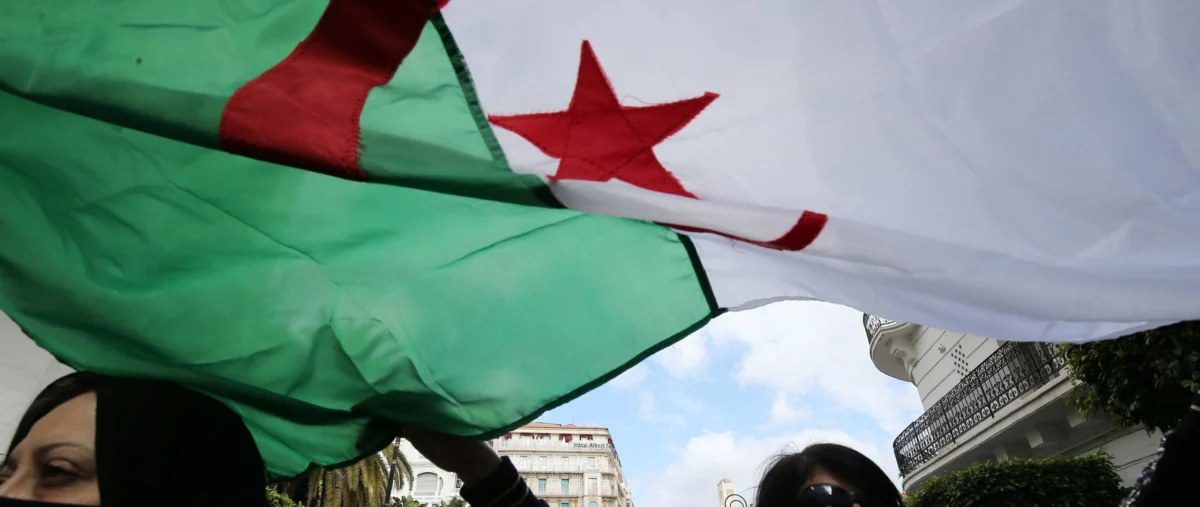
Twenty-two years after the Algerian government made a formal, high-profile commitment to establish a comprehensive, nationwide system of shelters to protect women from gender-based violence, the promise remains largely unfulfilled. Today, despite a population exceeding 48 million and a soaring number of reported abuse cases, only three state-run shelters are formally operational across the country’s 69 wilayas (provinces).
According to a new report by Amnesty International, this chronic deficit leaves survivors of domestic and gender-based violence in a state of perilous abandonment. The failure to provide adequate refuge is compounded by exclusionary admission criteria, geographical isolation, and restrictive policies that force women to choose between their safety and their autonomy.
The Broken Promise: A Chronology of Stagnation
The Algerian government’s pledge to protect women was codified in June 2004 through Executive Decree No. 04-182. This landmark legislation promised a nationwide network of shelters designed to provide temporary housing, medical, social, and psychological support, alongside legal assistance for survivors. Two decades later, the reality stands in stark contrast to the law’s ambitious scope.
- 2004: Executive Decree No. 04-182 is enacted, setting the legal framework for a national network of shelters.
- 2010: Decree 10-96 authorizes the creation of a shelter in Mostaganem, which eventually becomes operational.
- 2015: Decree 15-212 amends the original 2004 legislation, introducing more stringent, restrictive admission criteria that prioritize bureaucratic hurdles over victim safety.
- 2018: A purpose-built shelter in Tlemcen is completed, yet, inexplicably, it remains shuttered to this day, with the government offering no explanation for its closure.
- 2019: Decree 19-214 authorizes a shelter in Annaba, which later opens its doors.
- 2020: The Algerian Constitution is updated, with Article 40 explicitly guaranteeing victims of violence access to shelters and state protection.
- 2025: Despite persistent calls for reform, the network remains limited to only three functional facilities—Tipaza, Mostaganem, and Annaba—all situated in the northern coastal belt, leaving the vast, sprawling interior and the south entirely unserved.
Supporting Data: A Systemic Failure to Scale
The disparity between the state’s legal commitments and the on-the-ground reality is quantifiable and stark. The United Nations guidelines on the protection of women recommend a minimum of one specialized center per 10,000 inhabitants. In Algeria, the total combined capacity of the three operational state shelters is approximately 220 beds. For a nation of 48 million people, this is a negligible fraction of the actual requirement.
The absence of government infrastructure has forced the burden of care onto civil society. Since 2010, various women’s rights organizations have independently opened at least five facilities to bridge the yawning gap left by the state. However, these grassroots efforts are frequently under-resourced and lack the legal authority and funding necessary to provide long-term security.
Data collection remains another hurdle. The General Directorate of National Security (DGSN) reported approximately 7,500 complaints of violence against women in 2024—a 12.4% increase from the previous year. Yet, experts agree that these numbers are merely the tip of the iceberg, as sexual violence, in particular, is subject to extreme under-reporting due to social stigma, fear of reprisal, and a lack of faith in the justice system. The activist group Féminicides Algérie documented at least 37 femicides in 2025 alone, underscoring the lethal consequences of this protection gap.
Access Barriers and Institutional Restrictions
Even for those who manage to locate one of the few existing shelters, the path to entry is fraught with bureaucratic obstacles. Admission is not based solely on the immediate safety of the survivor; rather, it is subject to the discretion of the local wali (provincial governor). This centralized, discretionary power can delay or deny access in the very moments when a woman’s life is in immediate danger.
The language of the governing decrees further alienates potential beneficiaries. Regulations require that a woman be in a "state of distress" and subject to an assessment of her "disorders"—a pathologizing framework that frames the victim as the problem rather than the perpetrator of violence.
Furthermore, the 2015 amendment (Decree 15-212) introduced requirements that effectively disqualify the most vulnerable:
- Documentation: Women must provide medical certificates, identification documents, and photographs. Those without documents are limited to a four-day stay, pending a "social investigation." This effectively bars undocumented migrants, victims of forced displacement, and those who fled their homes in such haste that they could not retrieve personal records.
- Age Limits: The regulations stipulate an age range of 19 to 65, creating a dangerous blind spot for minors under 19, who are often at the highest risk of domestic abuse and child marriage.
- Child Exclusion: Crucially, women are often prohibited from bringing their children into these shelters. This policy of forced family separation acts as a profound deterrent; many women choose to remain in abusive, life-threatening environments rather than abandon their children to the care of an abuser.
Official Responses and the Wall of Silence
The government’s response to the crisis has been characterized by opacity and a refusal to engage with independent human rights actors. In March 2025, when Amnesty International requested a meeting with the Ministry of National Solidarity, Family, and Women’s Affairs to discuss these findings, the request was met with silence.
Repeated requests to visit the state-run facility in Bou Ismaïl—dating back to July 2024—have been rejected. Officials stated that NGOs are not permitted access to such facilities. This lack of transparency extends to the refusal to share basic operational data, such as annual budgets, occupancy rates, and success metrics. Without this information, civil society organizations are unable to refer victims to public services effectively, effectively rendering the state’s own "support network" a black box.
In February 2025, the government launched a 24-hour helpline and an interactive online platform, Himayati. While women’s rights groups acknowledge these as positive, if overdue, steps, they warn that they are largely performative without a physical, safe, and accessible infrastructure to support the women who reach out for help.
Implications: A Gendered Crisis of Rights
The implications of this policy failure are profound. By failing to provide a safe harbor, the Algerian state is effectively complicit in the continued victimization of its female population.
Diana Eltahawy, Deputy Regional Director for the Middle East and North Africa at Amnesty International, summarized the situation: "More than two decades after Algerian authorities committed to confront the scourge of violence against women and girls, access to shelters remains woefully inadequate and unequal. Women in the centre and south of the country are forced to travel vast distances to reach a shelter—a prohibitive barrier in a country stretching over 2,000 km from north to south."
The legal framework itself remains problematic. While Algeria has ratified the Convention on the Elimination of All Forms of Discrimination against Women (CEDAW), it maintains significant reservations regarding articles that conflict with the national Family Code. This code remains fundamentally discriminatory regarding marriage, divorce, and custody. When the law itself treats women as legal subordinates, the state’s half-hearted approach to protecting them from violence appears less like a failure of execution and more like a reflection of underlying institutional priorities.
Furthermore, the failure to define marital rape as a criminal offense means that many women seeking shelter are fleeing behavior that the law does not even recognize as a crime, further complicating their path to legal and social protection.
The Path Forward
For the government of Algeria to meet its constitutional mandate and its international human rights obligations, it must take immediate, concrete action:
- Immediate Expansion: Rapidly open and staff the promised shelters in all 69 wilayas, prioritizing underserved rural and southern regions.
- Removal of Barriers: Amend Decree 15-212 to remove restrictive admission requirements, including age limits and documentation hurdles.
- Family-Centric Protection: Revise policies to allow children to accompany their mothers, recognizing them as victims in their own right.
- Transparency and Cooperation: Open existing facilities to independent monitoring and share transparent data with civil society to allow for better coordination and victim support.
- Legal Reform: Align the Penal Code with international standards, specifically by criminalizing marital rape and removing discriminatory provisions in the Family Code.
The current situation is a violation of the fundamental right to safety. Until the Algerian authorities move beyond empty decrees and toward the creation of a functional, accessible, and transparent shelter network, thousands of women will continue to face the choice between staying in a cycle of violence or living on the streets—a choice no woman should ever have to make.

 Lina Hope
 Suro Senen