


 Lina Irawan
By Ismail Hussein Ismail
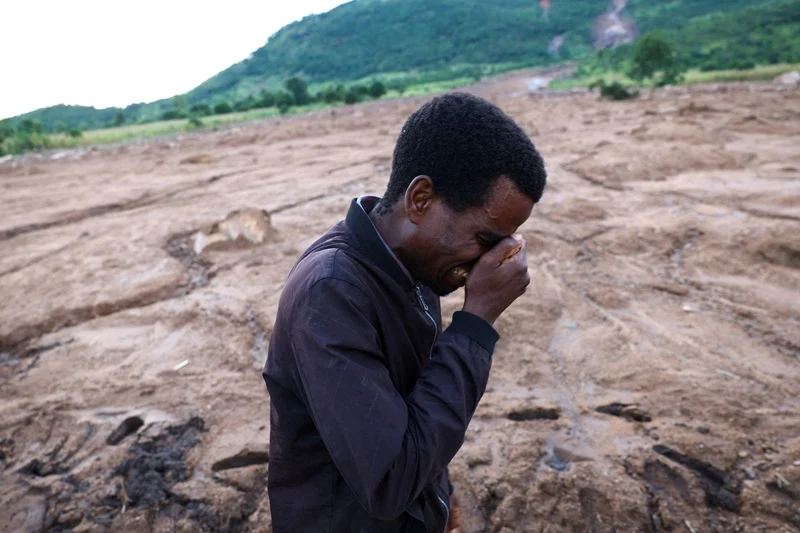
Every morning in Kampala, long before the city’s chaotic traffic begins its daily symphony of horns and exhaust, Sadio—not her real name—begins her workday. She spends hours meticulously weaving straw into intricate, handmade baskets. For Sadio, this is not a vocational passion; it is a desperate adaptation. Back in Somalia, she was a trained accountant with years of experience and a degree that represented years of intellectual rigor. In Uganda, that degree is a ghost—an unrecognized document that holds no currency in the local labor market. She weaves to survive, tethered to the informal sector while her professional potential remains stifled by bureaucratic inertia.
Sadio’s story is a microcosm of a larger, systemic crisis. While Uganda is globally celebrated for its progressive refugee policies, there exists a profound disconnect between the legislative promise of the 2006 Refugees Act and the lived reality of the nearly two million refugees currently residing within the country’s borders.
The Legislative Foundation: A Beacon of Hope
For two decades, Uganda has stood as a global archetype for refugee inclusion. The 2006 Refugees Act is, on paper, one of the most generous legal frameworks in Africa, if not the world. It grants refugees the fundamental right to work, the right to freedom of movement, and the right to establish businesses. Unlike many nations that confine refugees to camps, Uganda’s “settlement model” allows for a degree of integration that is meant to foster self-sufficiency.
However, as many refugees, including myself, have discovered, the law often loses its potency once it crosses the threshold of a settlement gate. While the de jure right to work exists, the de facto access to the formal labor market is obstructed by a labyrinth of administrative, financial, and societal barriers.
Chronology of a Growing Crisis
The current situation is the result of a compounding series of factors that have shifted over the last decade:
- 2006: The enactment of the Refugees Act, establishing a rights-based approach to refugee management in Uganda.
- 2018–2020: The rise of the “Comprehensive Refugee Response Framework” (CRRF), which sought to integrate refugees into national development plans.
- 2020–2022: The COVID-19 pandemic, which devastated informal economies and exposed the extreme vulnerability of refugees who lacked access to formal credit and social safety nets.
- 2024–2025: A period of acute global donor fatigue. Funding for humanitarian aid began to evaporate, leaving the World Food Programme (WFP) and other agencies unable to meet basic caloric requirements for the refugee population.
- Early 2026: The current juncture, where the refugee population has ballooned to nearly 2 million, and the funding gap for humanitarian response has reached a critical 75 percent shortfall, forcing a transition from aid-dependence to a desperate search for economic autonomy.
The Cost of Exclusion: Supporting Data
The statistics surrounding the refugee crisis in Uganda are not merely numbers; they are indicators of untapped economic potential. According to recent data from the United Nations High Commissioner for Refugees (UNHCR), Uganda hosts the largest refugee population in Africa. With roughly 663,000 individuals relying on direct food assistance, the humanitarian bill is becoming increasingly unsustainable.
The economic argument for inclusion is supported by the World Bank, which has repeatedly demonstrated that when refugees are permitted to participate in the formal economy, the entire host country benefits. Research from the Joint Data Center on Forced Displacement confirms a "triple win" scenario:
- Refugees achieve dignity and autonomy through income generation.
- Host communities benefit from increased local demand, tax revenue, and shared infrastructure.
- Donors see a reduction in the need for perpetual humanitarian aid, as productivity replaces reliance.
Evidence from organizations like Finn Church Aid and the ILO’s PROSPECTS Partnership indicates that vocational training and startup support for refugees have spillover effects. In regions like Nakivale, refugee-led cooperatives are not just employing refugees—they are manufacturing goods, such as school uniforms, that serve the local Ugandan market, thereby creating new value chains.
The Invisible Barriers to Employment
If the policy is inclusive and the economic incentives are clear, why does the status quo persist? The barriers are primarily administrative and financial.
The Credentialing Trap
The process for validating foreign academic qualifications is prohibitive. A refugee seeking to have their credentials recognized must navigate a system that requires significant capital. Translating a single page of qualifications costs approximately 50,000 Ugandan Shillings (roughly $14), and the formal process of “equating” these documents can cost upwards of 250,000 Shillings ($72). For a family living on a food ration, this is not just an administrative hurdle; it is a financial impossibility.
The Myth of Credit Risk
Financial institutions in Uganda remain largely closed to the refugee population. Banks often cite the transient nature of refugees or the lack of formal credit histories as reasons for exclusion. Yet, data tells a different story. Kiva has reported that refugee repayment rates on loans exceed 96 percent, mirroring or even exceeding those of native-born borrowers. VisionFund Uganda’s experience during the pandemic showed that refugee savings groups maintained a 94.2 percent repayment rate—a testament to resilience and financial discipline that the banking sector has yet to fully acknowledge.
Implications: A Path Forward
As global funding continues to dwindle, the transition from humanitarian aid to economic empowerment is no longer an optional policy goal—it is a necessity for survival. To align Uganda’s proud history of refugee protection with current economic realities, three actionable steps are required:
1. Streamlined Credential Recognition
The government should establish a centralized, digitized national system for the recognition of refugee academic and vocational qualifications. This system must feature lower, subsidized fees and transparent timelines. By establishing a "fast-track" for skilled professionals—nurses, engineers, and accountants—Uganda can fill gaps in its own workforce while allowing refugees to contribute to the national tax base.
2. De-risking Financial Access
To unlock the potential of refugee entrepreneurs, the Ugandan government and international partners must implement credit guarantees. By using public funds or donor capital to "de-risk" loans for refugees, banks will be encouraged to open their doors. The empirical data proves that refugees are not high-risk borrowers; they are a high-reward investment.
3. Structural Integration
Refugees must be explicitly written into national employment and private-sector development strategies. Public-private partnerships should view the refugee population not as a burden to be managed, but as a labor force to be integrated. Policy frameworks should incentivize companies that hire from refugee communities, creating a structured pipeline that ensures talent is matched with opportunity.
Conclusion: Securing Livelihoods
Uganda has spent decades earning its reputation as a safe haven. It has provided the land, the policy, and the welcome. But as the world’s attention shifts elsewhere and humanitarian coffers run dry, the country’s legacy will be defined by its ability to pivot.
The most effective refugee policy in the 21st century is not the distribution of rations, but the provision of opportunity. When we allow refugees to work, we are not just helping them survive; we are empowering them to build, to invent, and to contribute to the prosperity of their host nation. The law is already written; now, it is time to make it a reality. By removing the barriers that keep accountants like Sadio behind a weaving loom, Uganda can transform a humanitarian challenge into a developmental victory.

 Lina Hope
 Suro Senen