
 Dwi Wanna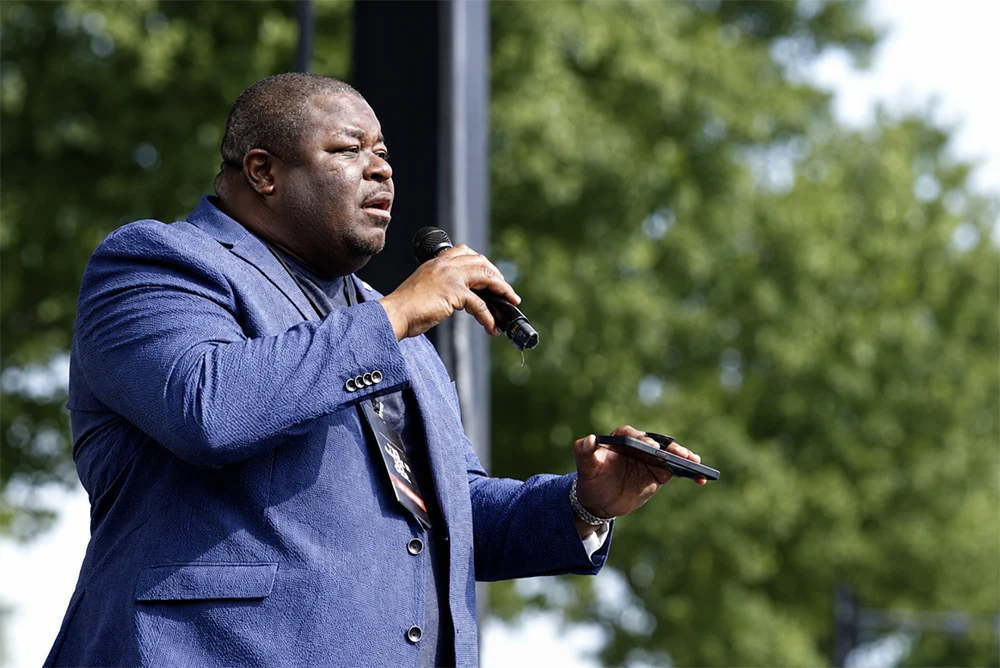
WASHINGTON, D.C. — In a move that legal scholars and civil rights advocates describe as a profound blow to the democratic process, the U.S. Supreme Court has vacated and remanded two landmark voting rights cases from Mississippi and North Dakota. The High Court’s decision mandates that these cases be re-evaluated in light of the controversial Callais ruling—a precedent that has effectively gutted the private right of action under Section 2 of the Voting Rights Act (VRA).
The order marks a significant escalation in the Court’s recent pattern of dismantling long-standing protections against racial gerrymandering and electoral disenfranchisement. By stripping away the ability of private citizens to enforce the VRA, the Court has effectively left the defense of voting rights to the discretion of federal agencies, a shift that critics warn will lead to systemic instability in the American electoral landscape.
The Core Conflict: A Departure from Precedent
At the heart of the litigation in both Mississippi and North Dakota was a fundamental question: Do private individuals have the legal standing to sue under Section 2 of the Voting Rights Act when state legislatures draw district lines that diminish their political power?
Historically, the answer has been a resounding "yes." For decades, the VRA has functioned as the primary tool for minority voters to challenge redistricting plans that dilute their influence. However, the Callais decision fundamentally altered this landscape, casting doubt on the enforcement mechanism of the act. By forcing lower courts to reconsider these active disputes through the lens of Callais, the Supreme Court has essentially signaled that the previous protections afforded to Black and Native American voters are now in legal jeopardy.
Chronology: From Legislative Maps to the High Court
To understand the gravity of the current situation, one must look at the trajectory of the litigation that led to today’s order.
Mississippi: The Fight for Representation
In 2025, Mississippi underwent a significant shift in its legislative map following a rigorous legal battle led by the Lawyers’ Committee for Civil Rights Under Law. Evidence presented in court demonstrated that the state’s previous redistricting plan was designed to dilute the voting power of Black residents.
Following a hard-fought trial, the state was forced to create three new majority-Black districts. These districts served as a tangible success story for civil rights litigation, as voters in these areas participated in historic elections, finally gaining representation that mirrored their demographic strength. The Supreme Court’s decision to vacate the lower court ruling threatens to dissolve these hard-won gains, potentially forcing a return to maps that critics argue were engineered to disenfranchise the Black electorate.
North Dakota: Tribal Nations Under Siege
Simultaneously, the Supreme Court addressed a case involving the Turtle Mountain Band of Chippewa Indians and the Spirit Lake Nation. Native American communities in North Dakota had mounted a significant challenge against a redistricting plan they argued systematically diminished their voting strength. Like the Mississippi case, the lower courts had recognized the inequities in the state’s approach, but the Supreme Court’s latest remand forces these tribal nations to justify their claims again under the restrictive framework established by Callais.
Supporting Data: The Impact of Section 2
The Voting Rights Act of 1965 remains the bedrock of American civil rights legislation. Section 2, specifically, prohibits voting practices or procedures that discriminate on the basis of race, color, or membership in a language minority group.
Data from the Brennan Center for Justice and various legal watchdogs suggest that since the weakening of the VRA, there has been a documented "race to discriminate." When the enforcement of Section 2 is weakened, state legislatures are emboldened to engage in aggressive gerrymandering.
- The Dilution Effect: Research shows that when minority-majority districts are fractured, the probability of electing candidates of choice drops by over 60% in affected regions.
- The Enforcement Gap: Without a private right of action, the burden falls entirely on the U.S. Department of Justice (DOJ). However, the DOJ lacks the resources to oversee every redistricting cycle in all 50 states, leaving millions of voters effectively without a mechanism to challenge local discrimination.
Official Responses: A Sharp Critique from the Bar
The Lawyers’ Committee for Civil Rights Under Law, a leading voice in these proceedings, issued a blistering response to the Court’s decision.
Statement from Damon Todd Hewitt
Damon Todd Hewitt, president and executive director of the Lawyers’ Committee, characterized the Court’s action as a departure from judicial neutrality.
"On the heels of one of the most devastating voting rights rulings in decades, the Supreme Court has reached a new low," Hewitt stated. "By vacating a lower court ruling which found that Mississippi’s prior redistricting plan diluted the voice and power of Black voters, the Supreme Court not only did something bad—it did something that was entirely unnecessary. As Justice Ketanji Brown Jackson noted in her dissent, the majority ignored the issue that was actually presented in the case and instead went out of its way to once again punish Black voters. That’s not adjudicating the law; that’s playing politics."
Statement from Rob Weiner
Rob Weiner, director of the Voting Rights Project, emphasized the procedural irregularities of the Court’s decision.
"In remanding this case for further consideration in light of Callais, the Court gives Mississippi relief it did not even request," Weiner noted. "The only issue the State presented for the Court’s review was whether private parties can sue for violations of the Voting Rights Act. In sending the case to the lower court for further review of other issues, the Supreme Court confirms once again that the normal rules do not apply when it considers voting rights cases. The Court’s apparent hostility to voting rights, especially the rights of Black people, is wreaking havoc in our Nation’s electoral system."
Implications: The Future of American Democracy
The implications of this remand are far-reaching, extending well beyond the borders of Mississippi and North Dakota.
The End of the "Private Right of Action"
Legal experts fear that Callais has effectively signaled the end of the private enforcement era. If individuals cannot sue to protect their right to vote, the democratic process becomes entirely top-down. This shift is expected to embolden legislatures in other states to propose aggressive maps that would have been previously deemed unconstitutional.
Chaos at the Local Level
As Hewitt noted, the impact of these rulings is not limited to federal congressional races. State legislative and local school board elections are now primary battlegrounds. By injecting uncertainty into the legal standards for redistricting, the Court has invited chaos into local election offices, where officials are now unsure which maps are legally compliant and which are subject to future litigation.
A Warning to Civil Rights Advocates
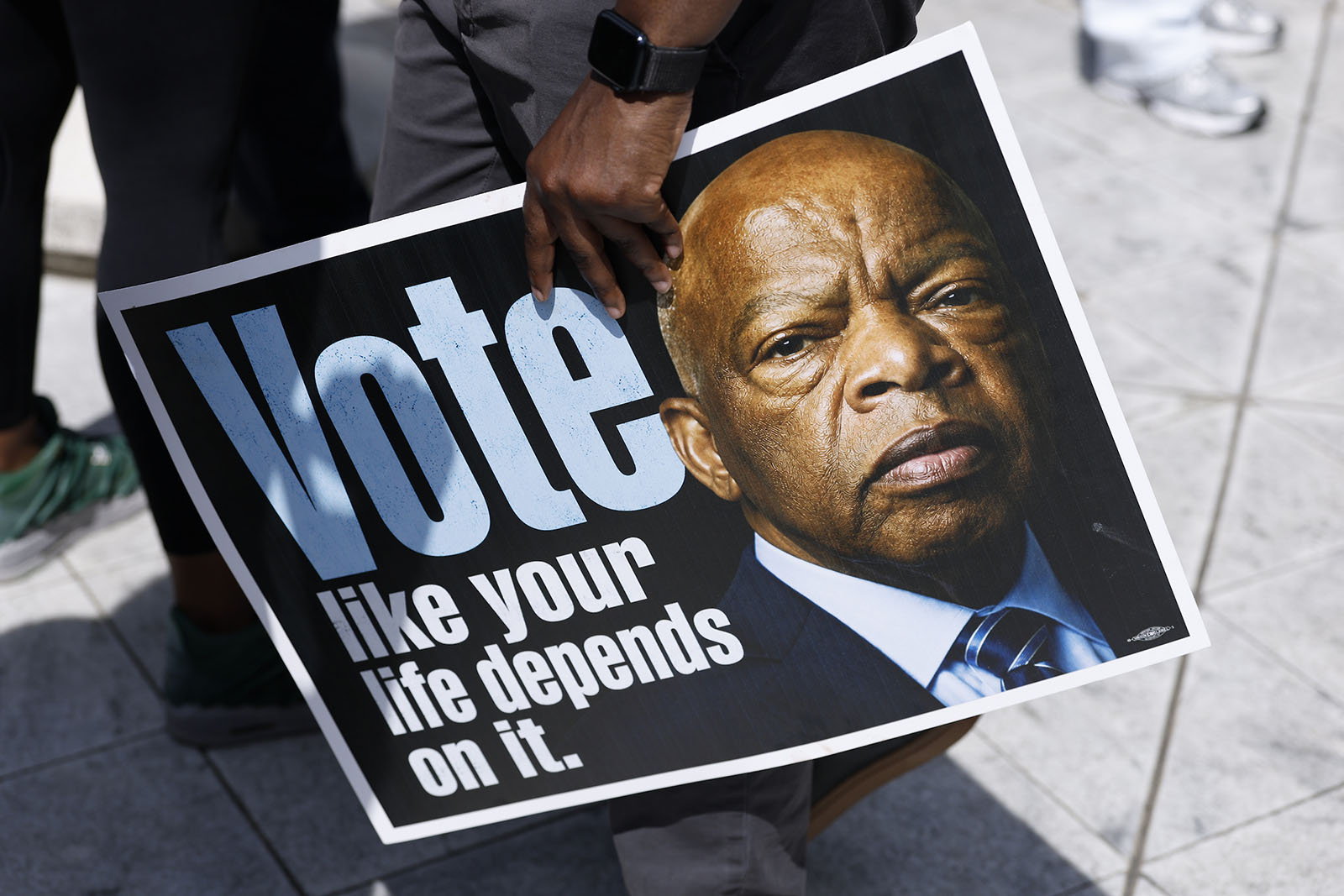
For civil rights groups, the Supreme Court’s actions represent a clear warning: the judiciary is no longer an ally in the fight against voter disenfranchisement. Advocates are now forced to pivot toward legislative solutions, calling for Congress to pass the John Lewis Voting Rights Advancement Act to restore the protections the Court has dismantled. However, with a divided Congress, the prospect of legislative relief remains dim.
Conclusion
The Supreme Court’s decision to remand the Mississippi and North Dakota cases is more than a procedural delay; it is a profound indicator of the current Court’s ideological trajectory. By prioritizing the narrow, restrictive interpretation of the Voting Rights Act over the historical and practical realities of voter discrimination, the Court has moved to limit the political power of Black and Native American citizens.
As the cases head back to lower courts, the nation watches to see if the judiciary will attempt to salvage the integrity of the electoral process or if it will continue down a path that critics argue is systematically silencing the voices of marginalized voters. In the eyes of the Lawyers’ Committee and other advocates, the message from the Supreme Court is clear: the rules of the game are changing, and the democratic process is increasingly at risk.

 Nana
Nana
 Raul Delapena Setiawan