


 Muslim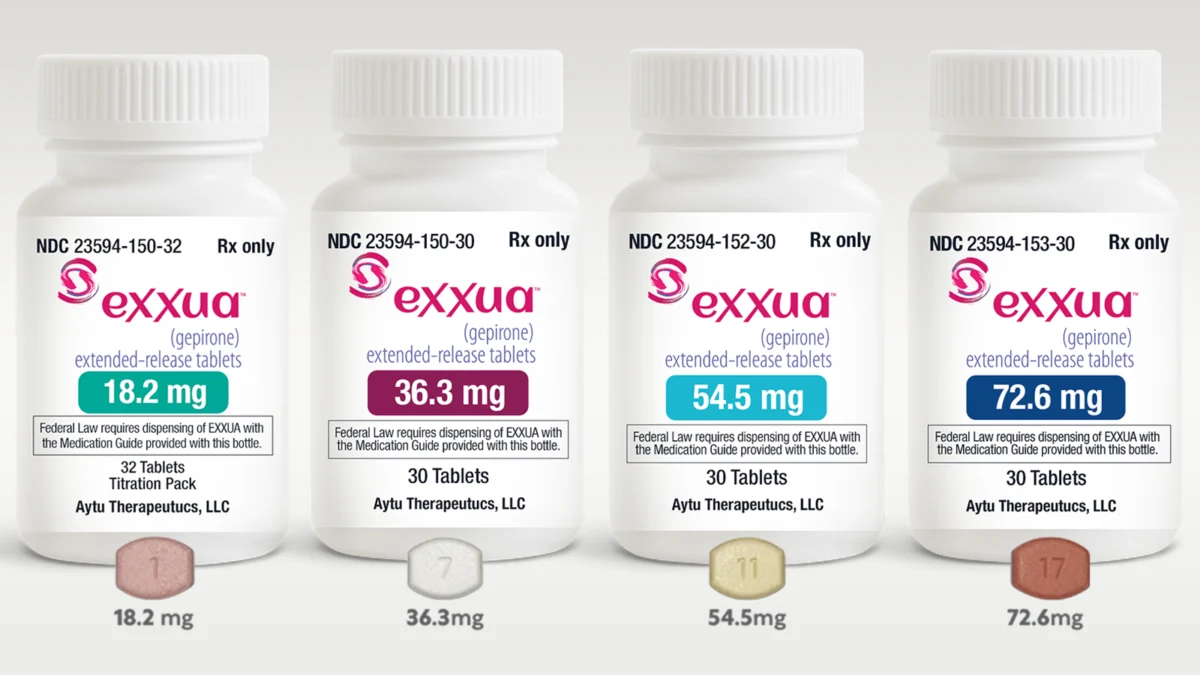
The regulatory landscape for pharmaceuticals is built on a foundation of trust. Physicians, pharmacists, and patients rely on the Food and Drug Administration (FDA) to act as a rigorous filter, ensuring that any medication reaching the market is both safe and demonstrably effective. However, a recent analysis published in JAMA Psychiatry has cast a long shadow over this process, using the 2023 approval of the antidepressant gepirone extended release (brand name Exxua) as a cautionary tale of "cherry-picked" data and the profound disconnect between statistical significance and clinical reality.
Researchers, led by Erick Turner, MD, of Oregon Health & Science University, argue that the FDA’s current practice of allowing pharmaceutical manufacturers to highlight only positive trial results in product labeling creates a distorted reality. By excluding negative studies, the agency risks misleading clinicians and consumers alike, potentially leading to the prescription of expensive medications that offer minimal, if any, real-world benefit.
The Chronology of a Controversial Approval
The journey of gepirone to the U.S. market is a nearly three-decade saga of rejection and persistent corporate lobbying. Dr. Turner, who served as a medical officer at the FDA in the late 1990s, witnessed the initial regulatory resistance firsthand. In 1999, the FDA rejected the drug—the first of at least four such rejections over the ensuing years. For nearly twenty-five years, the drug was deemed insufficient for approval based on the totality of the evidence.
When the FDA finally granted approval for Exxua in 2023 for the treatment of major depressive disorder, it caught many experts, including Turner, by surprise. "I said, ‘Wait a minute. Isn’t this the same drug?’" Turner remarked, recalling his astonishment at the reversal of a long-standing regulatory stance.
The path to approval was characterized by what researchers describe as a "convoluted" process. Despite the agency’s historical concerns regarding efficacy, the final approval was granted based on two trials that showed a small, statistically significant benefit. Crucially, this success was achieved while ignoring 11 other well-controlled studies that failed to show the drug performed any better than a placebo.
The Illusion of Efficacy: Statistical vs. Clinical Significance
At the heart of the JAMA Psychiatry critique is the distinction between statistical significance—a mathematical measure of whether a result could have occurred by chance—and clinical significance—the actual impact a drug has on a patient’s life.
In the case of gepirone, the "benefit" cited by the FDA was found to be a less than half-point difference on the Hamilton Depression Rating Scale compared to a placebo. To illustrate the absurdity of this, Dr. Turner draws a parallel to cardiovascular medicine: "It’s like treating a patient with blood pressure of 180/120 mm Hg with a drug that lowers it to 175/115 mm Hg. It may be statistically significant, but not clinically. The patient remains at high risk."
By focusing on this marginal statistical edge, the FDA allowed the manufacturer to ignore the aggregate of the other 11 trials. Furthermore, the adverse event profiles listed on the product label were compiled only from the two "successful" trials. By omitting data from the unsuccessful trials, the label potentially obscures a more comprehensive picture of the drug’s safety profile, preventing physicians from making truly informed prescribing decisions.
Physician Misconceptions and the Regulatory Myth
One of the most alarming aspects of the report is the revelation regarding how little the medical community understands about the FDA’s own standards. In a survey of practicing physicians, the researchers found that 70% of respondents mistakenly believe the FDA is legally required to prove that a drug is both clinically and statistically superior to existing treatments before granting approval.
The reality is far more sobering:
- 73% of doctors incorrectly believe that new drugs must be as effective as older ones for the same condition.
- 40% of doctors mistakenly believe that new drugs must be more effective than those currently on the market.
Neither of these is a prerequisite for FDA approval. This widespread lack of insight into the regulatory process helps explain why clinicians frequently overestimate the benefits of new pharmaceutical interventions while simultaneously underestimating their risks. When doctors operate under the false assumption that an FDA-approved label represents the "best" or even a "better" treatment, they are arguably being set up to fail their patients.
Financial Implications: The High Cost of Marginal Benefit
The approval of gepirone carries not only clinical concerns but also significant financial burdens. Without insurance, the cost of Exxua is approximately $1,500 per month. Even with Medicare Part D coverage, the annual cost to an enrollee can hit the 2026 cap of $2,100.
For a medication that has demonstrated such scant evidence of efficacy, the price tag is staggering. This creates a scenario where patients and healthcare systems are paying premium prices for drugs that might offer the same relief as a sugar pill, while simultaneously being denied access to more transparent data regarding their potential risks.
Expert Perspectives and Calls for Reform
Robert Steinbrook, MD, director of the health research group at Public Citizen, suggests that the gepirone case should serve as a wake-up call for the FDA. "The FDA seems to feel that its hands were tied," Steinbrook noted, pointing out that the regulatory standard for approval is often divorced from the clinical reality of whether a drug is actually "good" for a patient.
"The agency needs to consider this example as an impetus for revising its guidance," he added. The current system, which focuses heavily on satisfying legal benchmarks, often ignores the "totality of the evidence."
Adriane Fugh-Berman, MD, of Georgetown University Medical Center and the watchdog group PharmedOut, echoed these concerns. She questioned how many other drugs currently on the market were approved based on similarly unimpressive clinical evidence. "Drug companies are invested in exaggerating benefits and minimizing perceptions of harm," Fugh-Berman stated. "Right now, the labels are helping them out. The FDA should be encouraging better, more honest information."
The Path Forward: A Call for Inclusive Labeling
The researchers conclude that the FDA must mandate that all adequate and well-controlled trials—regardless of whether they yielded a positive or negative outcome—be represented in the product labeling. If a drug has failed in the majority of its trials, that fact is material to the prescribing physician.
The issue is particularly acute in psychiatry. Because endpoints for mental health—such as depression, anxiety, or pain—are inherently subjective, they are susceptible to manipulation or "cherry-picking" by sponsors. Dr. Turner, an expert in publication bias, warns that the industry’s tendency to suppress negative data is a systemic issue. "We know that for psychiatric drugs, roughly half of the studies are positive. That means there is a massive volume of negative data that is simply not being seen by the public or the medical community."
Implications for Public Health
If the FDA continues to prioritize statistical benchmarks over clinical utility, the erosion of public trust in the medical system is inevitable. When a patient takes a medication for depression, they are looking for a meaningful change in their quality of life, not a marginal, statistically significant change on a scale that doesn’t translate to real-world improvement.
The gepirone case provides a concrete, documented example of where the system has drifted away from its primary mission: the protection and promotion of public health. By mandating inclusive labeling, the FDA could restore a measure of transparency, allowing physicians to act as true advocates for their patients, armed with the full, unvarnished truth about the medications they prescribe. Until that change occurs, the burden remains on the medical community to look past the FDA’s "stamp of approval" and demand the full data, regardless of what the pharmaceutical sponsors would prefer they see.


 Reynand Wu
 Rifan Muazin